
AI & Tech One-page note UK only
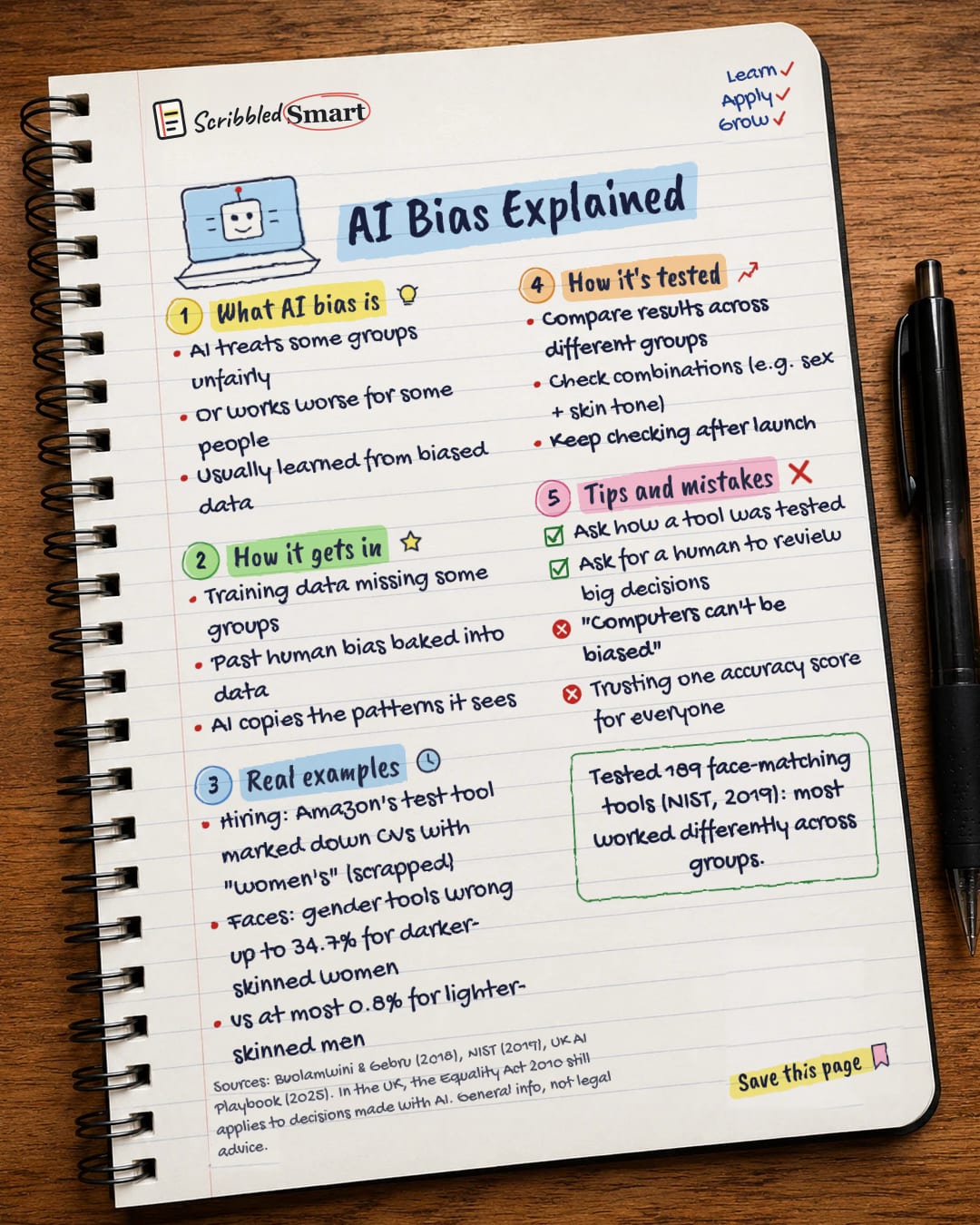
AI Bias Explained
AI can be unfair, and it usually learns it from us. Here's how bias gets into AI, real examples, and how it's tested. Save this page.
Good to know
Sources: Buolamwini & Gebru (2018), NIST (2019), UK AI Playbook (2025). In the UK, the Equality Act 2010 still applies to decisions made with AI. General info, not legal advice.
What's on the page
The note as text, so you can read it, copy it or use a screen reader.
What AI bias is
- AI treats some groups unfairly
- Or works worse for some people
- Usually learned from biased data
How it gets in
- Training data missing some groups
- Past human bias baked into data
- AI copies the patterns it sees
Real examples
- Hiring: Amazon's test tool marked down CVs with "women's" (scrapped)
- Faces: gender tools wrong up to 34.7% for darker-skinned women
- vs at most 0.8% for lighter-skinned men
How it's tested
- Compare results across different groups
- Check combinations (e.g. sex + skin tone)
- Keep checking after launch
Tips and mistakes
- Ask how a tool was tested
- Ask for a human to review big decisions
- "Computers can't be biased"
- Trusting one accuracy score for everyone
Sources
- Buolamwini, J. & Gebru, T. (2018): Gender Shades: Intersectional Accuracy Disparities in Commercial Gender Classification. PMLR 81:77–91
- NIST: NIST Study Evaluates Effects of Race, Age, Sex on Face Recognition Software (19 Dec 2019)
- GOV.UK (DSIT/GDS): Artificial Intelligence Playbook for the UK Government
- CNBC (Reuters): Amazon scraps a secret AI recruiting tool that showed bias against women (10 Oct 2018)
How we checked this
Every fact on this note comes from the 4 sources listed here, checked against official or peer-reviewed sources where possible. AI tools help with drafting; a person checks every fact against the sources. How we research
Spotted a mistake? Tell us and we'll fix it and log it on the corrections page.


