
Career One-page note
Apprenticeship Levels Explained
Level 2, 3, 4, 6, 7: what do apprenticeship levels actually mean? Here's what each one equals, plus pay. Save this page.
Good to know
England. Scotland, Wales and Northern Ireland run their own schemes. Pay from April 2026, checked Nov 2026.
What's on the page
The note as text, so you can read it, copy it or use a screen reader.
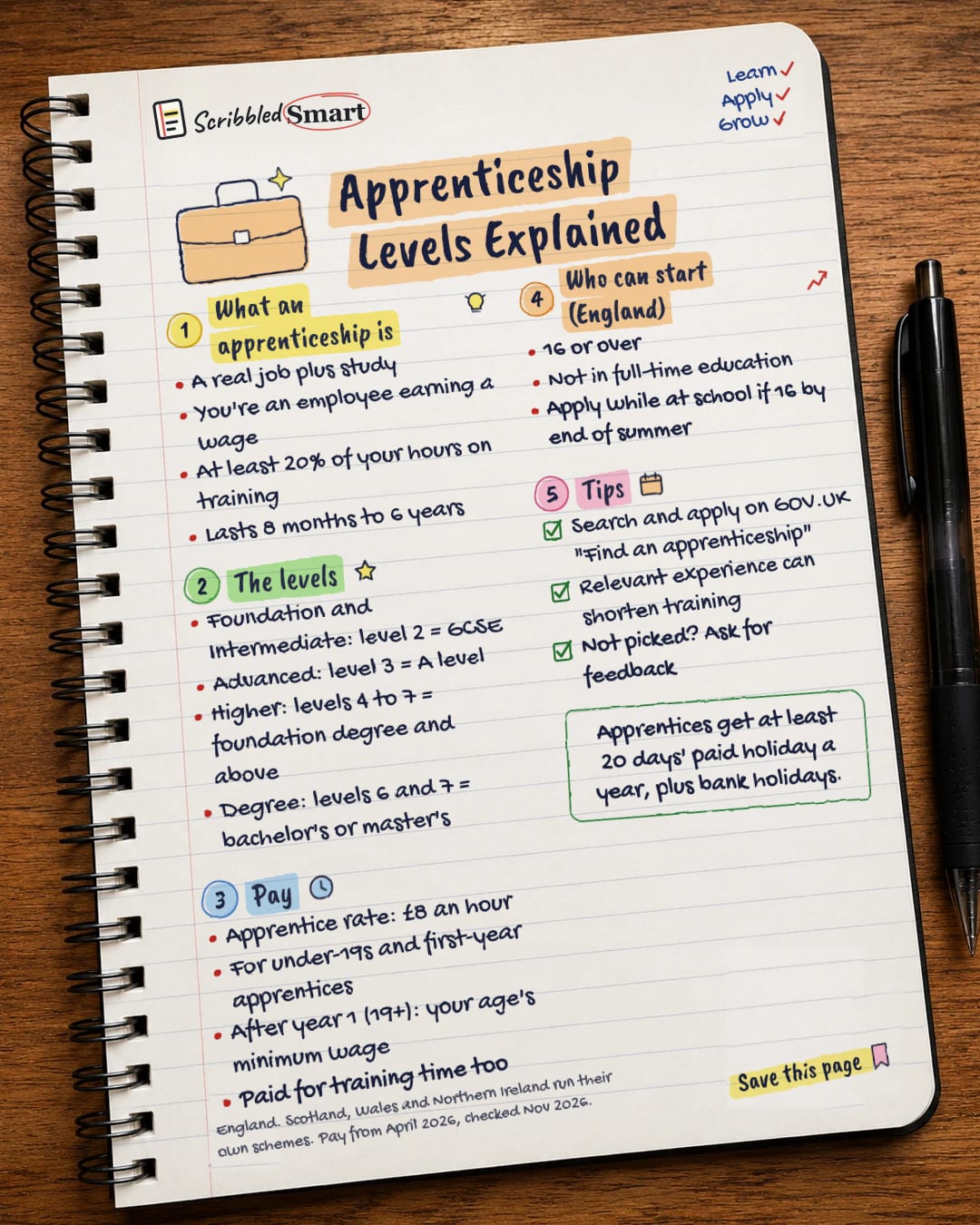
What an apprenticeship is
- A real job plus study
- You're an employee earning a wage
- At least 20% of your hours on training
- Lasts 8 months to 6 years
The levels
- Foundation and Intermediate: level 2 = GCSE
- Advanced: level 3 = A level
- Higher: levels 4 to 7 = foundation degree and above
- Degree: levels 6 and 7 = bachelor's or master's
Pay
- Apprentice rate: £8 an hour
- For under-19s and first-year apprentices
- After year 1 (19+): your age's minimum wage
- Paid for training time too
Who can start (England)
- 16 or over
- Not in full-time education
- Apply while at school if 16 by end of summer
Tips
- Search and apply on GOV.UK "Find an apprenticeship"
- Relevant experience can shorten training
- Not picked? Ask for feedback
Sources
How we checked this
Every fact on this note comes from the 3 sources listed here, checked against official or peer-reviewed sources where possible. AI tools help with drafting; a person checks every fact against the sources. How we research
Spotted a mistake? Tell us and we'll fix it and log it on the corrections page.


