
Career One-page note UK only
The Gender Pay Gap Explained
The gender pay gap and equal pay are not the same thing. Here's the difference, and the latest UK figures. Save this page.
Good to know
UK figures: ONS 2026 (provisional). Reporting rules: Great Britain. General info, not legal advice.
What's on the page
The note as text, so you can read it, copy it or use a screen reader.
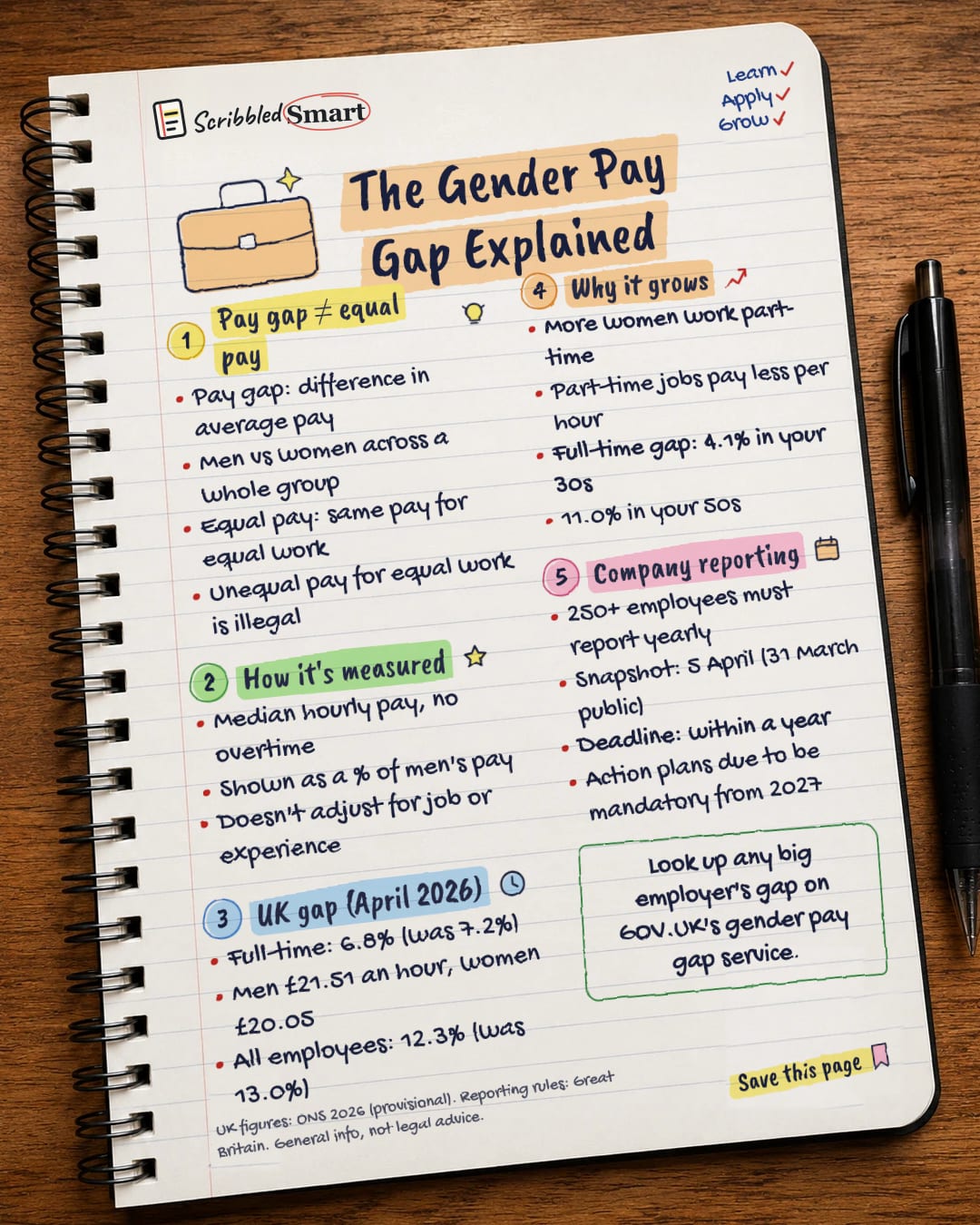
Pay gap ≠ equal pay
- Pay gap: difference in average pay
- Men vs women across a whole group
- Equal pay: same pay for equal work
- Unequal pay for equal work is illegal
How it's measured
- Median hourly pay, no overtime
- Shown as a % of men's pay
- Doesn't adjust for job or experience
UK gap (April 2026)
- Full-time: 6.8% (was 7.2%)
- Men £21.51 an hour, women £20.05
- All employees: 12.3% (was 13.0%)
Why it grows
- More women work part-time
- Part-time jobs pay less per hour
- Full-time gap: 4.1% in your 30s
- 11.0% in your 50s
Company reporting
- 250+ employees must report yearly
- Snapshot: 5 April (31 March public)
- Deadline: within a year
- Action plans due to be mandatory from 2027
Sources
- ONS: Gender pay gap in the UK: 2026 (22 Oct 2026)
- GOV.UK: Gender pay gap reporting and creating an action plan: guidance for employers (updated 7 Apr 2026)
- GOV.UK: Gender pay gap reporting: guidance for employers (Overview, Who needs to report, When to report, Making your calculations; updated 21 May 2026)
- Acas: Employee rights and pay rises
How we checked this
Every fact on this note comes from the 4 sources listed here, checked against official or peer-reviewed sources where possible. AI tools help with drafting; a person checks every fact against the sources. How we research
Spotted a mistake? Tell us and we'll fix it and log it on the corrections page.


