
Career One-page note
Reasonable Adjustments at Work
Disability or long-term health condition? Your employer has to make reasonable changes so you can do your job. Here's how. Save this page.
Good to know
England, Scotland & Wales. Checked Nov 2026. General info, not legal advice.
What's on the page
The note as text, so you can read it, copy it or use a screen reader.
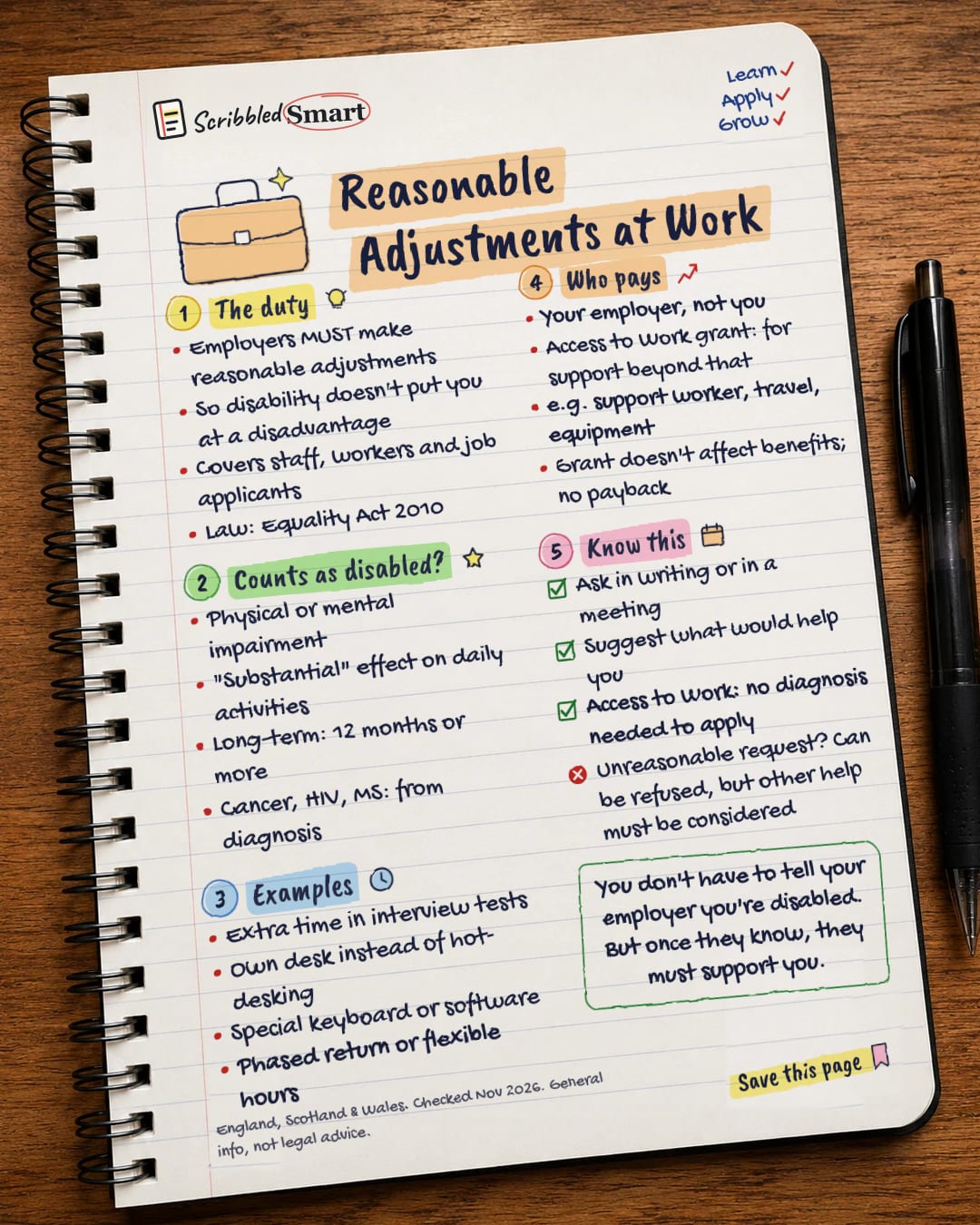
The duty
- Employers MUST make reasonable adjustments
- So disability doesn't put you at a disadvantage
- Covers staff, workers and job applicants
- Law: Equality Act 2010
Counts as disabled?
- Physical or mental impairment
- "Substantial" effect on daily activities
- Long-term: 12 months or more
- Cancer, HIV, MS: from diagnosis
Examples
- Extra time in interview tests
- Own desk instead of hot-desking
- Special keyboard or software
- Phased return or flexible hours
Who pays
- Your employer, not you
- Access to Work grant: for support beyond that
- e.g. support worker, travel, equipment
- Grant doesn't affect benefits; no payback
Know this
- Ask in writing or in a meeting
- Suggest what would help you
- Access to Work: no diagnosis needed to apply
- Unreasonable request? Can be refused, but other help must be considered
Sources
How we checked this
Every fact on this note comes from the 5 sources listed here, checked against official or peer-reviewed sources where possible. AI tools help with drafting; a person checks every fact against the sources. How we research
Spotted a mistake? Tell us and we'll fix it and log it on the corrections page.


