
Career One-page note UK only
Side Hustle Tax: The £1,000 Allowance (UK)
Earn a bit on the side? The first £1,000 can be tax-free, but it's what you take in, not your profit. When to tell HMRC and how to pick allowance or expenses. UK only. Save this page.
Good to know
UK, 2026–27 tax year, checked Nov 2026. General info, not financial advice.
What's on the page
The note as text, so you can read it, copy it or use a screen reader.
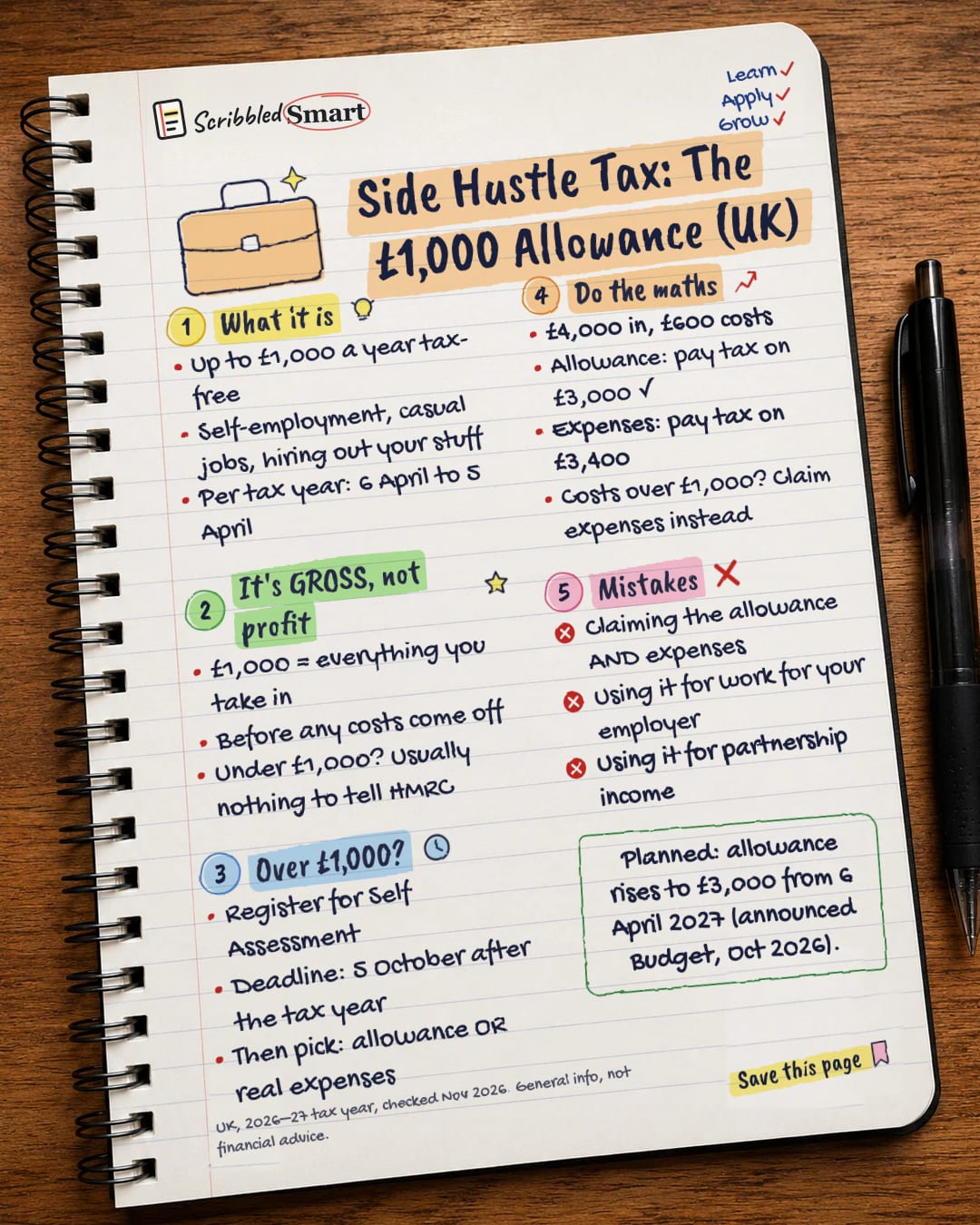
What it is
- Up to £1,000 a year tax-free
- Self-employment, casual jobs, hiring out your stuff
- Per tax year: 6 April to 5 April
It's GROSS, not profit
- £1,000 = everything you take in
- Before any costs come off
- Under £1,000? Usually nothing to tell HMRC
Over £1,000?
- Register for Self Assessment
- Deadline: 5 October after the tax year
- Then pick: allowance OR real expenses
Do the maths
- £4,000 in, £600 costs
- Allowance: pay tax on £3,000 ✓
- Expenses: pay tax on £3,400
- Costs over £1,000? Claim expenses instead
Mistakes
- Claiming the allowance AND expenses
- Using it for work for your employer
- Using it for partnership income
Sources
- GOV.UK: Tax-free allowances on property and trading income
- GOV.UK: Expenses if you're self-employed (print)
- GOV.UK: Set up as a sole trader (print)
- GOV.UK: Register for Self Assessment
- GOV.UK (HMRC policy paper, 28 Oct 2026): Income Tax: increasing the trading allowance
- GOV.UK (HMRC press release, 4 Dec 2024): No tax changes for online sellers
How we checked this
Every fact on this note comes from the 6 sources listed here, checked against official or peer-reviewed sources where possible. AI tools help with drafting; a person checks every fact against the sources. How we research
Spotted a mistake? Tell us and we'll fix it and log it on the corrections page.


