
General knowledge One-page note UK only
Meteors, Asteroids and Comets
A shooting star isn't a star. Asteroids, comets and meteors explained, plus the next UK meteor showers. Save this page.
Good to know
UK dates from Royal Museums Greenwich, checked Nov 2026. Hourly rates are best-case.
What's on the page
The note as text, so you can read it, copy it or use a screen reader.
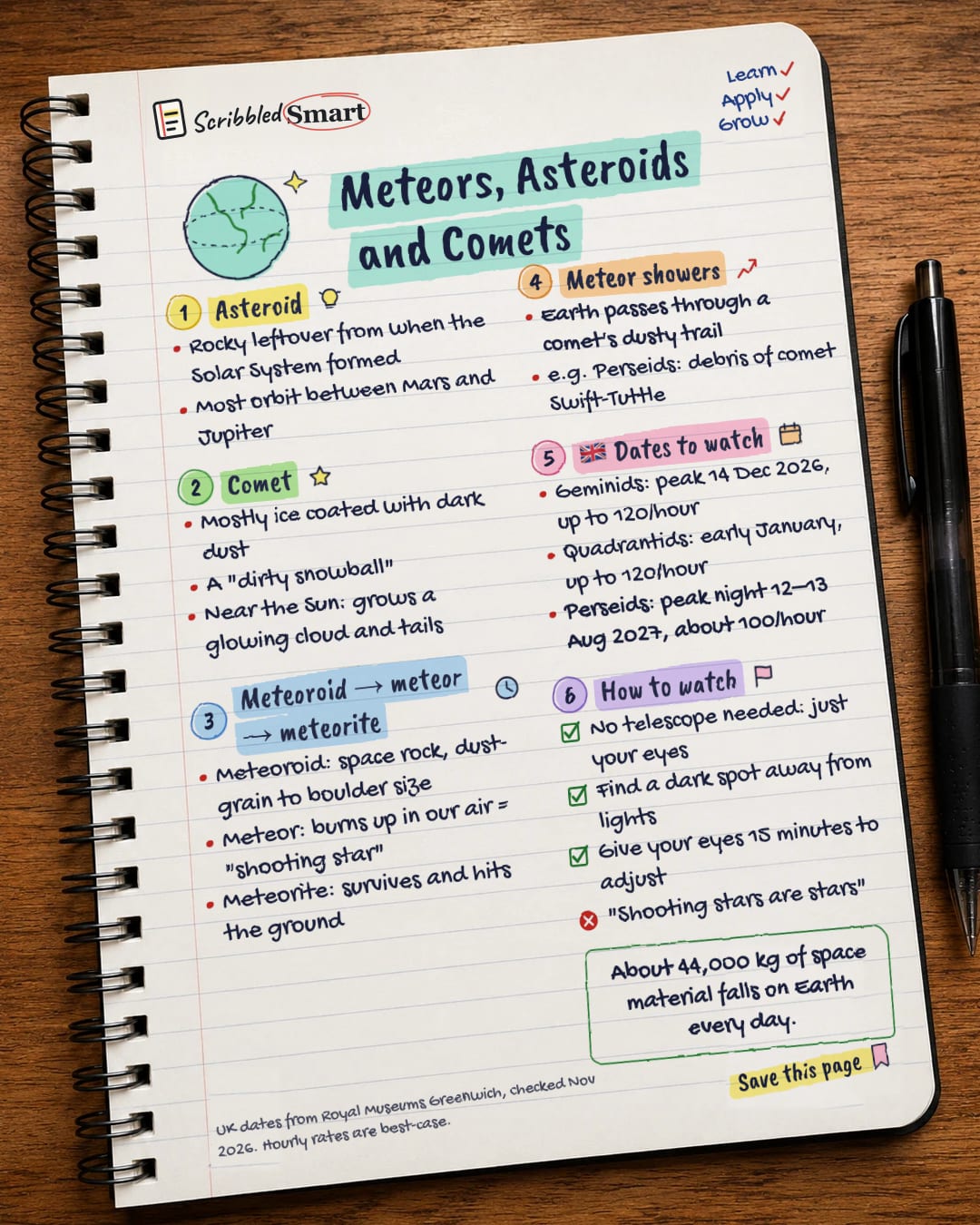
Asteroid
- Rocky leftover from when the Solar System formed
- Most orbit between Mars and Jupiter
Comet
- Mostly ice coated with dark dust
- A "dirty snowball"
- Near the Sun: grows a glowing cloud and tails
Meteoroid → meteor → meteorite
- Meteoroid: space rock, dust-grain to boulder size
- Meteor: burns up in our air = "shooting star"
- Meteorite: survives and hits the ground
Meteor showers
- Earth passes through a comet's dusty trail
- e.g. Perseids: debris of comet Swift-Tuttle
🇬🇧 Dates to watch
- Geminids: peak 14 Dec 2026, up to 120/hour
- Quadrantids: early January, up to 120/hour
- Perseids: peak night 12–13 Aug 2027, about 100/hour
How to watch
- No telescope needed: just your eyes
- Find a dark spot away from lights
- Give your eyes 15 minutes to adjust
- "Shooting stars are stars"
Sources
How we checked this
Every fact on this note comes from the 6 sources listed here, checked against official or peer-reviewed sources where possible. AI tools help with drafting; a person checks every fact against the sources. How we research
Spotted a mistake? Tell us and we'll fix it and log it on the corrections page.


