
Health One-page note
ADHD in Adults: The NHS Basics
Always distracted, restless or losing things? Here's what ADHD looks like in adults and how assessment works. Save this page.
Good to know
General info, not medical advice. Struggling? Talk to your GP, or call Samaritans on 116 123.
What's on the page
The note as text, so you can read it, copy it or use a screen reader.
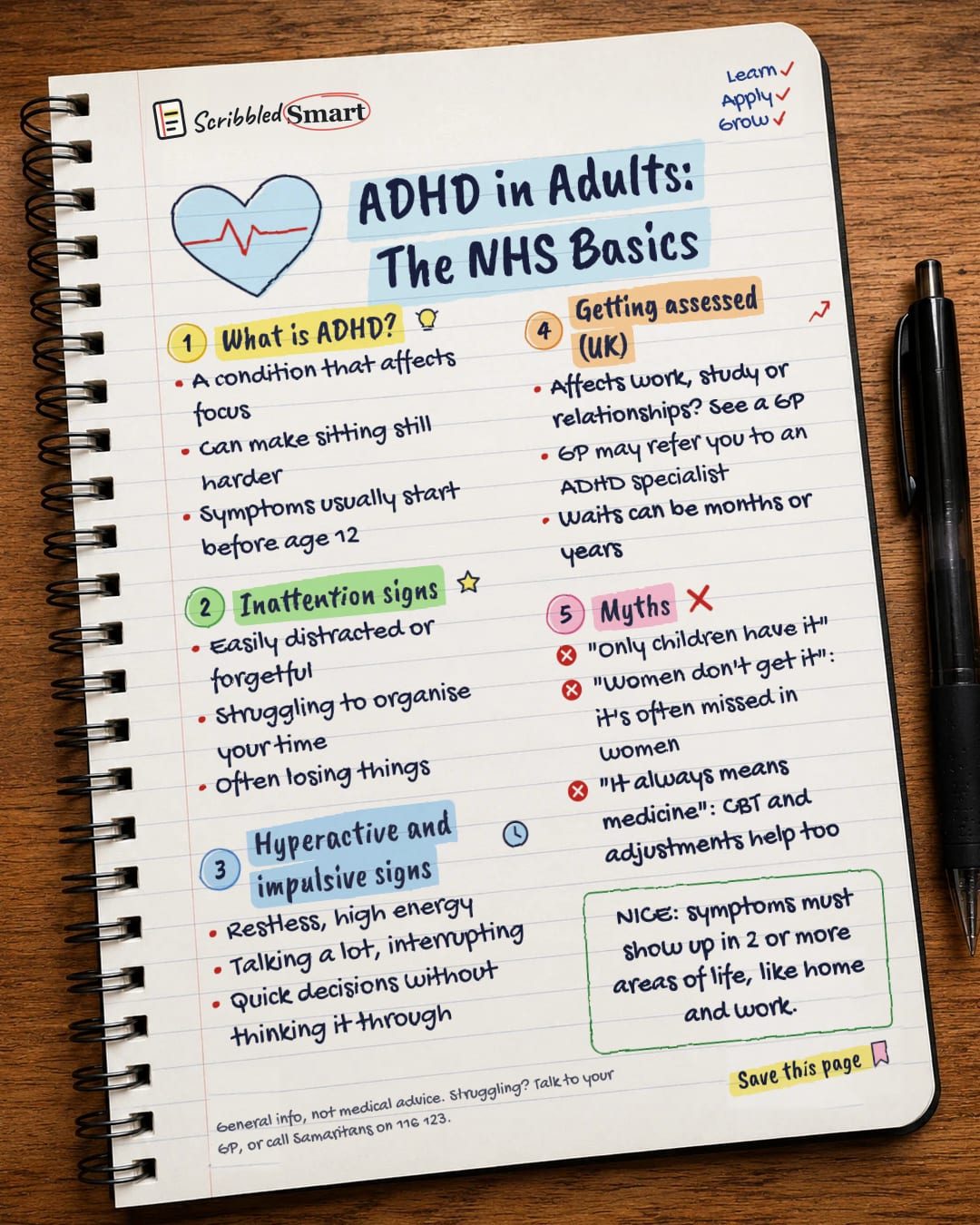
What is ADHD?
- A condition that affects focus
- Can make sitting still harder
- Symptoms usually start before age 12
Inattention signs
- Easily distracted or forgetful
- Struggling to organise your time
- Often losing things
Hyperactive and impulsive signs
- Restless, high energy
- Talking a lot, interrupting
- Quick decisions without thinking it through
Getting assessed (UK)
- Affects work, study or relationships? See a GP
- GP may refer you to an ADHD specialist
- Waits can be months or years
Myths
- "Only children have it"
- "Women don't get it": it's often missed in women
- "It always means medicine": CBT and adjustments help too
Sources
- NHS: ADHD in adults (reviewed 19 March 2025)
- NHS: ADHD in children and young people
- NICE: Attention deficit hyperactivity disorder: diagnosis and management (NG87)
- Samaritans: How we can help
- ADHD UK: NHS Right to Choose changes
- NHS Hampshire and Isle of Wight ICB: Autism and ADHD assessment services
How we checked this
Every fact on this note comes from the 6 sources listed here, checked against official or peer-reviewed sources where possible. AI tools help with drafting; a person checks every fact against the sources. How we research
Spotted a mistake? Tell us and we'll fix it and log it on the corrections page.


