
Health One-page note UK only
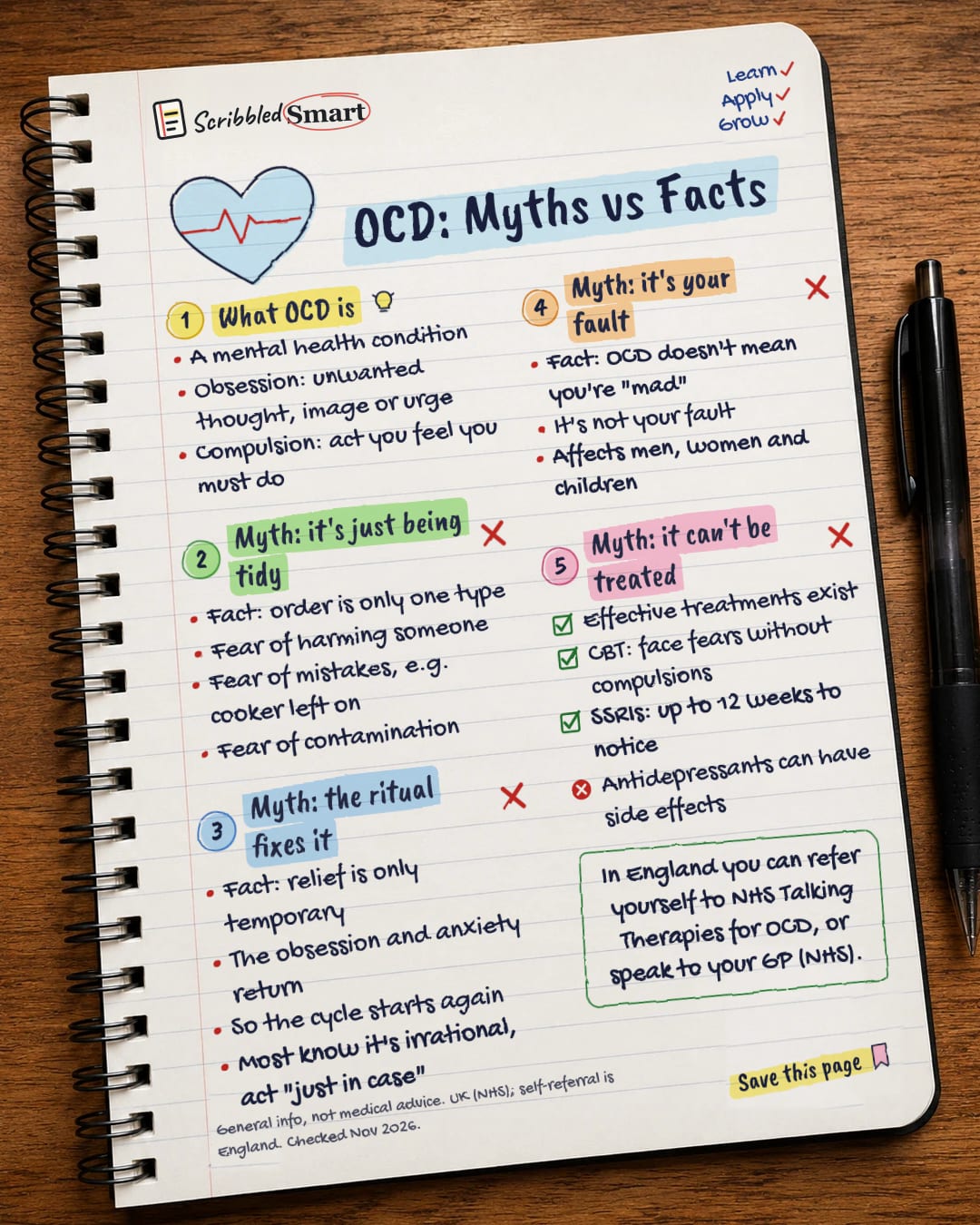
OCD: Myths vs Facts
OCD isn't about liking things neat. Here's what it really is, and how it's treated. Save this page.
Good to know
General info, not medical advice. UK (NHS); self-referral is England. Checked Nov 2026.
What's on the page
The note as text, so you can read it, copy it or use a screen reader.
What OCD is
- A mental health condition
- Obsession: unwanted thought, image or urge
- Compulsion: act you feel you must do
Myth: it's just being tidy
- Fact: order is only one type
- Fear of harming someone
- Fear of mistakes, e.g. cooker left on
- Fear of contamination
Myth: the ritual fixes it
- Fact: relief is only temporary
- The obsession and anxiety return
- So the cycle starts again
- Most know it's irrational, act "just in case"
Myth: it's your fault
- Fact: OCD doesn't mean you're "mad"
- It's not your fault
- Affects men, women and children
Myth: it can't be treated
- Effective treatments exist
- CBT: face fears without compulsions
- SSRIs: up to 12 weeks to notice
- Antidepressants can have side effects
Sources
How we checked this
Every fact on this note comes from the 4 sources listed here, checked against official or peer-reviewed sources where possible. AI tools help with drafting; a person checks every fact against the sources. How we research
Spotted a mistake? Tell us and we'll fix it and log it on the corrections page.


