
Health One-page note UK only
PCOS Explained
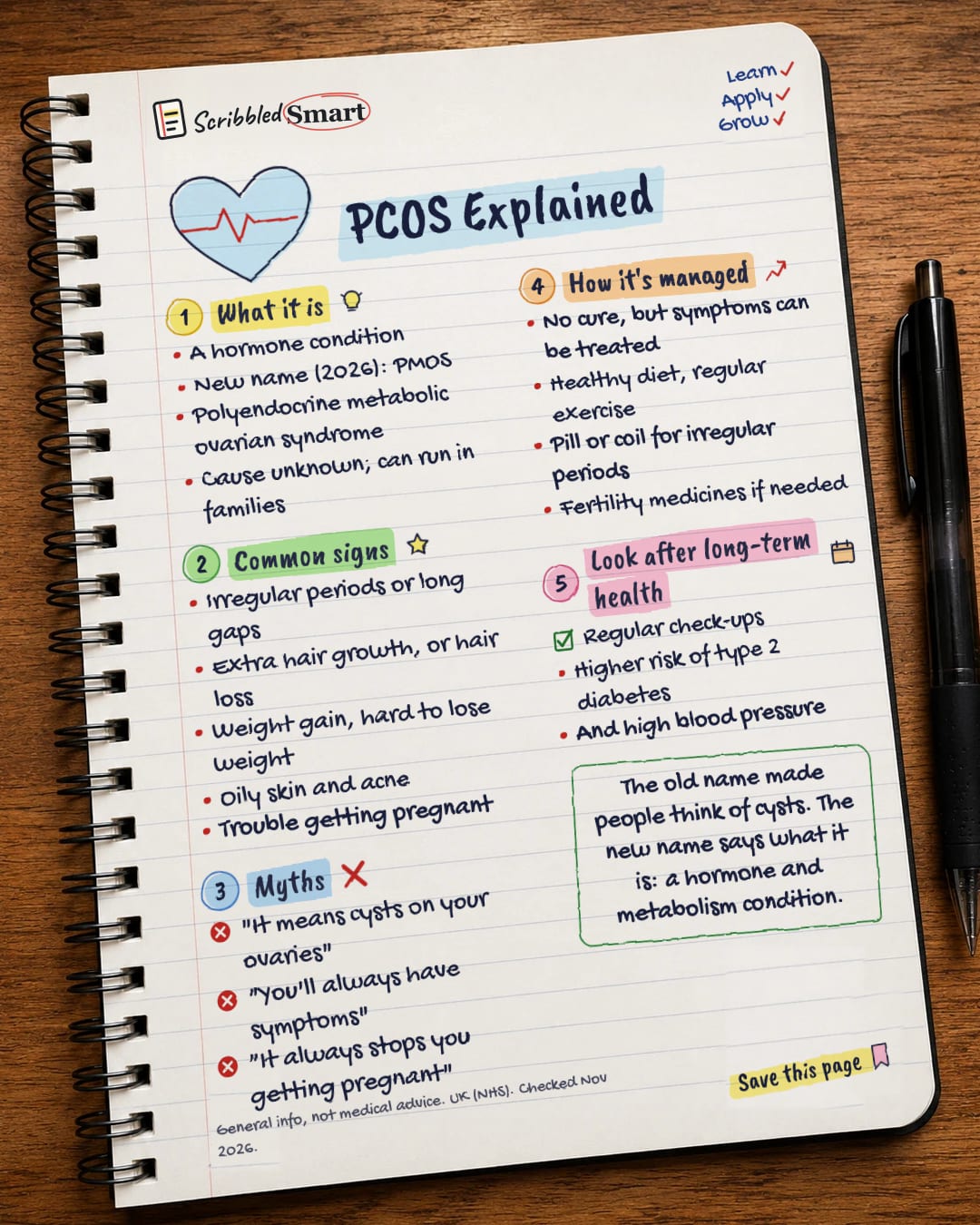
PCOS has a new name, and the old one was misleading. Here's what it really is, the signs and how it's managed. Save this page.
Good to know
General info, not medical advice. UK (NHS). Checked Nov 2026.
What's on the page
The note as text, so you can read it, copy it or use a screen reader.
What it is
- A hormone condition
- New name (2026): PMOS
- Polyendocrine metabolic ovarian syndrome
- Cause unknown; can run in families
Common signs
- Irregular periods or long gaps
- Extra hair growth, or hair loss
- Weight gain, hard to lose weight
- Oily skin and acne
- Trouble getting pregnant
Myths
- "It means cysts on your ovaries"
- "You'll always have symptoms"
- "It always stops you getting pregnant"
How it's managed
- No cure, but symptoms can be treated
- Healthy diet, regular exercise
- Pill or coil for irregular periods
- Fertility medicines if needed
Look after long-term health
- Regular check-ups
- Higher risk of type 2 diabetes
- And high blood pressure
Sources
How we checked this
Every fact on this note comes from the 2 sources listed here, checked against official or peer-reviewed sources where possible. AI tools help with drafting; a person checks every fact against the sources. How we research
Spotted a mistake? Tell us and we'll fix it and log it on the corrections page.


