
Language One-page note
Collective Nouns for Animals
A murder of crows? Not in the famous 1486 list. Which animal group names are really old, and which ones people use every day. Save this page.
Good to know
Original spellings from the Book of St Albans (1486, Blades facsimile edition).
What's on the page
The note as text, so you can read it, copy it or use a screen reader.
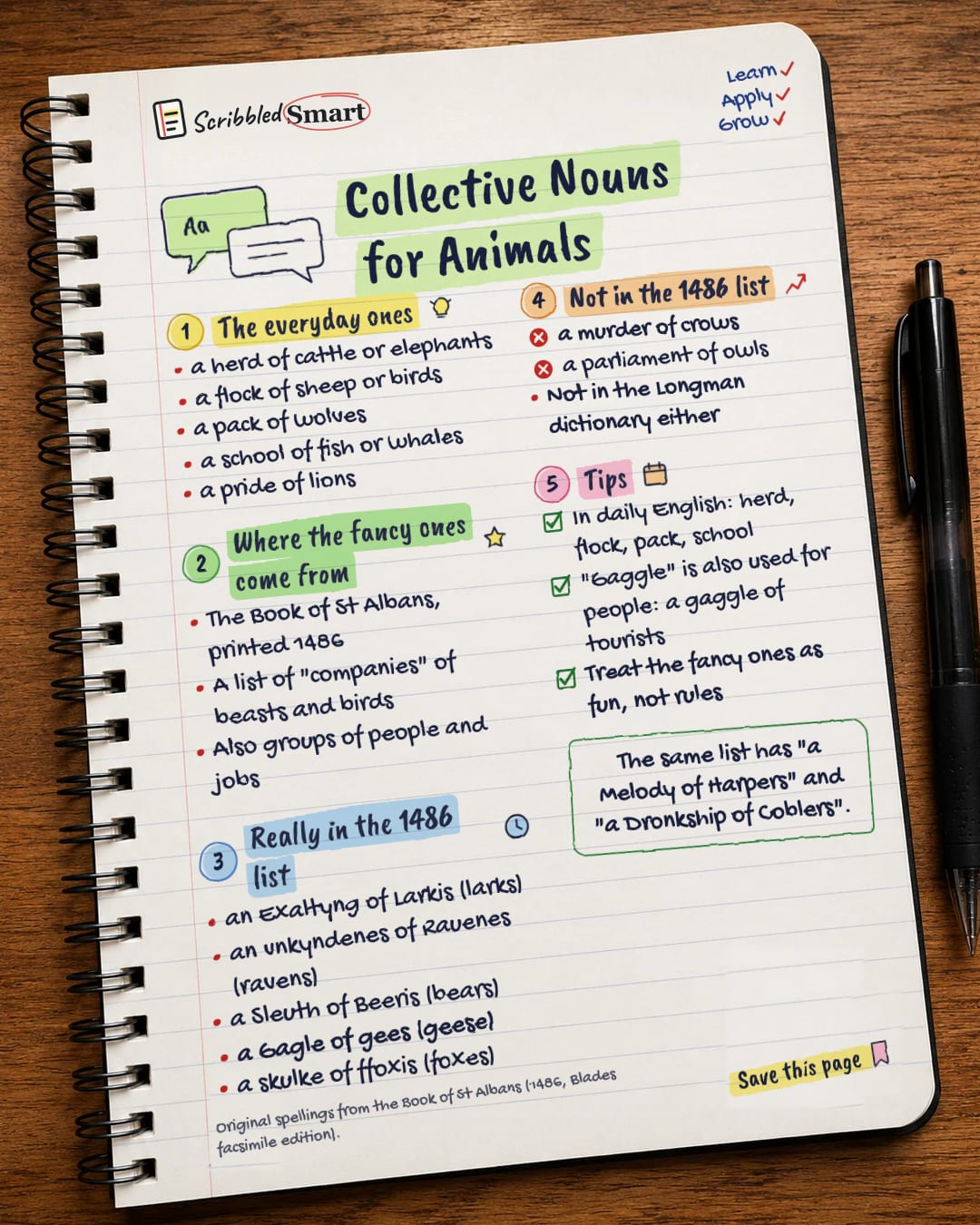
The everyday ones
- a herd of cattle or elephants
- a flock of sheep or birds
- a pack of wolves
- a school of fish or whales
- a pride of lions
Where the fancy ones come from
- The Book of St Albans, printed 1486
- A list of "companies" of beasts and birds
- Also groups of people and jobs
Really in the 1486 list
- an Exaltyng of Larkis (larks)
- an vnkyndenes of Rauenes (ravens)
- a Sleuth of Beeris (bears)
- a Gagle of gees (geese)
- a skulke of ffoxis (foxes)
Not in the 1486 list
- a murder of crows
- a parliament of owls
- Not in the Longman dictionary either
Tips
- In daily English: herd, flock, pack, school
- "Gaggle" is also used for people: a gaggle of tourists
- Treat the fancy ones as fun, not rules
Sources
How we checked this
Every fact on this note comes from the 3 sources listed here, checked against official or peer-reviewed sources where possible. AI tools help with drafting; a person checks every fact against the sources. How we research
Spotted a mistake? Tell us and we'll fix it and log it on the corrections page.


