
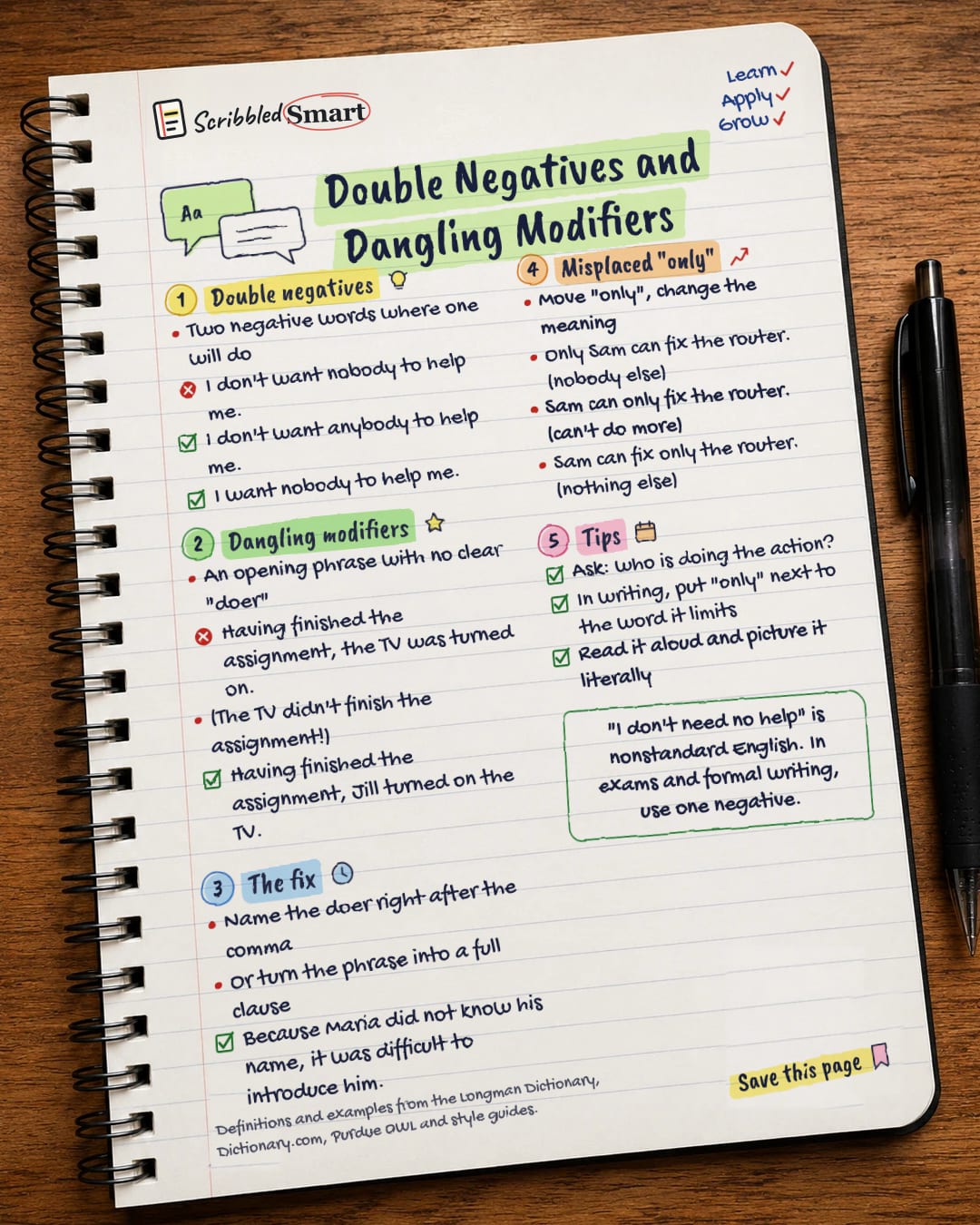
Language One-page note
Double Negatives and Dangling Modifiers
"Having finished my homework, the TV was turned on." Spot the problem? Double negatives and dangling modifiers in one page. Save this page.
Good to know
Definitions and examples from the Longman Dictionary, Dictionary.com, Purdue OWL and style guides.
What's on the page
The note as text, so you can read it, copy it or use a screen reader.
Double negatives
- Two negative words where one will do
- I don't want nobody to help me.
- I don't want anybody to help me.
- I want nobody to help me.
Dangling modifiers
- An opening phrase with no clear "doer"
- Having finished the assignment, the TV was turned on.
- (The TV didn't finish the assignment!)
- Having finished the assignment, Jill turned on the TV.
The fix
- Name the doer right after the comma
- Or turn the phrase into a full clause
- Because Maria did not know his name, it was difficult to introduce him.
Misplaced "only"
- Move "only", change the meaning
- Only Sam can fix the router. (nobody else)
- Sam can only fix the router. (can't do more)
- Sam can fix only the router. (nothing else)
Tips
- Ask: who is doing the action?
- In writing, put "only" next to the word it limits
- Read it aloud and picture it literally
Sources
- Longman Dictionary of Contemporary English: double negative
- Longman Dictionary of Contemporary English: only
- Purdue OWL: Dangling Modifiers and How To Correct Them
- Splunk Style Guide: Misplaced modifiers
- Dictionary.com: double negative (incl. Collins entry and usage note)
- GrammarBook (Blue Book of Grammar): Misplaced modifiers (search summary only)
How we checked this
Every fact on this note comes from the 6 sources listed here, checked against official or peer-reviewed sources where possible. AI tools help with drafting; a person checks every fact against the sources. How we research
Spotted a mistake? Tell us and we'll fix it and log it on the corrections page.


