
Language One-page note
i.e. vs e.g. (and etc., et al.)
i.e. or e.g.? What they mean, how to punctuate them, and why GOV.UK skips them. Save this page.
What's on the page
The note as text, so you can read it, copy it or use a screen reader.
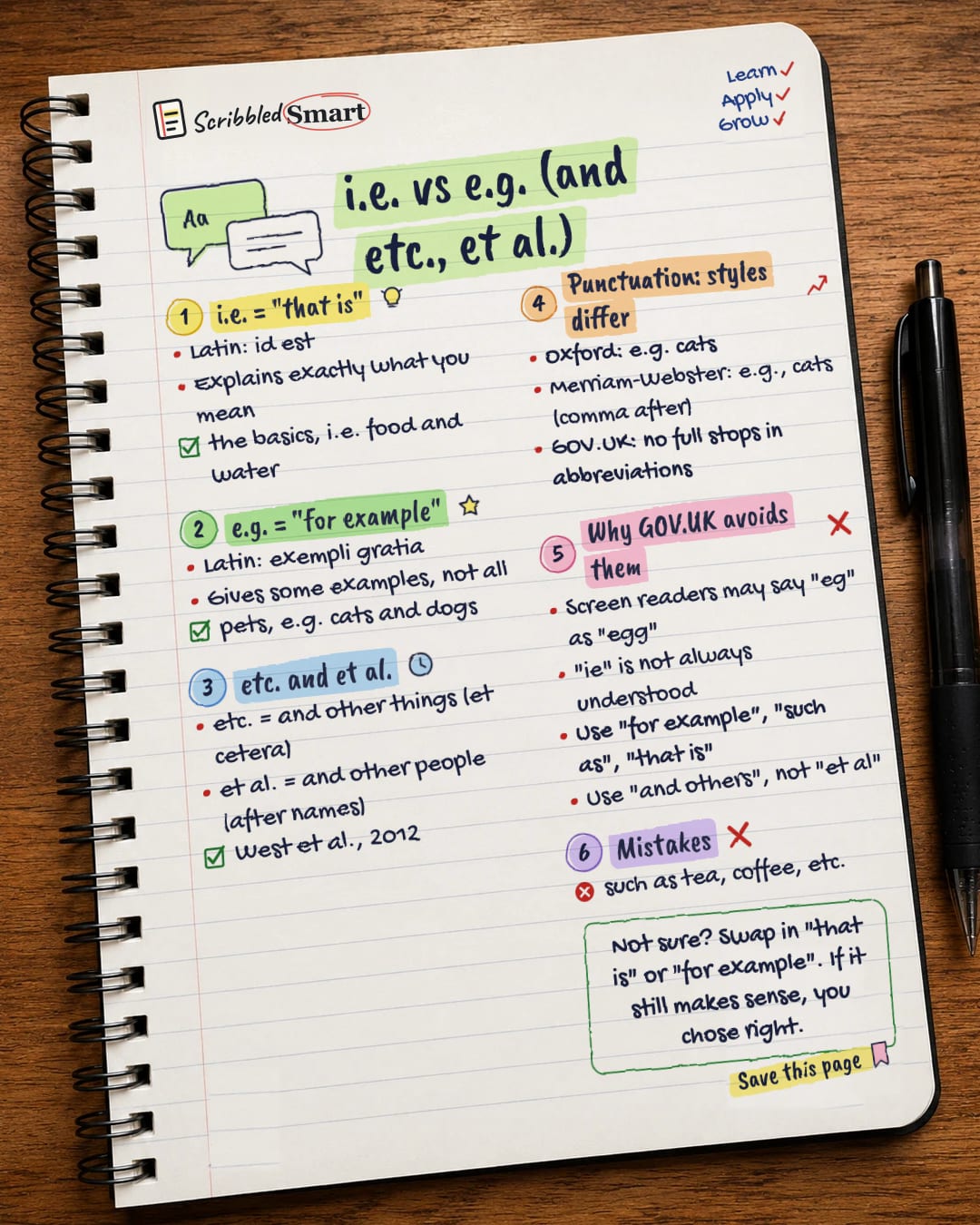
i.e. = "that is"
- Latin: id est
- Explains exactly what you mean
- the basics, i.e. food and water
e.g. = "for example"
- Latin: exempli gratia
- Gives some examples, not all
- pets, e.g. cats and dogs
etc. and et al.
- etc. = and other things (et cetera)
- et al. = and other people (after names)
- West et al., 2012
Punctuation: styles differ
- Oxford: e.g. cats
- Merriam-Webster: e.g., cats (comma after)
- GOV.UK: no full stops in abbreviations
Why GOV.UK avoids them
- Screen readers may say "eg" as "egg"
- "ie" is not always understood
- Use "for example", "such as", "that is"
- Use "and others", not "et al"
Mistakes
- such as tea, coffee, etc.
Sources
How we checked this
Every fact on this note comes from the 6 sources listed here, checked against official or peer-reviewed sources where possible. AI tools help with drafting; a person checks every fact against the sources. How we research
Spotted a mistake? Tell us and we'll fix it and log it on the corrections page.


