
Life skills One-page note UK
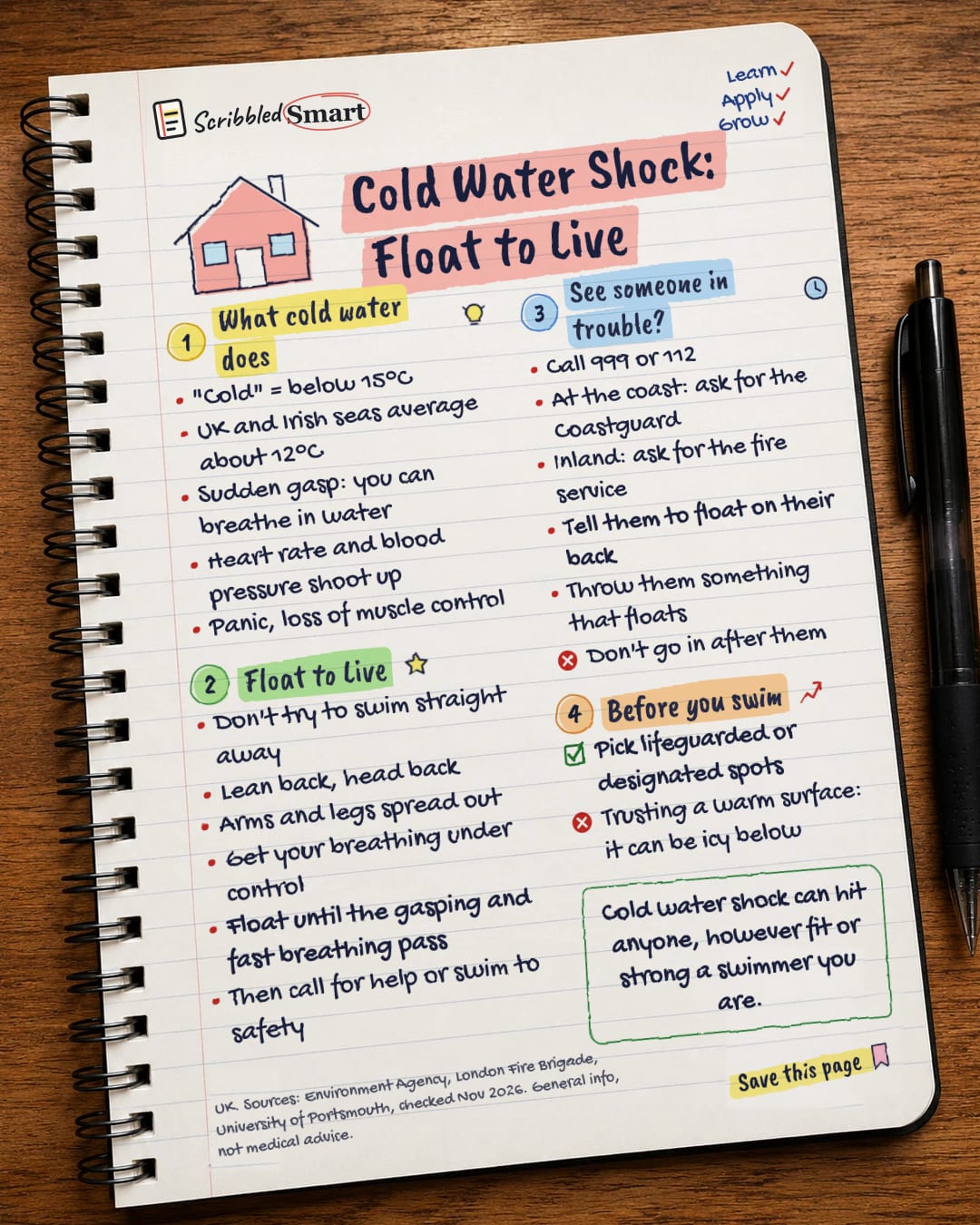
Cold Water Shock: Float to Live
Fall into cold water and your body's first move is a gasp. Don't swim for it yet. Lean back, float, and wait for the gasping to pass. Save this page.
Good to know
UK. Sources: Environment Agency, London Fire Brigade, University of Portsmouth, checked Nov 2026. General info, not medical advice.
What's on the page
The note as text, so you can read it, copy it or use a screen reader.
What cold water does
- "Cold" = below 15°C
- UK and Irish seas average about 12°C
- Sudden gasp: you can breathe in water
- Heart rate and blood pressure shoot up
- Panic, loss of muscle control
Float to Live
- Don't try to swim straight away
- Lean back, head back
- Arms and legs spread out
- Get your breathing under control
- Float until the gasping and fast breathing pass
- Then call for help or swim to safety
See someone in trouble?
- Call 999 or 112
- At the coast: ask for the Coastguard
- Inland: ask for the fire service
- Tell them to float on their back
- Throw them something that floats
- Don't go in after them
Before you swim
- Pick lifeguarded or designated spots
- Trusting a warm surface: it can be icy below
Sources
- Environment Agency (GOV.UK news): Parents urged to help spread summer safety messages on the Medway (2 Aug 2023)
- Environment Agency (GOV.UK news): Environment Agency teams up with Fire & Rescue Service (20 Jul 2023)
- London Fire Brigade: Survival and rescue
- University of Portsmouth: Float and relax: How our drowning prevention research saves lives (6 Oct 2022)
How we checked this
Every fact on this note comes from the 4 sources listed here, checked against official or peer-reviewed sources where possible. AI tools help with drafting; a person checks every fact against the sources. How we research
Spotted a mistake? Tell us and we'll fix it and log it on the corrections page.


