
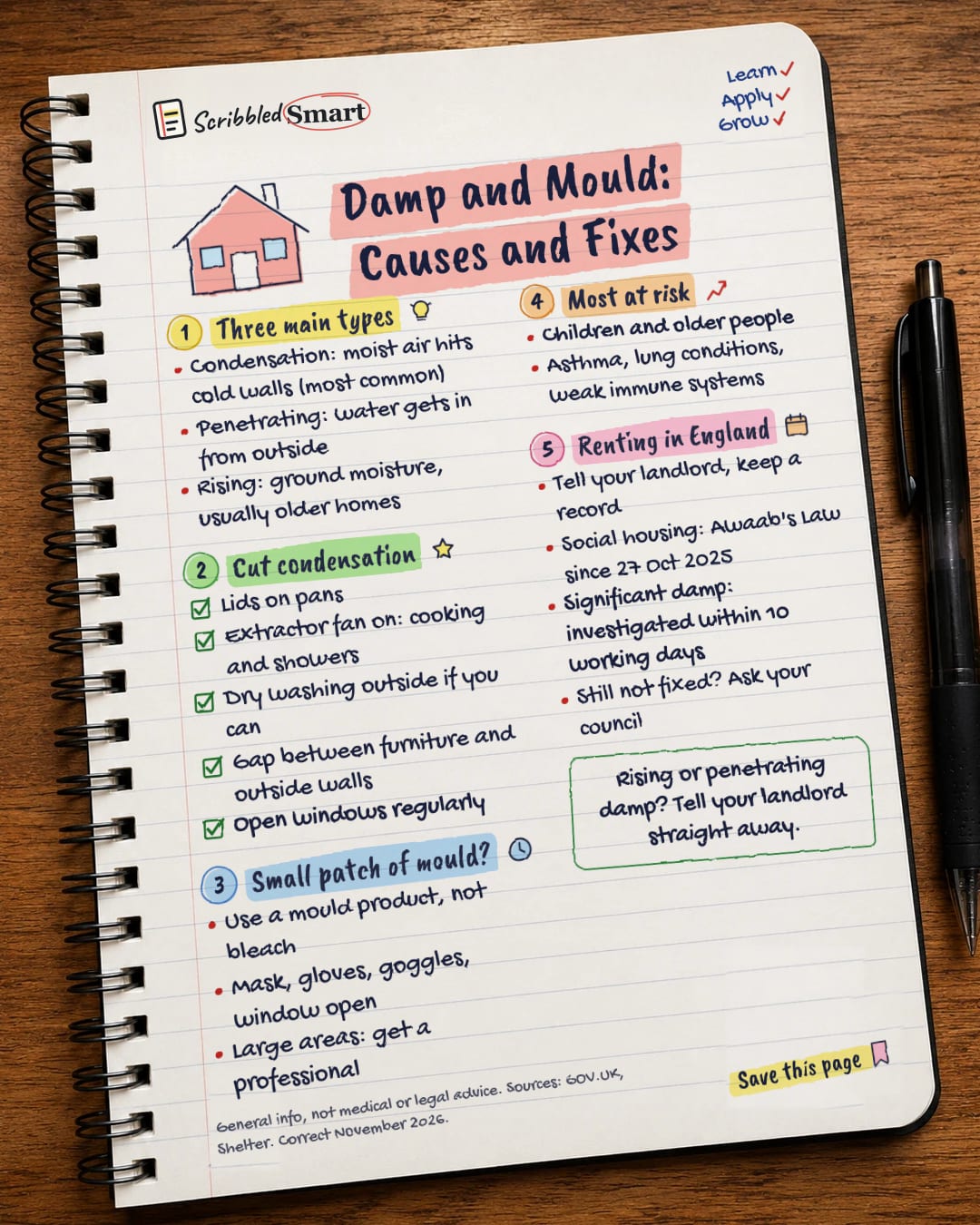
Life skills One-page note UK (renting rules: England)
Damp and Mould: Causes and Fixes
Black spots on the wall again? What causes damp, how to cut it, and your rights if you rent, in one page. Save this page.
Good to know
General info, not medical or legal advice. Sources: GOV.UK, Shelter. Correct November 2026.
What's on the page
The note as text, so you can read it, copy it or use a screen reader.
Three main types
- Condensation: moist air hits cold walls (most common)
- Penetrating: water gets in from outside
- Rising: ground moisture, usually older homes
Cut condensation
- Lids on pans
- Extractor fan on: cooking and showers
- Dry washing outside if you can
- Gap between furniture and outside walls
- Open windows regularly
Small patch of mould?
- Use a mould product, not bleach
- Mask, gloves, goggles, window open
- Large areas: get a professional
Most at risk
- Children and older people
- Asthma, lung conditions, weak immune systems
Renting in England
- Tell your landlord, keep a record
- Social housing: Awaab's Law since 27 Oct 2025
- Significant damp: investigated within 10 working days
- Still not fixed? Ask your council
Sources
- GOV.UK (DHSC/MHCLG): Understanding and addressing the health risks of damp and mould in the home
- GOV.UK: Millions of tenants safe from black mould through Awaab's Law (27 Oct 2025)
- GOV.UK: Awaab's Law – guidance for tenants in social housing
- GOV.UK: Extending Awaab's Law to private rented tenancies and to licences (consultation)
- MHCLG blog: Tackling dangerous homes – private renters closer to faster repairs (9 Oct 2026)
- Shelter England: Damp and mould in rented homes
How we checked this
Every fact on this note comes from the 6 sources listed here, checked against official or peer-reviewed sources where possible. AI tools help with drafting; a person checks every fact against the sources. How we research
Spotted a mistake? Tell us and we'll fix it and log it on the corrections page.


