
Life skills One-page note
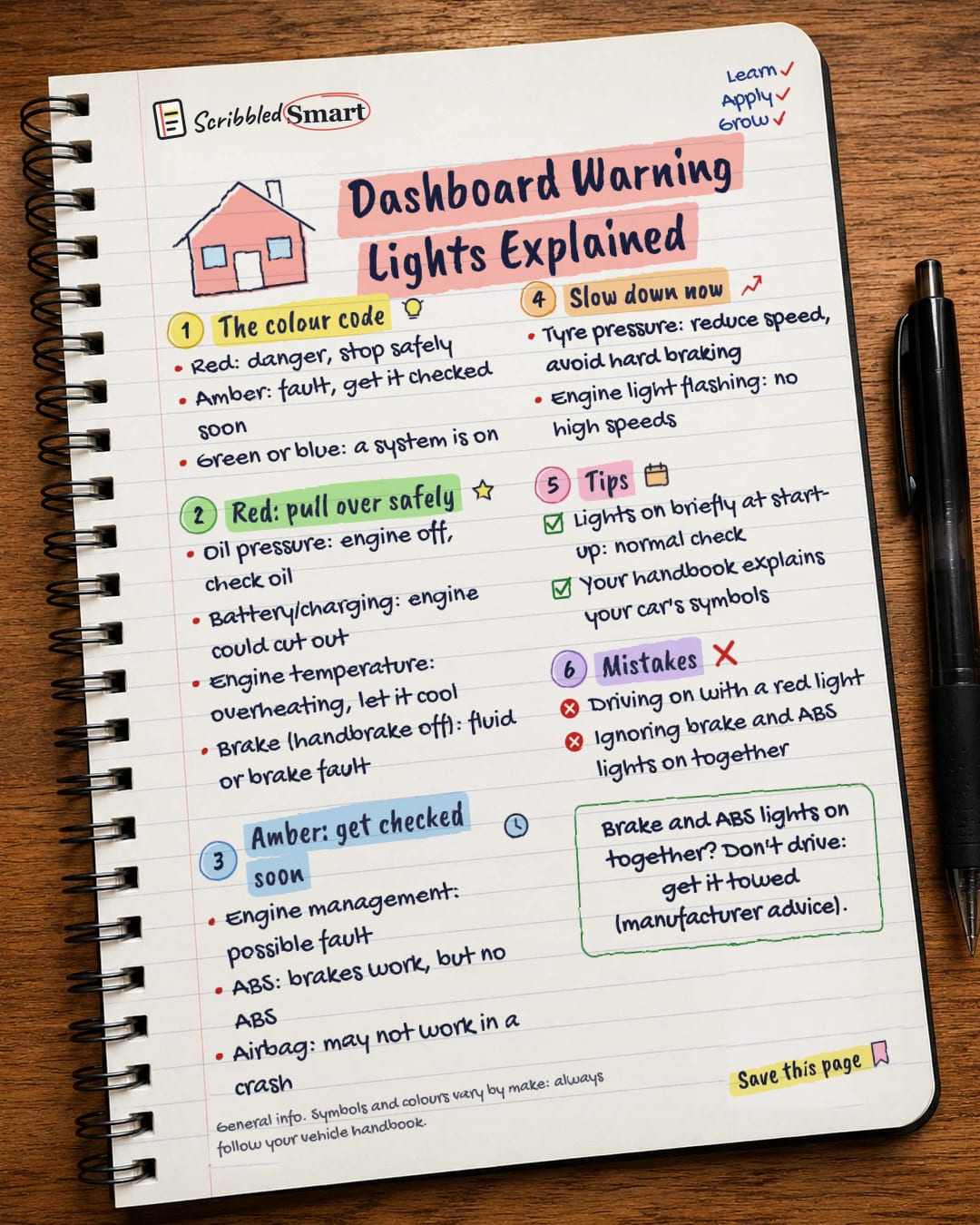
Dashboard Warning Lights Explained
Red, amber or green? What your dashboard is trying to tell you, and when to pull over now, in one page. Save this page.
Good to know
General info. Symbols and colours vary by make: always follow your vehicle handbook.
What's on the page
The note as text, so you can read it, copy it or use a screen reader.
The colour code
- Red: danger, stop safely
- Amber: fault, get it checked soon
- Green or blue: a system is on
Red: pull over safely
- Oil pressure: engine off, check oil
- Battery/charging: engine could cut out
- Engine temperature: overheating, let it cool
- Brake (handbrake off): fluid or brake fault
Amber: get checked soon
- Engine management: possible fault
- ABS: brakes work, but no ABS
- Airbag: may not work in a crash
Slow down now
- Tyre pressure: reduce speed, avoid hard braking
- Engine light flashing: no high speeds
Tips
- Lights on briefly at start-up: normal check
- Your handbook explains your car's symbols
Mistakes
- Driving on with a red light
- Ignoring brake and ABS lights on together
Sources
- Mazda: Mazda6 (2021) owner's manual – Stop vehicle in safe place immediately
- Mazda: Mazda6 (2021) owner's manual – Contact Authorized Mazda dealer and have vehicle inspected
- DVSA (GOV.UK): MOT inspection manual for cars – 8. Nuisance (8.2.1.2)
- ISO: ISO 2575:2021 Road vehicles – Symbols for controls, indicators and tell-tales
- RAC: Dashboard warning lights: all symbols explained
How we checked this
Every fact on this note comes from the 5 sources listed here, checked against official or peer-reviewed sources where possible. AI tools help with drafting; a person checks every fact against the sources. How we research
Spotted a mistake? Tell us and we'll fix it and log it on the corrections page.


