
Life skills One-page note Great Britain
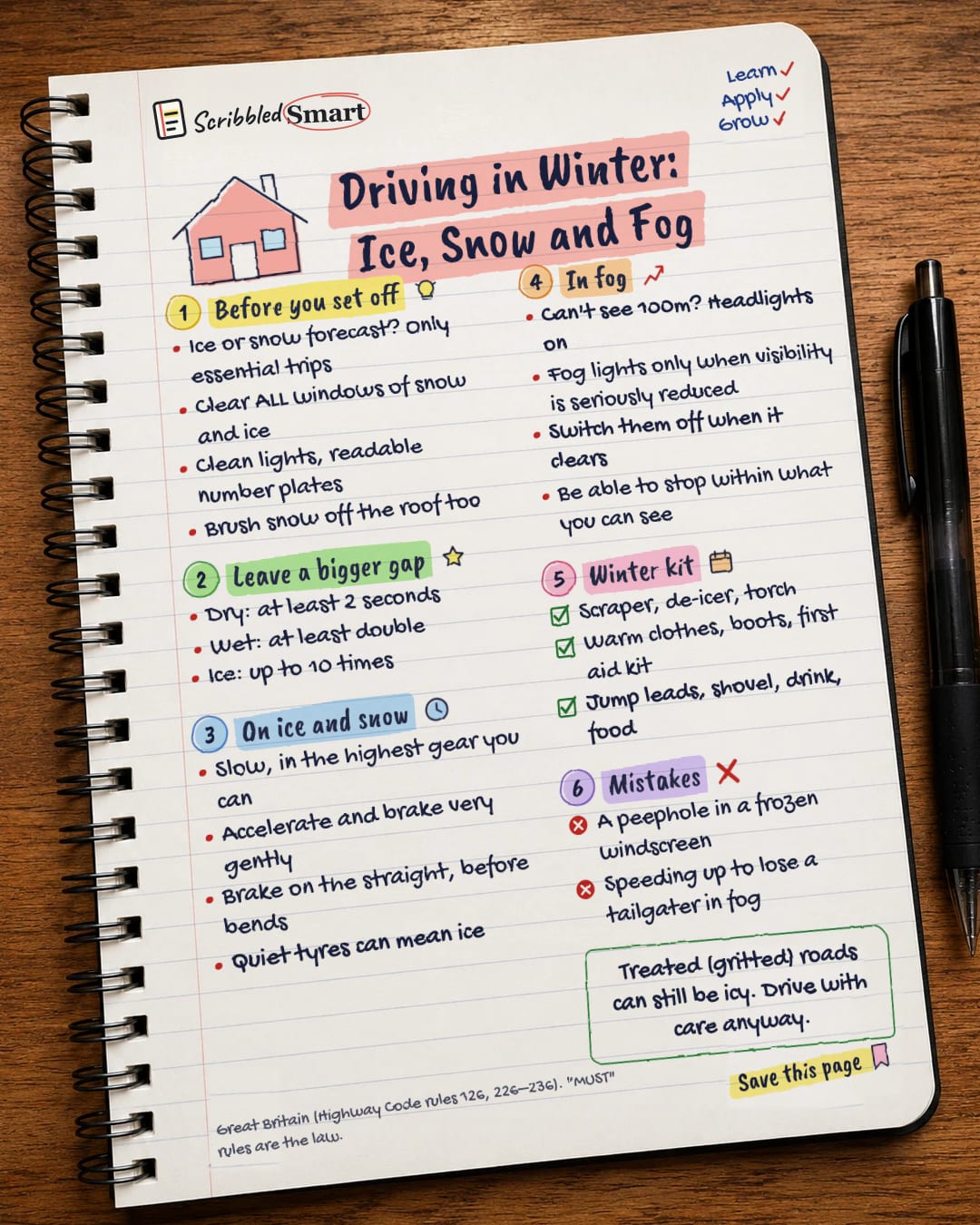
Driving in Winter: Ice, Snow and Fog
Up to 10 times the stopping distance on ice. How to drive safely in ice, snow and fog, straight from the Highway Code, in one page. Save this page.
Good to know
Great Britain (Highway Code rules 126, 226–236). "MUST" rules are the law.
What's on the page
The note as text, so you can read it, copy it or use a screen reader.
Before you set off
- Ice or snow forecast? Only essential trips
- Clear ALL windows of snow and ice
- Clean lights, readable number plates
- Brush snow off the roof too
Leave a bigger gap
- Dry: at least 2 seconds
- Wet: at least double
- Ice: up to 10 times
On ice and snow
- Slow, in the highest gear you can
- Accelerate and brake very gently
- Brake on the straight, before bends
- Quiet tyres can mean ice
In fog
- Can't see 100m? Headlights on
- Fog lights only when visibility is seriously reduced
- Switch them off when it clears
- Be able to stop within what you can see
Winter kit
- Scraper, de-icer, torch
- Warm clothes, boots, first aid kit
- Jump leads, shovel, drink, food
Mistakes
- A peephole in a frozen windscreen
- Speeding up to lose a tailgater in fog
Sources
How we checked this
Every fact on this note comes from the 3 sources listed here, checked against official or peer-reviewed sources where possible. AI tools help with drafting; a person checks every fact against the sources. How we research
Spotted a mistake? Tell us and we'll fix it and log it on the corrections page.


