
Money One-page note
Bailiffs and Debt Collectors: Your Rights
A debt collector is not a bailiff, and neither can push past you at the door. Know your rights before the knock. Save this page.
Good to know
England only; Scotland has a different process. Criminal fines, Income Tax and Stamp Duty: bailiffs may force entry as a last resort. General info, not legal advice.
What's on the page
The note as text, so you can read it, copy it or use a screen reader.
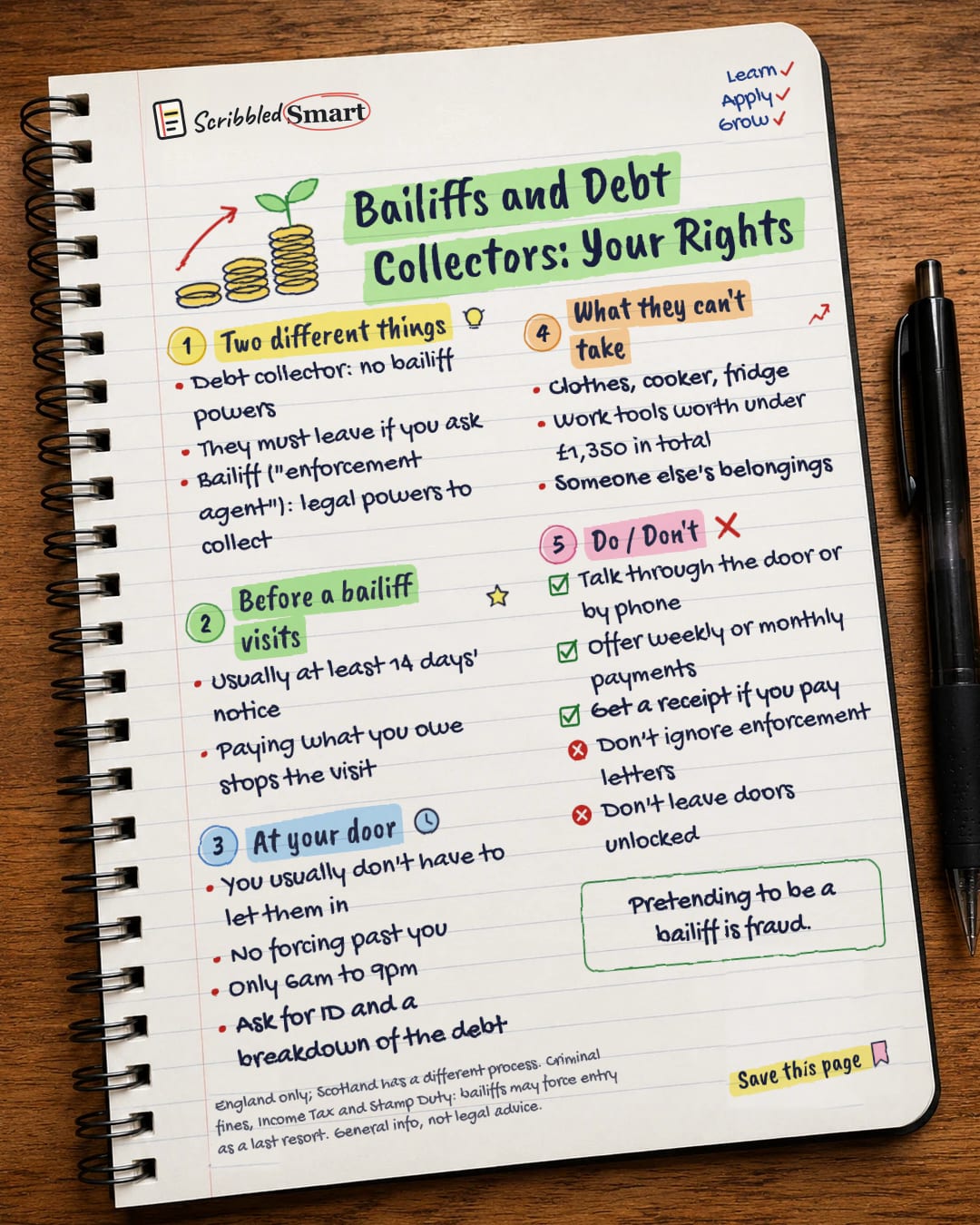
Two different things
- Debt collector: no bailiff powers
- They must leave if you ask
- Bailiff ("enforcement agent"): legal powers to collect
Before a bailiff visits
- Usually at least 14 days' notice
- Paying what you owe stops the visit
At your door
- You usually don't have to let them in
- No forcing past you
- Only 6am to 9pm
- Ask for ID and a breakdown of the debt
What they can't take
- Clothes, cooker, fridge
- Work tools worth under £1,350 in total
- Someone else's belongings
Do / Don't
- Talk through the door or by phone
- Offer weekly or monthly payments
- Get a receipt if you pay
- Don't ignore enforcement letters
- Don't leave doors unlocked
Sources
How we checked this
Every fact on this note comes from the 5 sources listed here, checked against official or peer-reviewed sources where possible. AI tools help with drafting; a person checks every fact against the sources. How we research
Spotted a mistake? Tell us and we'll fix it and log it on the corrections page.


