
Money One-page note
Risk vs Return: How Investing Risk Works
Why can't you get big returns with no risk? The risk vs return trade-off, explained on one page. Save this page.
Good to know
General info, not financial advice. Investments can go down as well as up.
What's on the page
The note as text, so you can read it, copy it or use a screen reader.
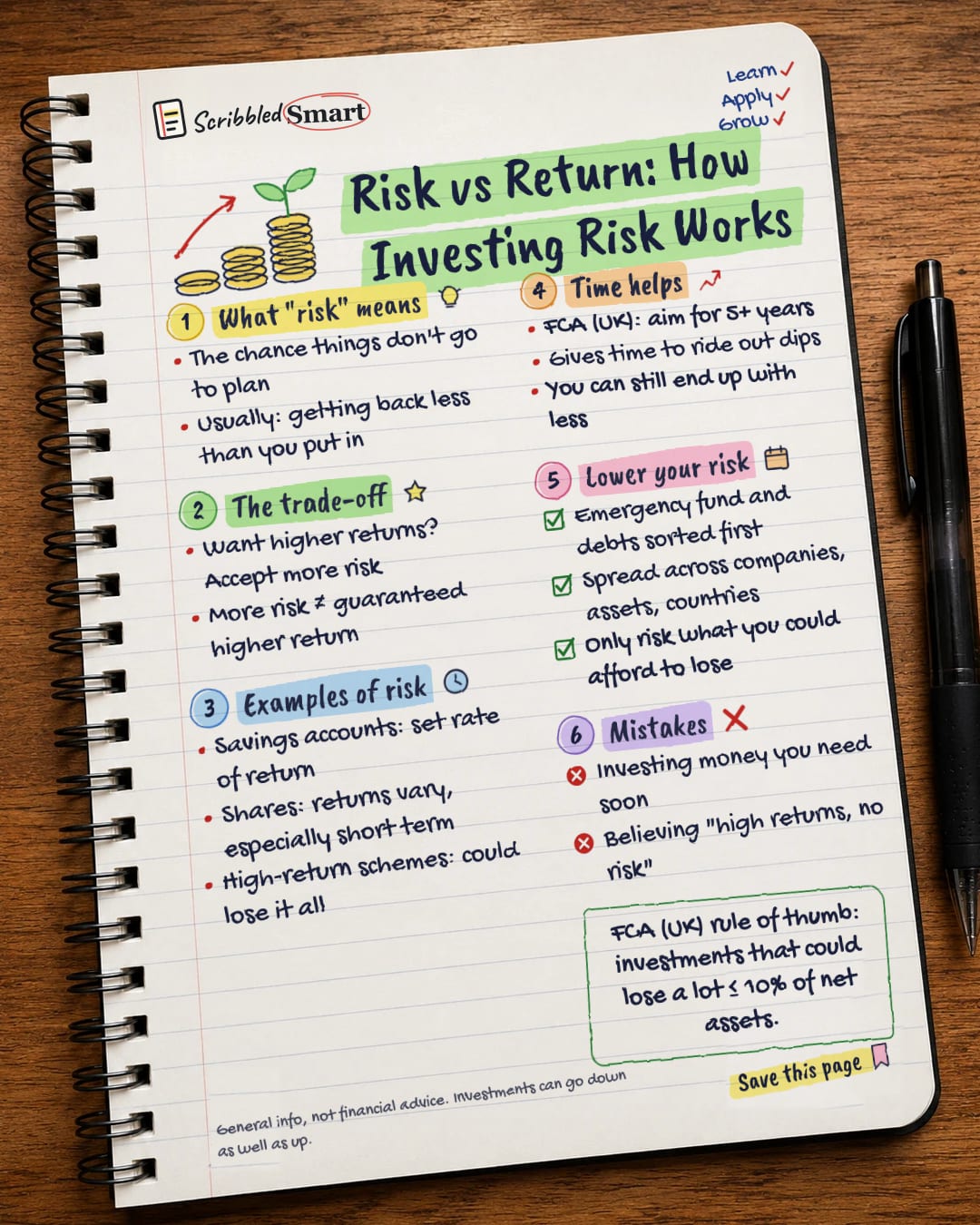
What "risk" means
- The chance things don't go to plan
- Usually: getting back less than you put in
The trade-off
- Want higher returns? Accept more risk
- More risk ≠ guaranteed higher return
Examples of risk
- Savings accounts: set rate of return
- Shares: returns vary, especially short term
- High-return schemes: could lose it all
Time helps
- FCA (UK): aim for 5+ years
- Gives time to ride out dips
- You can still end up with less
Lower your risk
- Emergency fund and debts sorted first
- Spread across companies, assets, countries
- Only risk what you could afford to lose
Mistakes
- Investing money you need soon
- Believing "high returns, no risk"
Sources
How we checked this
Every fact on this note comes from the 4 sources listed here, checked against official or peer-reviewed sources where possible. AI tools help with drafting; a person checks every fact against the sources. How we research
Spotted a mistake? Tell us and we'll fix it and log it on the corrections page.


