
Money One-page note UK only
Easy Access vs Fixed vs Regular Saver
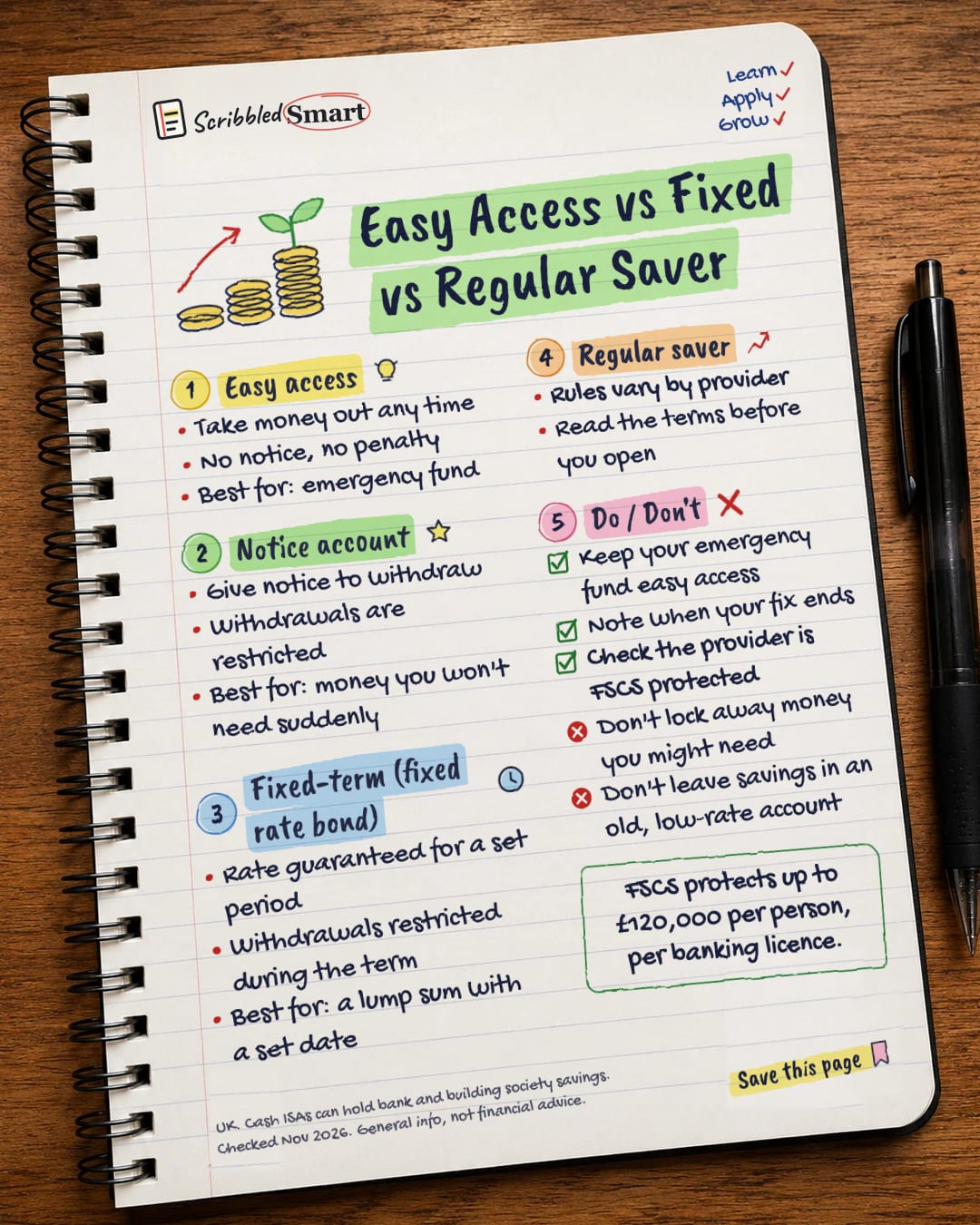
Not all savings accounts are the same. Pick the one that matches when you'll need the money. Save this page.
Good to know
UK. Cash ISAs can hold bank and building society savings. Checked Nov 2026. General info, not financial advice.
What's on the page
The note as text, so you can read it, copy it or use a screen reader.
Easy access
- Take money out any time
- No notice, no penalty
- Best for: emergency fund
Notice account
- Give notice to withdraw
- Withdrawals are restricted
- Best for: money you won't need suddenly
Fixed-term (fixed rate bond)
- Rate guaranteed for a set period
- Withdrawals restricted during the term
- Best for: a lump sum with a set date
Regular saver
- Rules vary by provider
- Read the terms before you open
Do / Don't
- Keep your emergency fund easy access
- Note when your fix ends
- Check the provider is FSCS protected
- Don't lock away money you might need
- Don't leave savings in an old, low-rate account
Sources
- FCA: Cash Savings Market Review 2023
- FCA: Cash saving remedies – consumer research
- FCA Handbook: BCOBS 2 Annex 1 Form of summary box for savings accounts
- FSCS: Check your money is protected
- Bank of England: Effective interest rates – September 2026
- HMRC: Tax-free savings newsletter 24 (October 2026)
How we checked this
Every fact on this note comes from the 6 sources listed here, checked against official or peer-reviewed sources where possible. AI tools help with drafting; a person checks every fact against the sources. How we research
Spotted a mistake? Tell us and we'll fix it and log it on the corrections page.


