
Productivity One-page note
The 80/20 Rule (Pareto Principle)
Not everything you do counts the same. The 80/20 rule in one page. Save it.
What's on the page
The note as text, so you can read it, copy it or use a screen reader.
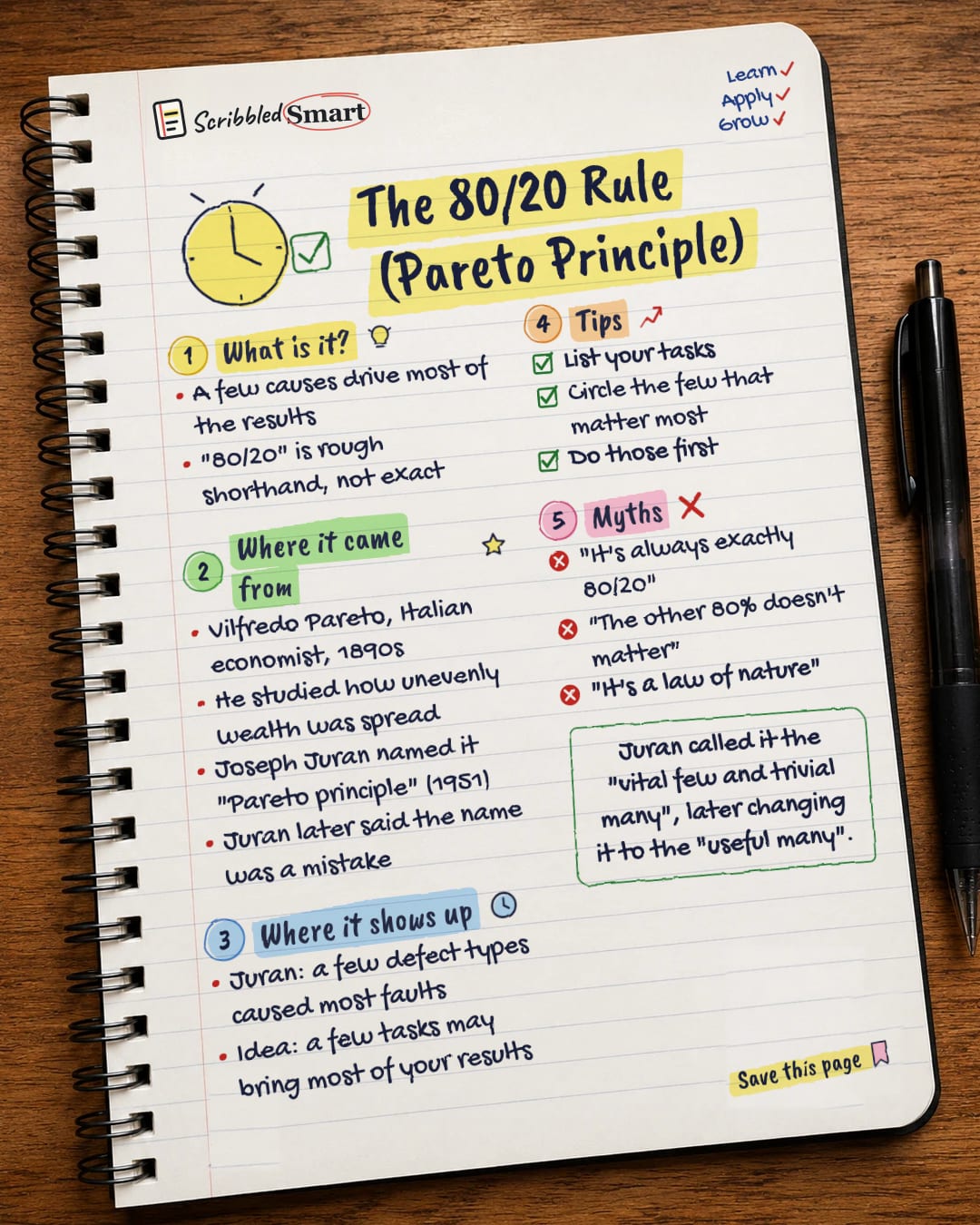
What is it?
- A few causes drive most of the results
- "80/20" is rough shorthand, not exact
Where it came from
- Vilfredo Pareto, Italian economist, 1890s
- He studied how unevenly wealth was spread
- Joseph Juran named it "Pareto principle" (1951)
- Juran later said the name was a mistake
Where it shows up
- Juran: a few defect types caused most faults
- Idea: a few tasks may bring most of your results
Tips
- List your tasks
- Circle the few that matter most
- Do those first
Myths
- "It's always exactly 80/20"
- "The other 80% doesn't matter"
- "It's a law of nature"
Sources
How we checked this
Every fact on this note comes from the 4 sources listed here, checked against official or peer-reviewed sources where possible. AI tools help with drafting; a person checks every fact against the sources. How we research
Spotted a mistake? Tell us and we'll fix it and log it on the corrections page.


