
Study One-page note
The Cornell Note-Taking Method
The famous 3-part note page, and the step that actually makes it work. Save this page.
What's on the page
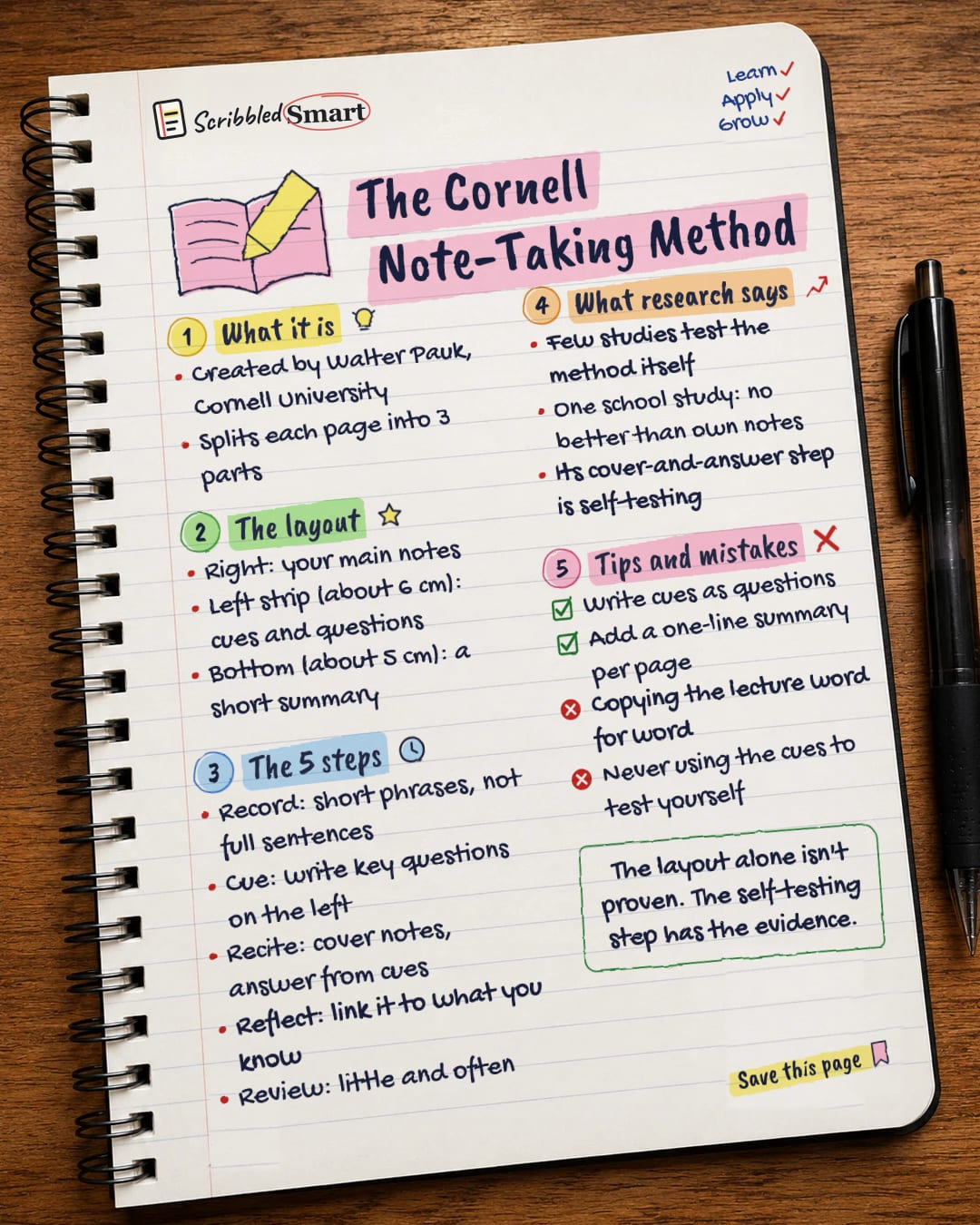
The note as text, so you can read it, copy it or use a screen reader.
What it is
- Created by Walter Pauk, Cornell University
- Splits each page into 3 parts
The layout
- Right: your main notes
- Left strip (about 6 cm): cues and questions
- Bottom (about 5 cm): a short summary
The 5 steps
- Record: short phrases, not full sentences
- Cue: write key questions on the left
- Recite: cover notes, answer from cues
- Reflect: link it to what you know
- Review: little and often
What research says
- Few studies test the method itself
- One school study: no better than own notes
- Its cover-and-answer step is self-testing
Tips and mistakes
- Write cues as questions
- Add a one-line summary per page
- Copying the lecture word for word
- Never using the cues to test yourself
Sources
How we checked this
Every fact on this note comes from the 4 sources listed here, checked against official or peer-reviewed sources where possible. AI tools help with drafting; a person checks every fact against the sources. How we research
Spotted a mistake? Tell us and we'll fix it and log it on the corrections page.


