
Study One-page note
Cramming: Why It Fails You Later
Cramming feels like it works. A week later, the science says otherwise. Save this page.
Good to know
Most studies used word lists and short texts.
What's on the page
The note as text, so you can read it, copy it or use a screen reader.
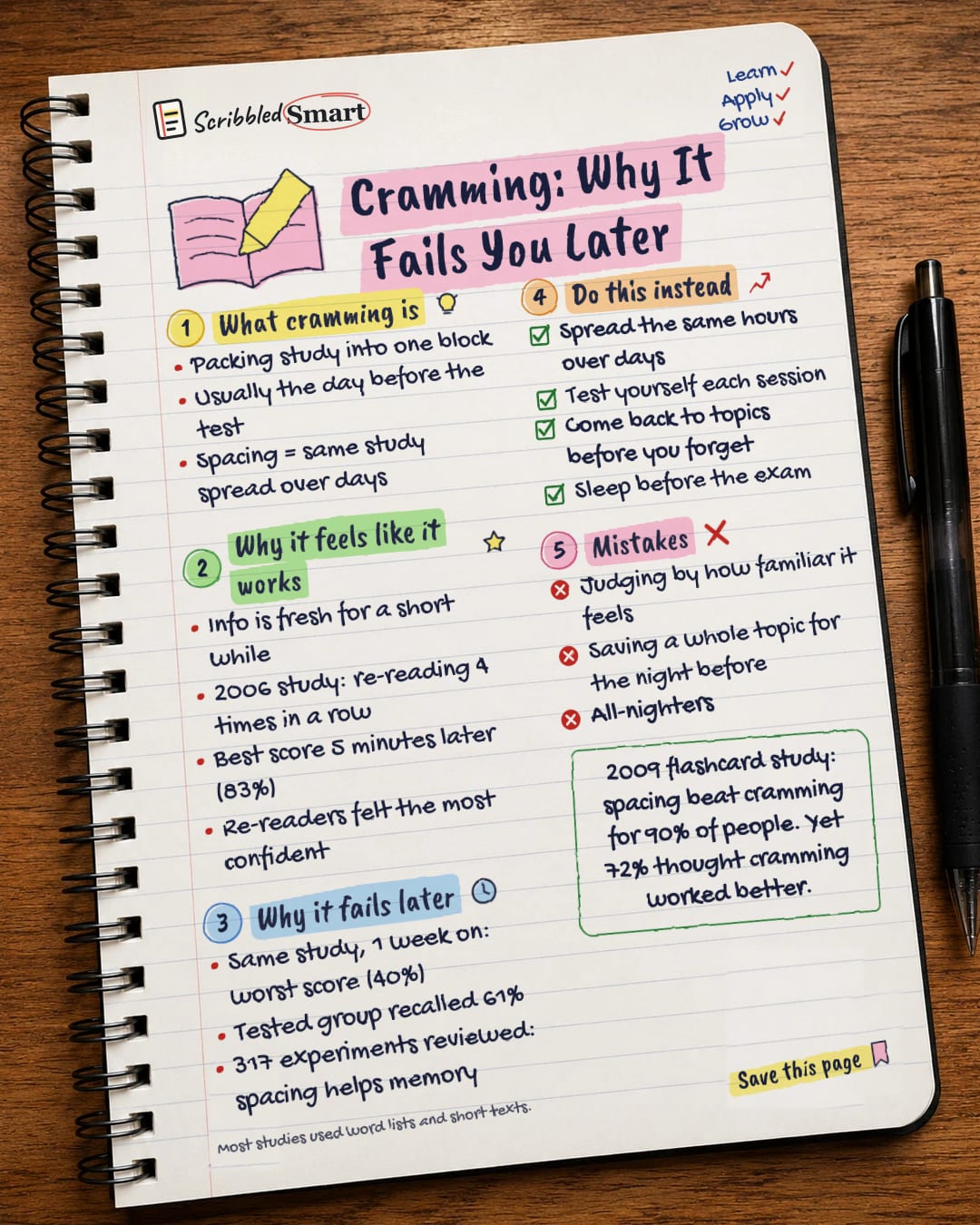
What cramming is
- Packing study into one block
- Usually the day before the test
- Spacing = same study spread over days
Why it feels like it works
- Info is fresh for a short while
- 2006 study: re-reading 4 times in a row
- Best score 5 minutes later (83%)
- Re-readers felt the most confident
Why it fails later
- Same study, 1 week on: worst score (40%)
- Tested group recalled 61%
- 317 experiments reviewed: spacing helps memory
Do this instead
- Spread the same hours over days
- Test yourself each session
- Come back to topics before you forget
- Sleep before the exam
Mistakes
- Judging by how familiar it feels
- Saving a whole topic for the night before
- All-nighters
Sources
How we checked this
Every fact on this note comes from the 5 sources listed here, checked against official or peer-reviewed sources where possible. AI tools help with drafting; a person checks every fact against the sources. How we research
Spotted a mistake? Tell us and we'll fix it and log it on the corrections page.


