
Study One-page note UK only
Mark Schemes: How Examiners Think
Ever wondered how examiners actually decide your mark? Here's how mark schemes work. Save this page.
Good to know
UK GCSE and A level. Each exam board's mark schemes differ: use your own board's.
What's on the page
The note as text, so you can read it, copy it or use a screen reader.
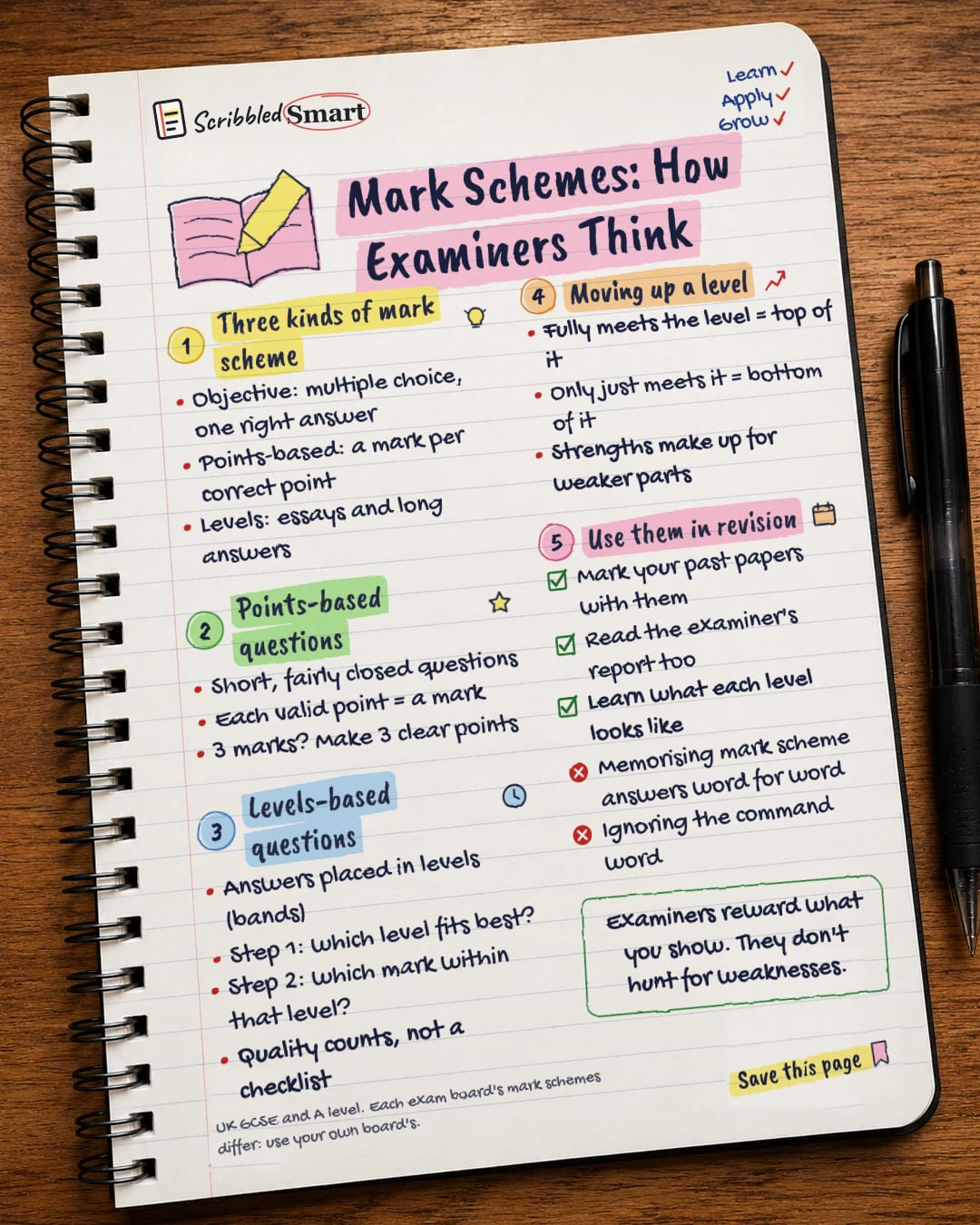
Three kinds of mark scheme
- Objective: multiple choice, one right answer
- Points-based: a mark per correct point
- Levels: essays and long answers
Points-based questions
- Short, fairly closed questions
- Each valid point = a mark
- 3 marks? Make 3 clear points
Levels-based questions
- Answers placed in levels (bands)
- Step 1: which level fits best?
- Step 2: which mark within that level?
- Quality counts, not a checklist
Moving up a level
- Fully meets the level = top of it
- Only just meets it = bottom of it
- Strengths make up for weaker parts
Use them in revision
- Mark your past papers with them
- Read the examiner's report too
- Learn what each level looks like
- Memorising mark scheme answers word for word
- Ignoring the command word
Sources
How we checked this
Every fact on this note comes from the 3 sources listed here, checked against official or peer-reviewed sources where possible. AI tools help with drafting; a person checks every fact against the sources. How we research
Spotted a mistake? Tell us and we'll fix it and log it on the corrections page.


