
Career One-page note UK only
Employee vs Worker vs Self-Employed (UK)
Employee, worker or self-employed? Your rights depend on it. Here's the difference. UK only. Save this page.
Good to know
UK employment law. Some rights need a minimum time in the job.
What's on the page
The note as text, so you can read it, copy it or use a screen reader.
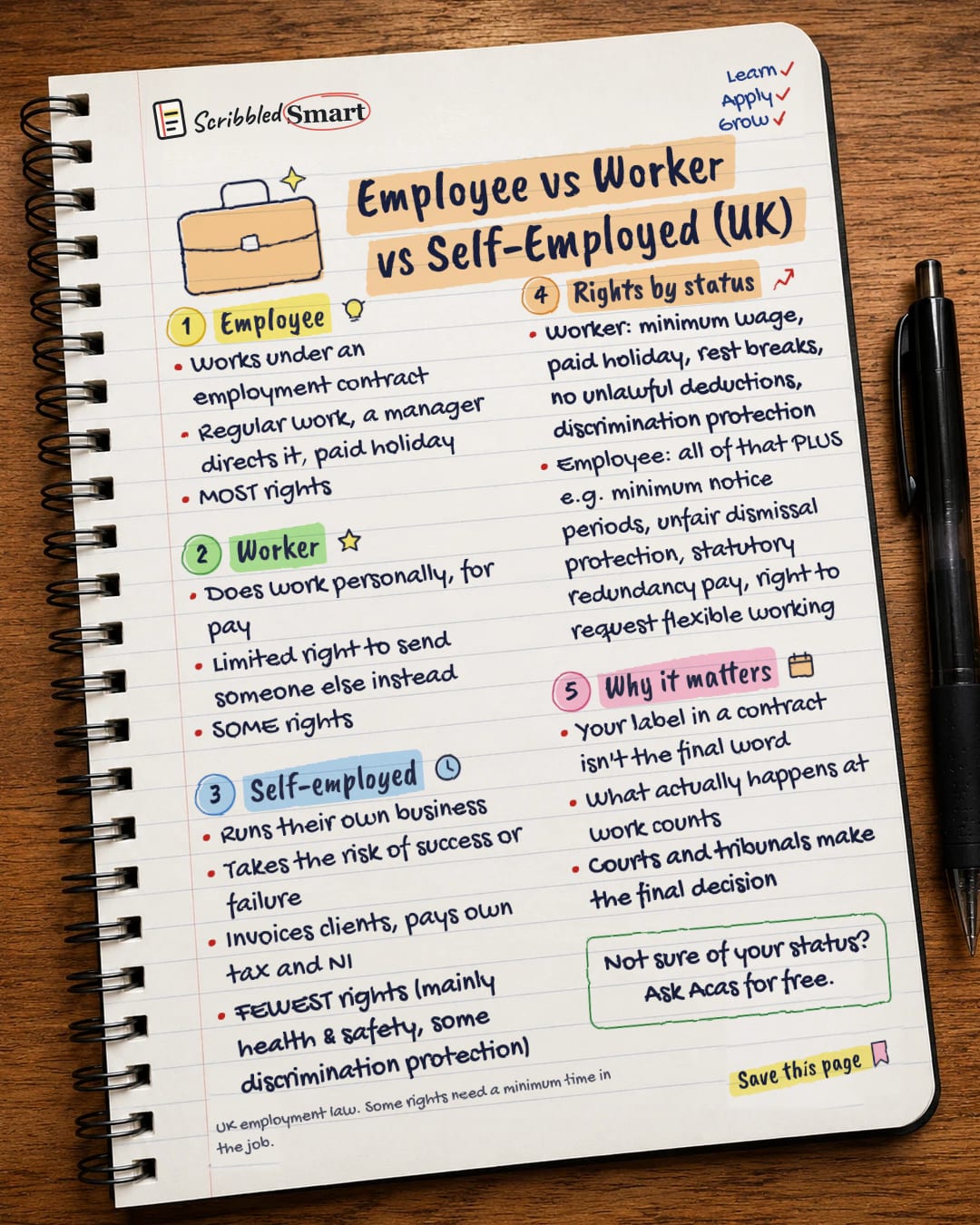
Employee
- Works under an employment contract
- Regular work, a manager directs it, paid holiday
- MOST rights
Worker
- Does work personally, for pay
- Limited right to send someone else instead
- SOME rights
Self-employed
- Runs their own business
- Takes the risk of success or failure
- Invoices clients, pays own tax and NI
- FEWEST rights (mainly health & safety, some discrimination protection)
Rights by status
- Worker: minimum wage, paid holiday, rest breaks, no unlawful deductions, discrimination protection
- Employee: all of that PLUS e.g. minimum notice periods, unfair dismissal protection, statutory redundancy pay, right to request flexible working
Why it matters
- Your label in a contract isn't the final word
- What actually happens at work counts
- Courts and tribunals make the final decision
Sources
How we checked this
Every fact on this note comes from the 4 sources listed here, checked against official or peer-reviewed sources where possible. AI tools help with drafting; a person checks every fact against the sources. How we research
Spotted a mistake? Tell us and we'll fix it and log it on the corrections page.


