
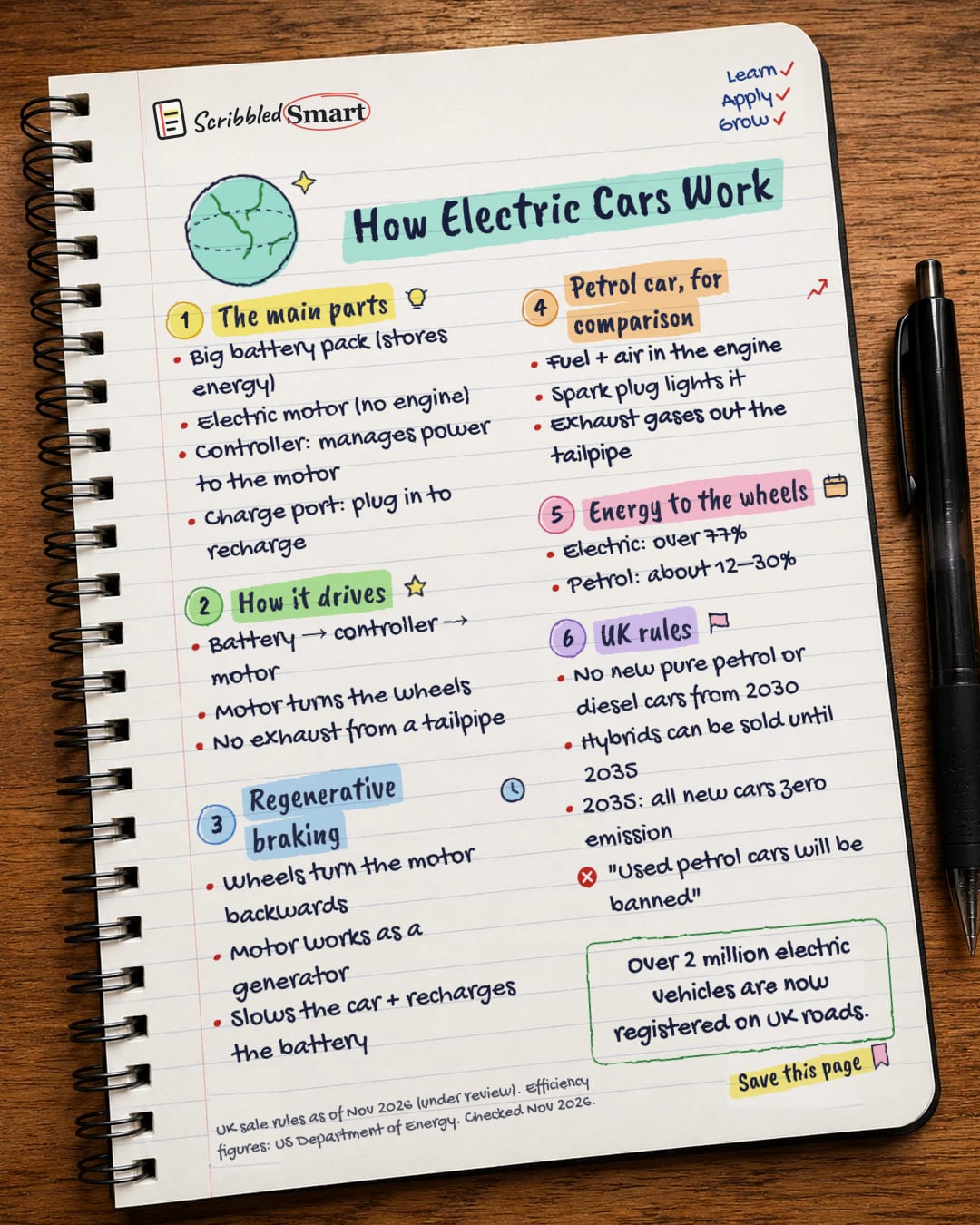
General knowledge One-page note UK only
How Electric Cars Work
No engine, no exhaust, and the brakes charge the battery. How an electric car actually works. Save this page.
Good to know
UK sale rules as of Nov 2026 (under review). Efficiency figures: US Department of Energy. Checked Nov 2026.
What's on the page
The note as text, so you can read it, copy it or use a screen reader.
The main parts
- Big battery pack (stores energy)
- Electric motor (no engine)
- Controller: manages power to the motor
- Charge port: plug in to recharge
How it drives
- Battery → controller → motor
- Motor turns the wheels
- No exhaust from a tailpipe
Regenerative braking
- Wheels turn the motor backwards
- Motor works as a generator
- Slows the car + recharges the battery
Petrol car, for comparison
- Fuel + air in the engine
- Spark plug lights it
- Exhaust gases out the tailpipe
Energy to the wheels
- Electric: over 77%
- Petrol: about 12–30%
UK rules
- No new pure petrol or diesel cars from 2030
- Hybrids can be sold until 2035
- 2035: all new cars zero emission
- "Used petrol cars will be banned"
Sources
- US DOE Alternative Fuels Data Center: How Do All-Electric Cars Work?
- US DOE Alternative Fuels Data Center: How Do Gasoline Cars Work?
- fueleconomy.gov: All-Electric Vehicles
- fueleconomy.gov: Hybrid animation – Braking
- GOV.UK (DfT): Review launched to shape pathway to reach zero emission driving by 2035 (14 Aug 2026)
- GOV.UK: Backing British business: Prime Minister unveils plan to support carmakers (6 Apr 2025)
- Full Fact: Government tracker – diesel and petrol new cars ban
How we checked this
Every fact on this note comes from the 7 sources listed here, checked against official or peer-reviewed sources where possible. AI tools help with drafting; a person checks every fact against the sources. How we research
Spotted a mistake? Tell us and we'll fix it and log it on the corrections page.


