
General knowledge One-page note UK only
How Renewable Energy Works
Over half the UK's electricity came from renewables in 2025. Here's how wind, sun and water actually make it. Save this page.
Good to know
UK figures: DESNZ, Digest of UK Energy Statistics 2026 (year 2025). Checked Nov 2026.
What's on the page
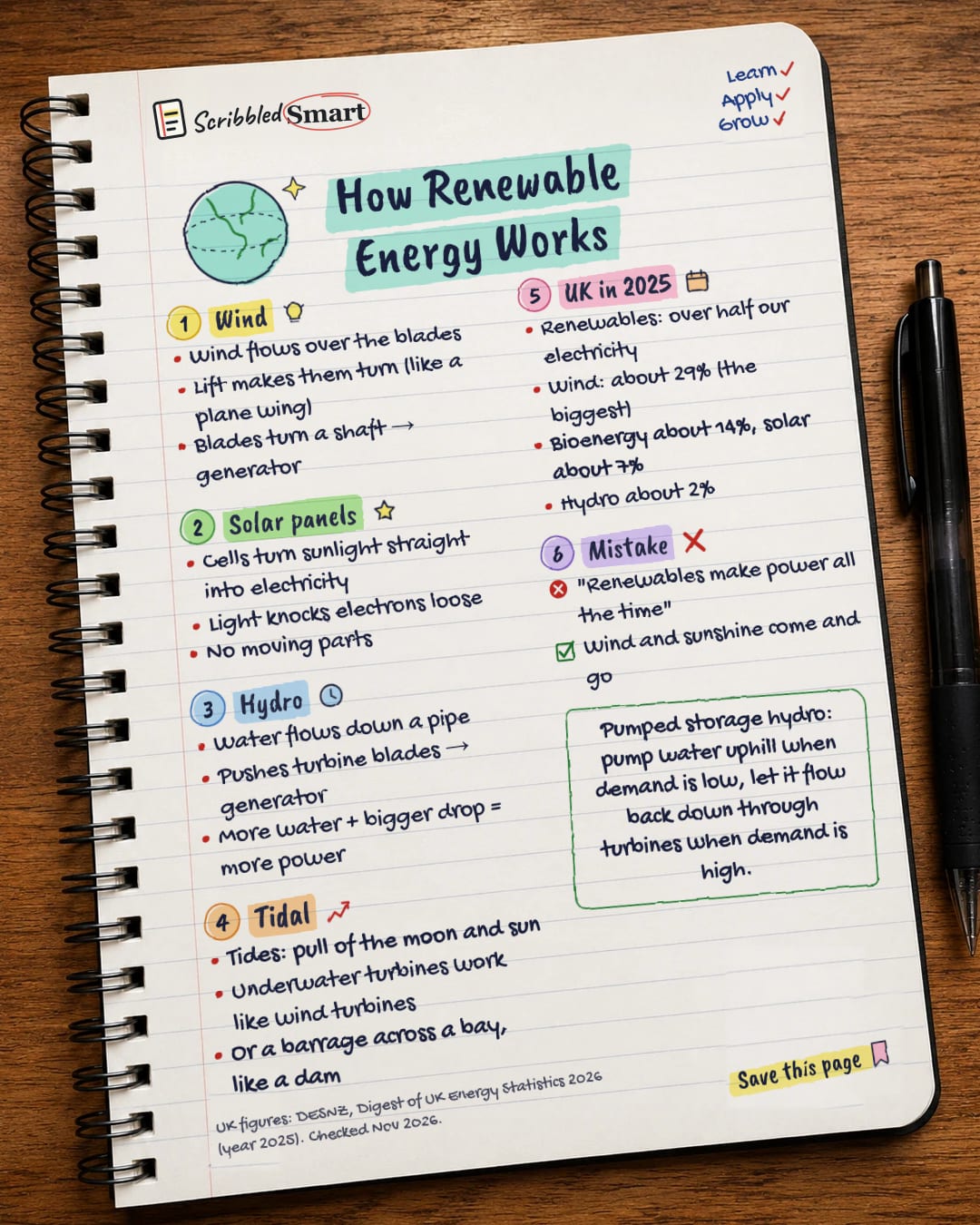
The note as text, so you can read it, copy it or use a screen reader.
Wind
- Wind flows over the blades
- Lift makes them turn (like a plane wing)
- Blades turn a shaft → generator
Solar panels
- Cells turn sunlight straight into electricity
- Light knocks electrons loose
- No moving parts
Hydro
- Water flows down a pipe
- Pushes turbine blades → generator
- More water + bigger drop = more power
Tidal
- Tides: pull of the moon and sun
- Underwater turbines work like wind turbines
- Or a barrage across a bay, like a dam
UK in 2025
- Renewables: over half our electricity
- Wind: about 29% (the biggest)
- Bioenergy about 14%, solar about 7%
- Hydro about 2%
Mistake
- "Renewables make power all the time"
- Wind and sunshine come and go
Sources
- DESNZ: Digest of UK Energy Statistics (DUKES) 2026, table 6.2 Capacity of, generation from renewable sources and shares of total generation
- DESNZ: DUKES renewable sources of energy (collection page)
- DESNZ: Energy Trends March 2026
- US EIA: Electricity generation from wind
- US EIA: Photovoltaics and electricity
- US EIA: Where solar is found and used
- US EIA: Hydropower explained
- US EIA: Tidal power
- US EIA: Glossary, intermittent
How we checked this
Every fact on this note comes from the 9 sources listed here, checked against official or peer-reviewed sources where possible. AI tools help with drafting; a person checks every fact against the sources. How we research
Spotted a mistake? Tell us and we'll fix it and log it on the corrections page.


