
General knowledge One-page note UK only
How the Heart Works
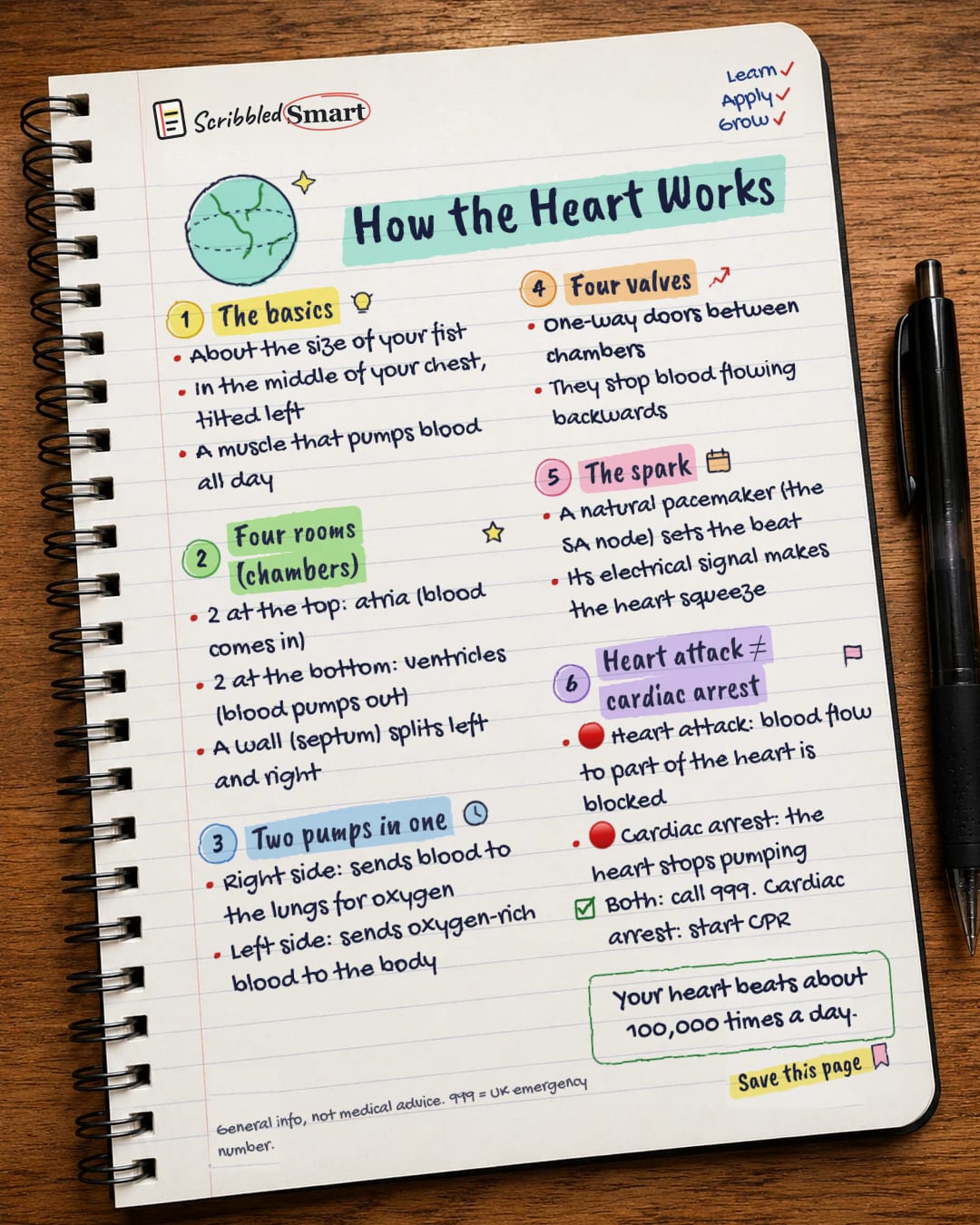
Your heart beats about 100,000 times a day. Here's how it works, in one page. Save this page.
Good to know
General info, not medical advice. 999 = UK emergency number.
What's on the page
The note as text, so you can read it, copy it or use a screen reader.
The basics
- About the size of your fist
- In the middle of your chest, tilted left
- A muscle that pumps blood all day
Four rooms (chambers)
- 2 at the top: atria (blood comes in)
- 2 at the bottom: ventricles (blood pumps out)
- A wall (septum) splits left and right
Two pumps in one
- Right side: sends blood to the lungs for oxygen
- Left side: sends oxygen-rich blood to the body
Four valves
- One-way doors between chambers
- They stop blood flowing backwards
The spark
- A natural pacemaker (the SA node) sets the beat
- Its electrical signal makes the heart squeeze
Heart attack ≠ cardiac arrest
- Heart attack: blood supply to the heart is blocked
- Cardiac arrest: the heart stops pumping
- Both: call 999. Cardiac arrest: start CPR
Sources
How we checked this
Every fact on this note comes from the 3 sources listed here, checked against official or peer-reviewed sources where possible. AI tools help with drafting; a person checks every fact against the sources. How we research
Spotted a mistake? Tell us and we'll fix it and log it on the corrections page.


