
General knowledge One-page note UK only
How UK Courts Work
Magistrates, Crown Court, Supreme Court: who decides what, and when do you get a jury? UK courts in one page. Save this page.
Good to know
England & Wales (Scotland and NI differ). Court reforms are going through Parliament. Checked Nov 2026. General info, not legal advice.
What's on the page
The note as text, so you can read it, copy it or use a screen reader.
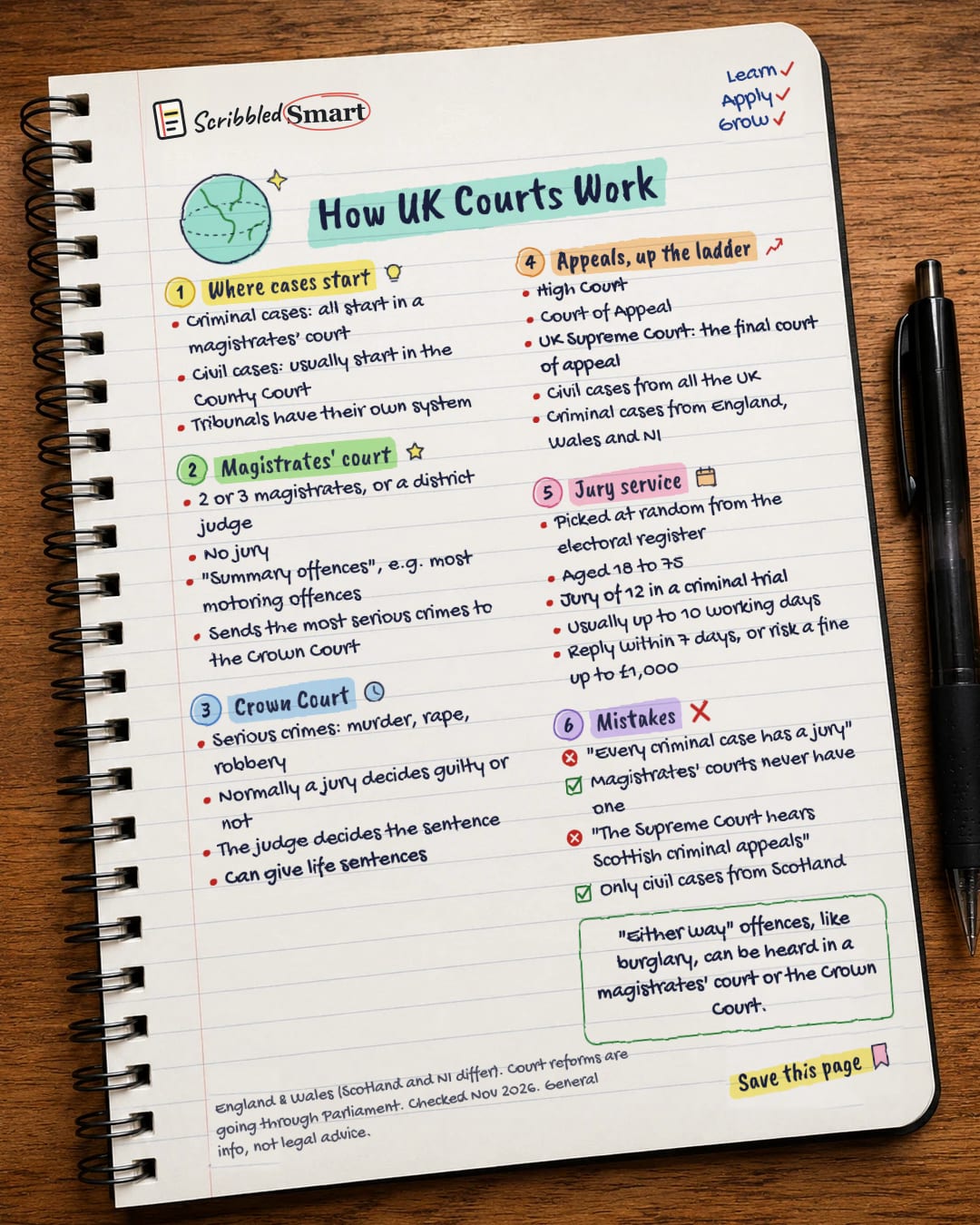
Where cases start
- Criminal cases: all start in a magistrates' court
- Civil cases: usually start in the County Court
- Tribunals have their own system
Magistrates' court
- 2 or 3 magistrates, or a district judge
- No jury
- "Summary offences", e.g. most motoring offences
- Sends the most serious crimes to the Crown Court
Crown Court
- Serious crimes: murder, rape, robbery
- Normally a jury decides guilty or not
- The judge decides the sentence
- Can give life sentences
Appeals, up the ladder
- High Court
- Court of Appeal
- UK Supreme Court: the final court of appeal
- Civil cases from all the UK
- Criminal cases from England, Wales and NI
Jury service
- Picked at random from the electoral register
- Aged 18 to 75
- Jury of 12 in a criminal trial
- Usually up to 10 working days
- Reply within 7 days, or risk a fine up to £1,000
Mistakes
- "Every criminal case has a jury"
- Magistrates' courts never have one
- "The Supreme Court hears Scottish criminal appeals"
- Only civil cases from Scotland
Sources
How we checked this
Every fact on this note comes from the 5 sources listed here, checked against official or peer-reviewed sources where possible. AI tools help with drafting; a person checks every fact against the sources. How we research
Spotted a mistake? Tell us and we'll fix it and log it on the corrections page.


