
General knowledge One-page note UK only
How UK Government Works
Who actually runs the country: the PM, the Cabinet, ministers or civil servants? UK government in one page. Save this page.
Good to know
🇬🇧 UK. Counts from GOV.UK; they change with each reshuffle. Checked Nov 2026.
What's on the page
The note as text, so you can read it, copy it or use a screen reader.
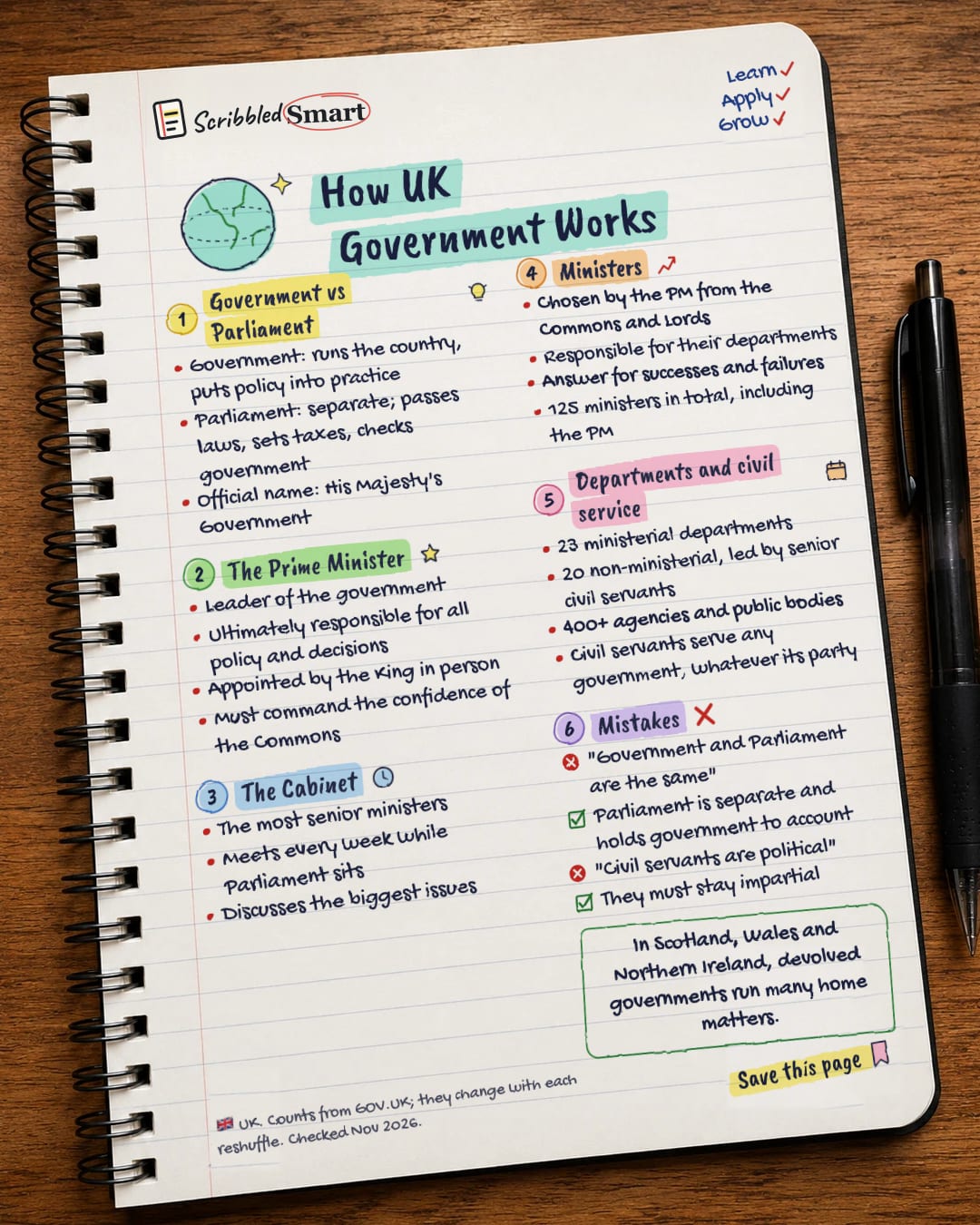
Government vs Parliament
- Government: runs the country, puts policy into practice
- Parliament: separate; passes laws, sets taxes, checks government
- Official name: His Majesty's Government
The Prime Minister
- Leader of the government
- Ultimately responsible for all policy and decisions
- Appointed by the King in person
- Must command the confidence of the Commons
The Cabinet
- The most senior ministers
- Meets every week while Parliament sits
- Discusses the biggest issues
Ministers
- Chosen by the PM from the Commons and Lords
- Responsible for their departments
- Answer for successes and failures
- 125 ministers in total, including the PM
Departments and civil service
- 23 ministerial departments
- 20 non-ministerial, led by senior civil servants
- 400+ agencies and public bodies
- Civil servants serve any government, whatever its party
Mistakes
- "Government and Parliament are the same"
- Parliament is separate and holds government to account
- "Civil servants are political"
- They must stay impartial
Sources
How we checked this
Every fact on this note comes from the 3 sources listed here, checked against official or peer-reviewed sources where possible. AI tools help with drafting; a person checks every fact against the sources. How we research
Spotted a mistake? Tell us and we'll fix it and log it on the corrections page.


