
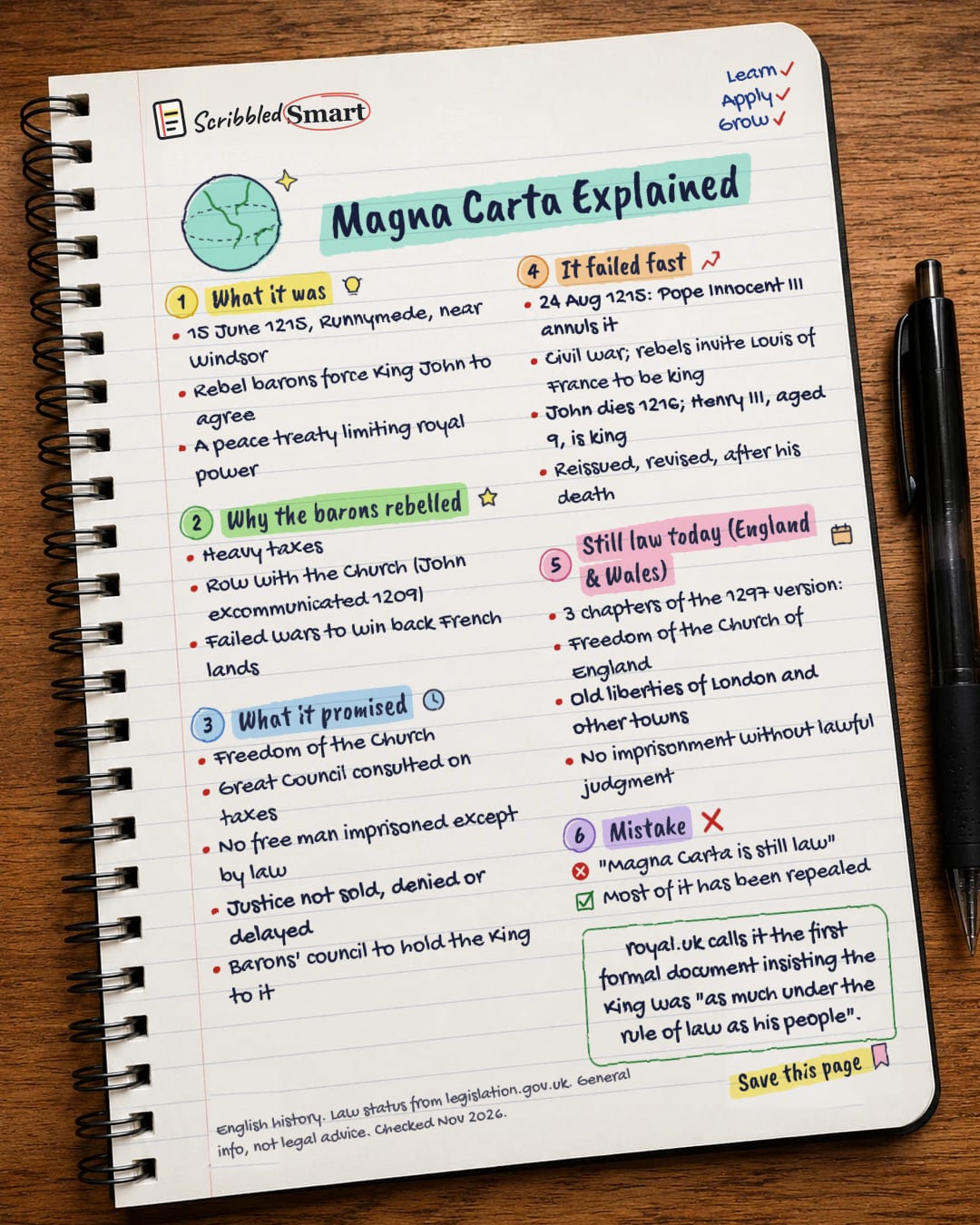
General knowledge One-page note
Magna Carta Explained
A king, a meadow and a promise that lasted ten weeks. Magna Carta in one page. Save this page.
Good to know
English history. Law status from legislation.gov.uk. General info, not legal advice. Checked Nov 2026.
What's on the page
The note as text, so you can read it, copy it or use a screen reader.
What it was
- 15 June 1215, Runnymede, near Windsor
- Rebel barons force King John to agree
- A peace treaty limiting royal power
Why the barons rebelled
- Heavy taxes
- Row with the Church (John excommunicated 1209)
- Failed wars to win back French lands
What it promised
- Freedom of the Church
- Great Council consulted on taxes
- No free man imprisoned except by law
- Justice not sold, denied or delayed
- Barons' council to hold the King to it
It failed fast
- 24 Aug 1215: Pope Innocent III annuls it
- Civil war; rebels invite Louis of France to be king
- John dies 1216; Henry III, aged 9, is king
- Reissued, revised, after his death
Still law today (England & Wales)
- 3 chapters of the 1297 version:
- Freedom of the Church of England
- Old liberties of London and other towns
- No imprisonment without lawful judgment
Mistake
- "Magna Carta is still law"
- Most of it has been repealed
Sources
- royal.uk: John Lackland (r. 1199-1216)
- legislation.gov.uk: Magna Carta (1297) contents; ch. I, IX, XXIX, XXX
- Magna Carta Project (University of East Anglia): Magna Carta 1215 translation
- Magna Carta Project: Feature of the month, October 2015
- British Library: Shameful and demeaning: the annulment of Magna Carta
- Runnymede Borough Council: Magna Carta
How we checked this
Every fact on this note comes from the 6 sources listed here, checked against official or peer-reviewed sources where possible. AI tools help with drafting; a person checks every fact against the sources. How we research
Spotted a mistake? Tell us and we'll fix it and log it on the corrections page.


