
General knowledge One-page note UK only
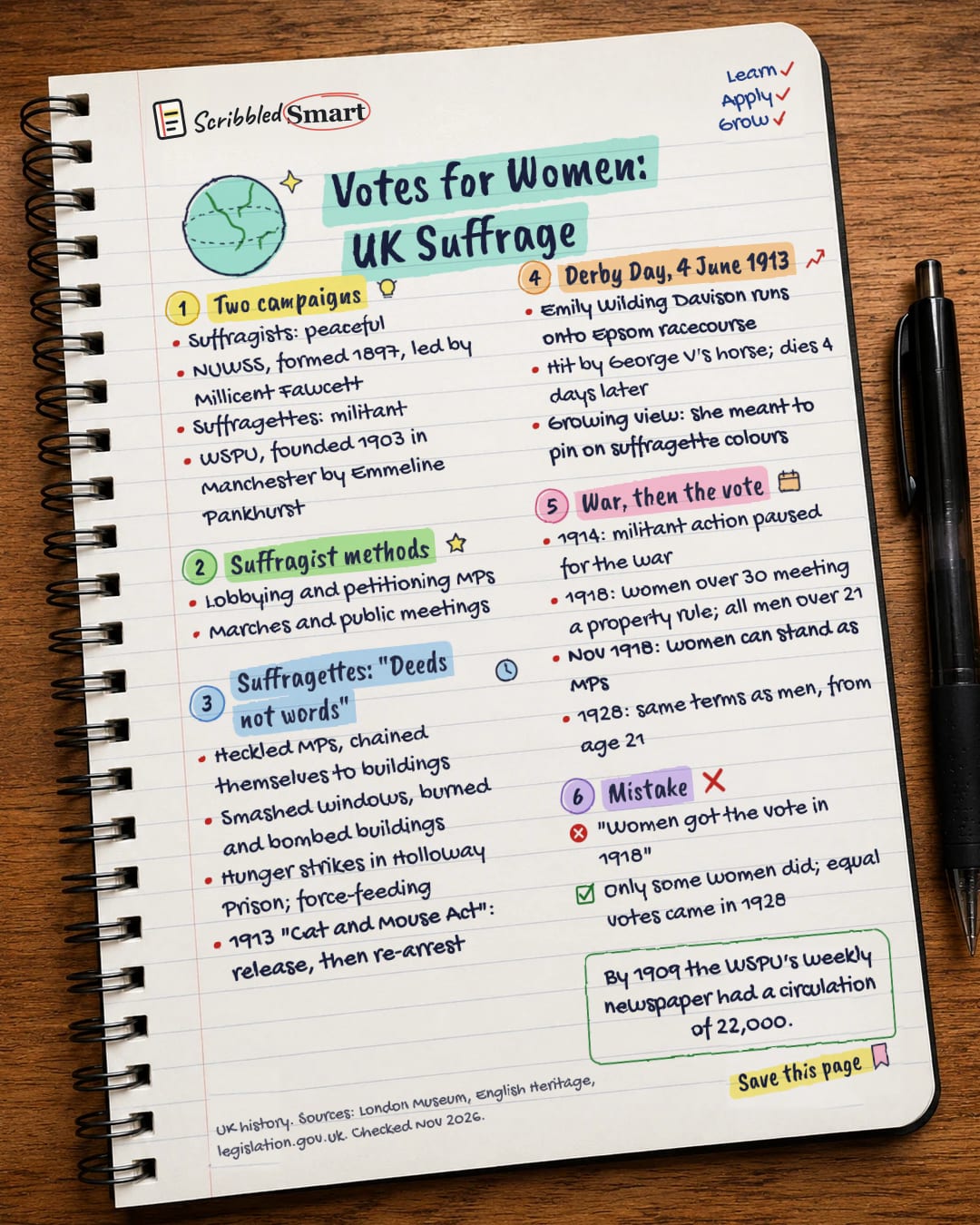
Votes for Women: UK Suffrage
Peaceful petitions, smashed windows and a 10-year wait for equal votes. How UK women won the vote, in one page. Save this page.
Good to know
UK history. Sources: London Museum, English Heritage, legislation.gov.uk. Checked Nov 2026.
What's on the page
The note as text, so you can read it, copy it or use a screen reader.
Two campaigns
- Suffragists: peaceful
- NUWSS, formed 1897, led by Millicent Fawcett
- Suffragettes: militant
- WSPU, founded 1903 in Manchester by Emmeline Pankhurst
Suffragist methods
- Lobbying and petitioning MPs
- Marches and public meetings
Suffragettes: "Deeds not words"
- Heckled MPs, chained themselves to buildings
- Smashed windows, burned and bombed buildings
- Hunger strikes in Holloway Prison; force-feeding
- 1913 "Cat and Mouse Act": release, then re-arrest
Derby Day, 4 June 1913
- Emily Wilding Davison runs onto Epsom racecourse
- Hit by George V's horse; dies 4 days later
- Growing view: she meant to pin on suffragette colours
War, then the vote
- 1914: militant action paused for the war
- 1918: women over 30 meeting a property rule; all men over 21
- Nov 1918: women can stand as MPs
- 1928: same terms as men, from age 21
Mistake
- "Women got the vote in 1918"
- Only some women did; equal votes came in 1928
Sources
How we checked this
Every fact on this note comes from the 4 sources listed here, checked against official or peer-reviewed sources where possible. AI tools help with drafting; a person checks every fact against the sources. How we research
Spotted a mistake? Tell us and we'll fix it and log it on the corrections page.


