
General knowledge One-page note UK only
The Industrial Revolution
Coal, steam and children in cotton mills: how Britain changed the world. The Industrial Revolution in one page. Save this page.
Good to know
UK history. Dates from the Science Museum, Historic England and Cromford Mills. Checked Nov 2026.
What's on the page
The note as text, so you can read it, copy it or use a screen reader.
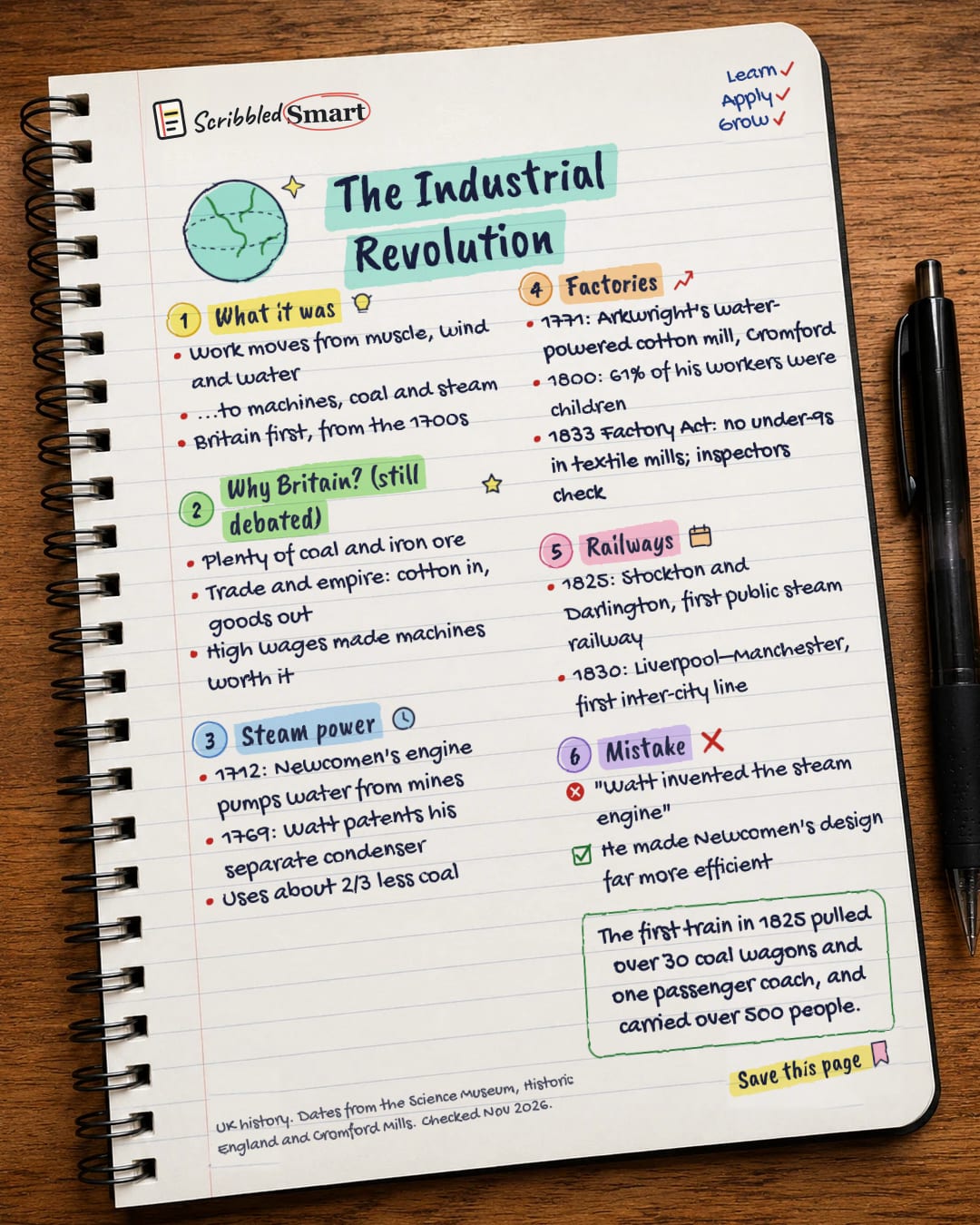
What it was
- Work moves from muscle, wind and water
- ...to machines, coal and steam
- Britain first, from the 1700s
Why Britain? (still debated)
- Plenty of coal and iron ore
- Trade and empire: cotton in, goods out
- High wages made machines worth it
Steam power
- 1712: Newcomen's engine pumps water from mines
- 1769: Watt patents his separate condenser
- Uses about 2/3 less coal
Factories
- 1771: Arkwright's water-powered cotton mill, Cromford
- 1800: 61% of his workers were children
- 1833 Factory Act: no under-9s in textile mills; inspectors check
Railways
- 1825: Stockton and Darlington, first public steam railway
- 1830: Liverpool–Manchester, first inter-city line
Mistake
- "Watt invented the steam engine"
- He made Newcomen's design far more efficient
Sources
- Science Museum blog: In Pursuit of Power / A new age
- Science Museum blog: James Watt and the separate condenser
- Cromford Mills: Our History
- Historic England (Heritage Calling): A brief introduction to the history of the railway in England
- The National Archives: 1833 Factory Act
- CEPR VoxEU (Robert Allen): Why was the Industrial Revolution British?
- Encyclopedia.com: The First Industrial Revolution: Why it Started in Britain
How we checked this
Every fact on this note comes from the 7 sources listed here, checked against official or peer-reviewed sources where possible. AI tools help with drafting; a person checks every fact against the sources. How we research
Spotted a mistake? Tell us and we'll fix it and log it on the corrections page.


