
General knowledge One-page note UK only
Why Do We Have Seasons?
Seasons aren't about how close we are to the Sun. It's all in the tilt. Save this page.
Good to know
Dates for the UK (northern hemisphere). Checked November 2026.
What's on the page
The note as text, so you can read it, copy it or use a screen reader.
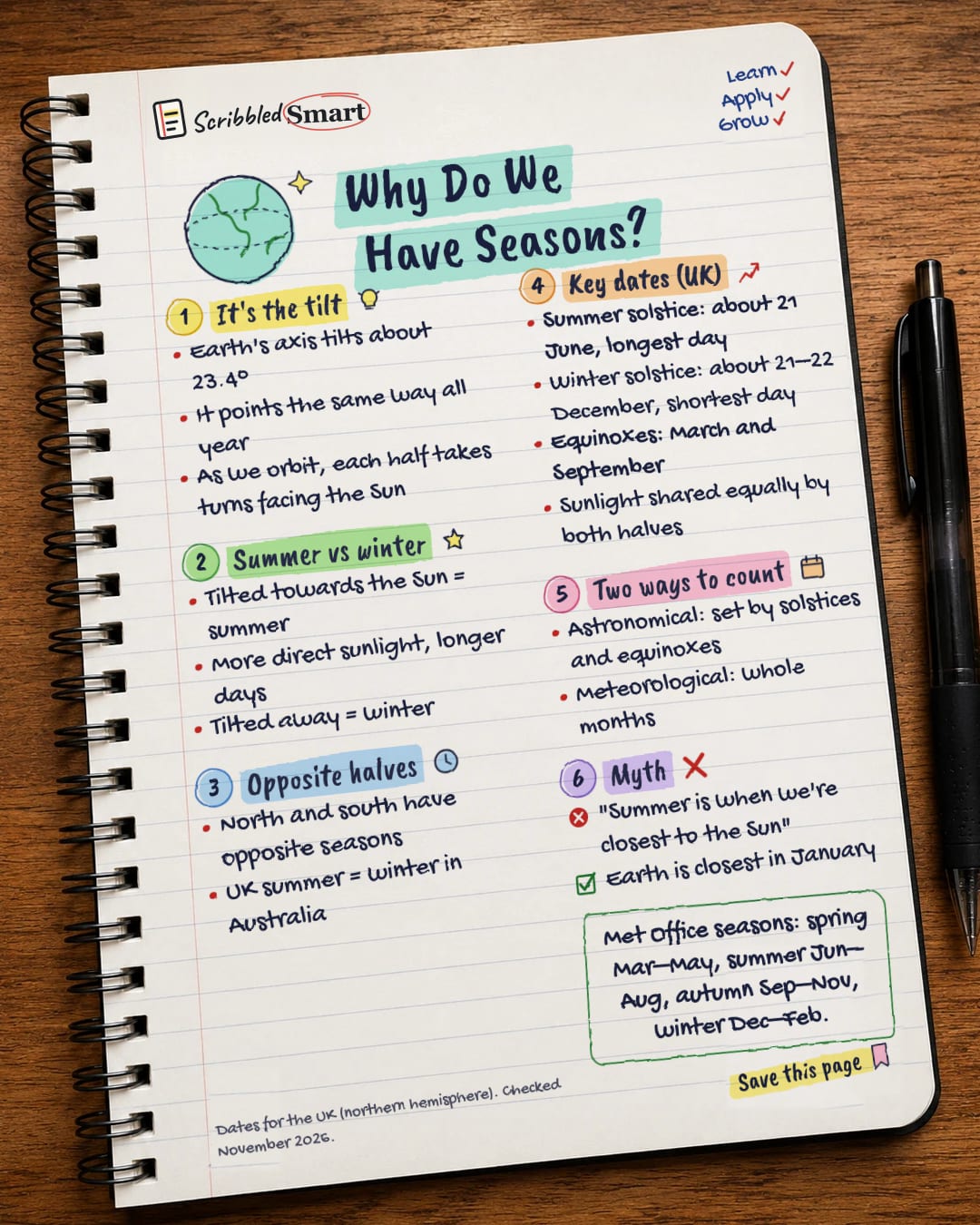
It's the tilt
- Earth's axis tilts about 23.4°
- It points the same way all year
- As we orbit, each half takes turns facing the Sun
Summer vs winter
- Tilted towards the Sun = summer
- More direct sunlight, longer days
- Tilted away = winter
Opposite halves
- North and south have opposite seasons
- UK summer = winter in Australia
Key dates (UK)
- Summer solstice: about 21 June, longest day
- Winter solstice: about 21–22 December, shortest day
- Equinoxes: March and September
- Sunlight shared equally by both halves
Two ways to count
- Astronomical: set by solstices and equinoxes
- Meteorological: whole months
Myth
- "Summer is when we're closest to the Sun"
- Earth is closest in January
Sources
How we checked this
Every fact on this note comes from the 4 sources listed here, checked against official or peer-reviewed sources where possible. AI tools help with drafting; a person checks every fact against the sources. How we research
Spotted a mistake? Tell us and we'll fix it and log it on the corrections page.


