
General knowledge One-page note UK only
How the UK Parliament Works
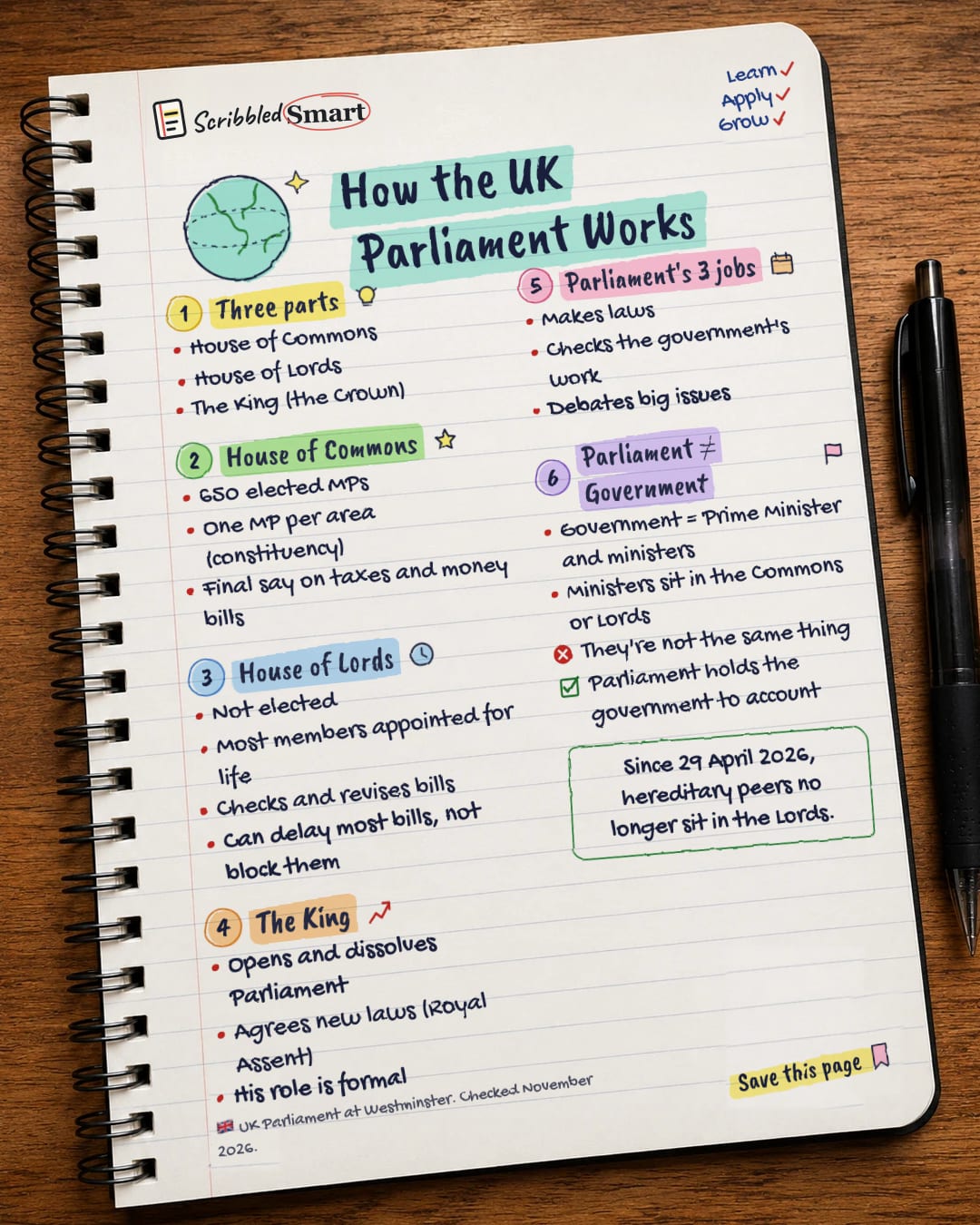
Commons, Lords, King: who actually does what? The UK Parliament, explained in one page. Save this page.
Good to know
🇬🇧 UK Parliament at Westminster. Checked November 2026.
What's on the page
The note as text, so you can read it, copy it or use a screen reader.
Three parts
- House of Commons
- House of Lords
- The King (the Crown)
House of Commons
- 650 elected MPs
- One MP per area (constituency)
- Final say on taxes and money bills
House of Lords
- Not elected
- Most members appointed for life
- Checks and revises bills
- Can delay most bills, not block them
The King
- Opens and dissolves Parliament
- Agrees new laws (Royal Assent)
- His role is formal
Parliament's 3 jobs
- Makes laws
- Checks the government's work
- Debates big issues
Parliament ≠ Government
- Government = Prime Minister and ministers
- Ministers sit in the Commons or Lords
- They're not the same thing
- Parliament holds the government to account
Sources
- GOV.UK: How government works
- GOV.UK: General elections
- UK Parliament: How Parliament works – role
- UK Parliament: Parliament and the Crown
- Institute for Government: House of Lords
- Institute for Government: Parliament Acts
- legislation.gov.uk: House of Lords (Hereditary Peers) Act 2026
- House of Lords Library / bills.parliament.uk: House of Lords (Hereditary Peers) Bill
How we checked this
Every fact on this note comes from the 8 sources listed here, checked against official or peer-reviewed sources where possible. AI tools help with drafting; a person checks every fact against the sources. How we research
Spotted a mistake? Tell us and we'll fix it and log it on the corrections page.


