
Health One-page note
10,000 Steps a Day: Myth or Must?
10,000 steps started as a marketing idea, not science. Here's what the research actually found. Save this page.
Good to know
General info, not medical advice. Talk to your GP or doctor about your own health.
What's on the page
The note as text, so you can read it, copy it or use a screen reader.
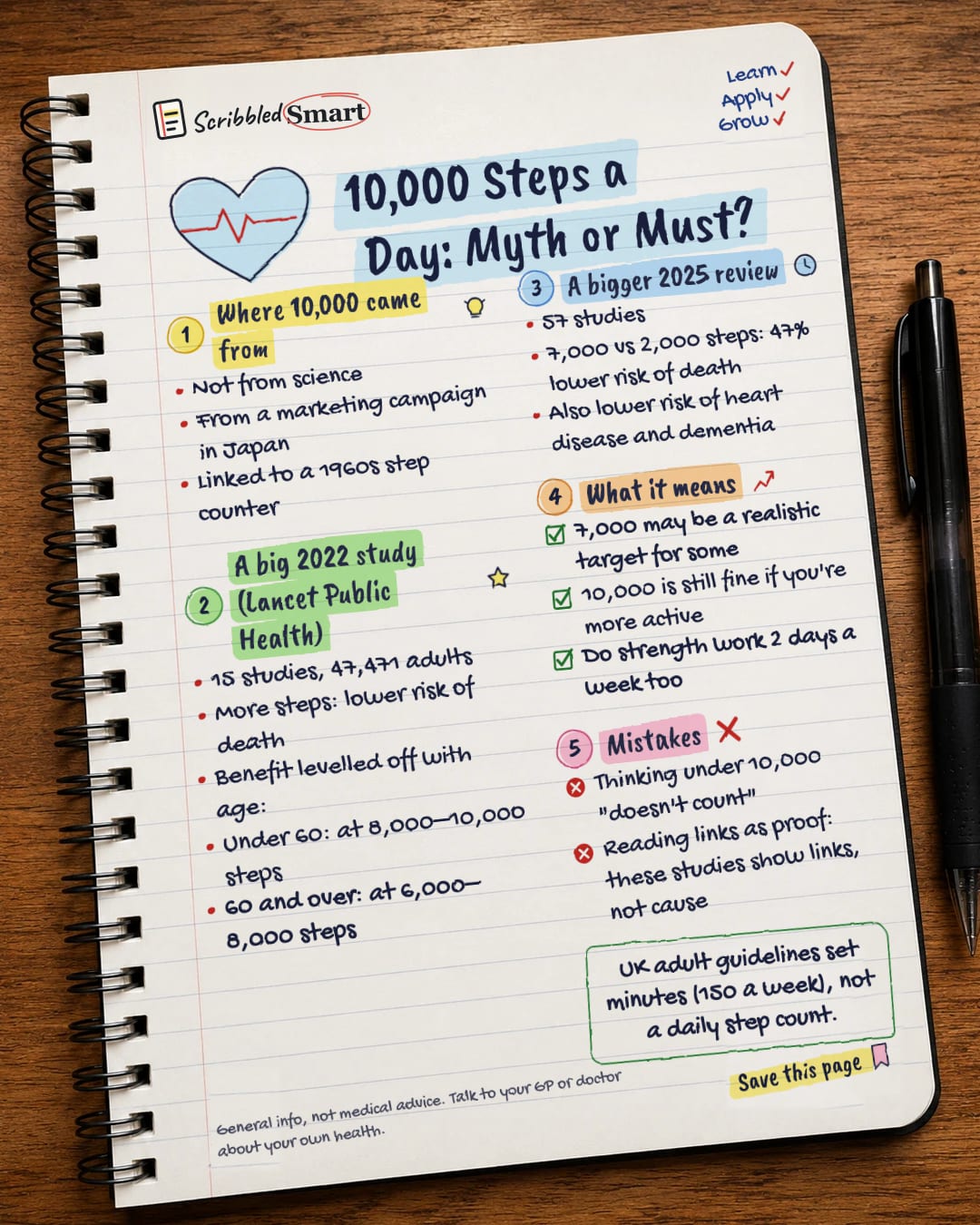
Where 10,000 came from
- Not from science
- From a marketing campaign in Japan
- Linked to a 1960s step counter
A big 2022 study (Lancet Public Health)
- 15 studies, 47,471 adults
- More steps: lower risk of death
- Benefit levelled off with age:
- Under 60: at 8,000–10,000 steps
- 60 and over: at 6,000–8,000 steps
A bigger 2025 review
- 57 studies
- 7,000 vs 2,000 steps: 47% lower risk of death
- Also lower risk of heart disease and dementia
What it means
- 7,000 may be a realistic target for some
- 10,000 is still fine if you're more active
- Do strength work 2 days a week too
Mistakes
- Thinking under 10,000 "doesn't count"
- Reading links as proof: these studies show links, not cause
Sources
- Paluch AE et al. (2022), Daily steps and all-cause mortality, Lancet Public Health (open-access PDF)
- Ding D et al. (2025), Daily steps and health outcomes in adults, Lancet Public Health (PubMed)
- Popular Science: No, you don't need 10,000 steps a day
- GOV.UK: UK Chief Medical Officers' physical activity guidelines
How we checked this
Every fact on this note comes from the 4 sources listed here, checked against official or peer-reviewed sources where possible. AI tools help with drafting; a person checks every fact against the sources. How we research
Spotted a mistake? Tell us and we'll fix it and log it on the corrections page.


