
Health One-page note UK only
Calories Explained: Energy In, Energy Out
2,000 and 2,500 calories are just rough guides. Here's what a calorie is and why your needs are different. Save this page.
Good to know
General info, not medical advice. UK guidance (menu labelling: England). Source: NHS, SACN, GOV.UK. Checked Nov 2026.
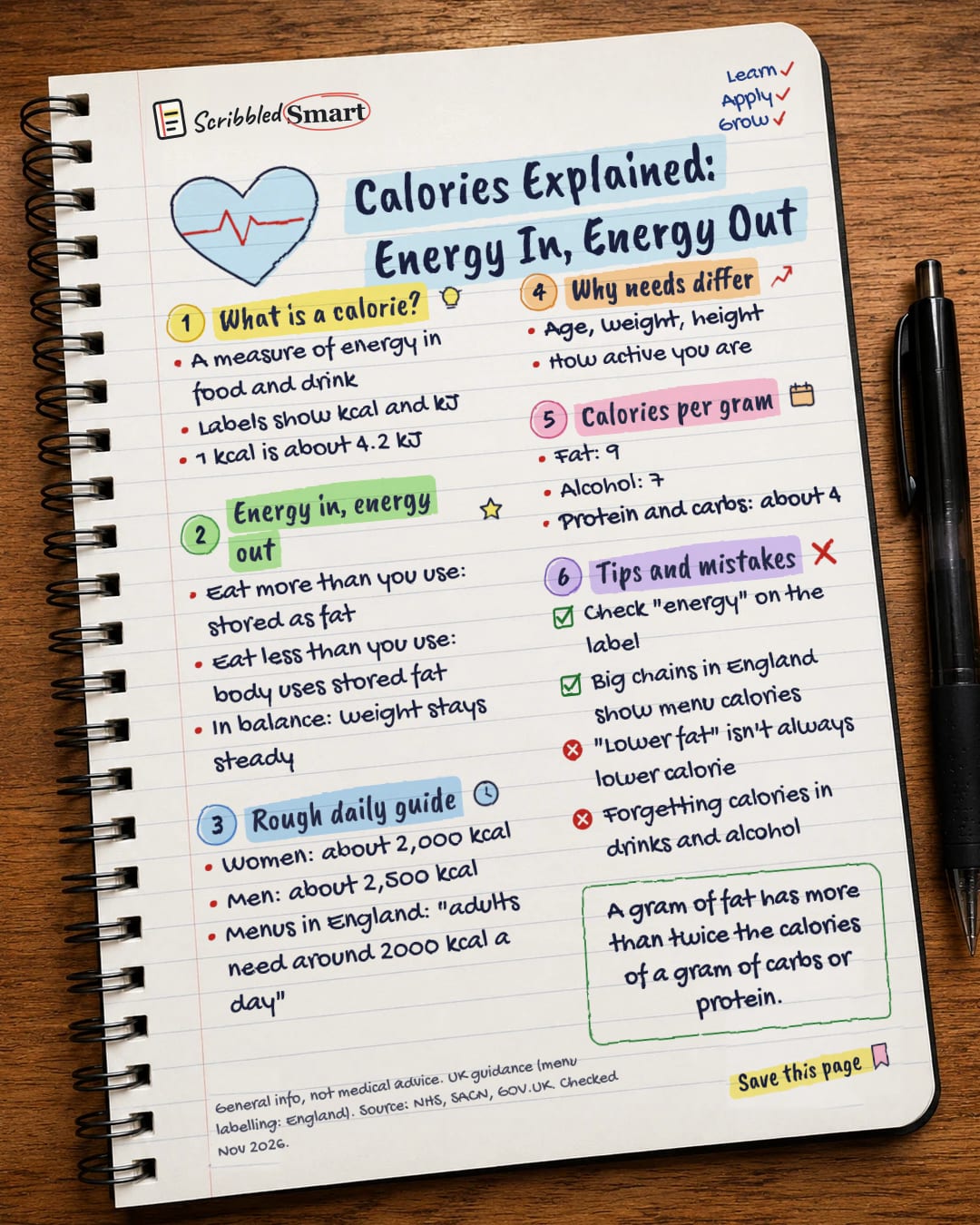
What's on the page
The note as text, so you can read it, copy it or use a screen reader.
What is a calorie?
- A measure of energy in food and drink
- Labels show kcal and kJ
- 1 kcal is about 4.2 kJ
Energy in, energy out
- Eat more than you use: stored as fat
- Eat less than you use: body uses stored fat
- In balance: weight stays steady
Rough daily guide
- Women: about 2,000 kcal
- Men: about 2,500 kcal
- Menus in England: "adults need around 2000 kcal a day"
Why needs differ
- Age, weight, height
- How active you are
Calories per gram
- Fat: 9
- Alcohol: 7
- Protein and carbs: about 4
Tips and mistakes
- Check "energy" on the label
- Big chains in England show menu calories
- "Lower fat" isn't always lower calorie
- Forgetting calories in drinks and alcohol
Sources
How we checked this
Every fact on this note comes from the 5 sources listed here, checked against official or peer-reviewed sources where possible. AI tools help with drafting; a person checks every fact against the sources. How we research
Spotted a mistake? Tell us and we'll fix it and log it on the corrections page.


