
Health One-page note UK only
Fats Explained: Saturated vs Unsaturated
Not all fat is the same. Here's which fats to cut, which to swap to, and the daily limit for saturated fat. Save this page.
Good to know
General info, not medical advice. UK guidance. Source: NHS. Checked Nov 2026.
What's on the page
The note as text, so you can read it, copy it or use a screen reader.
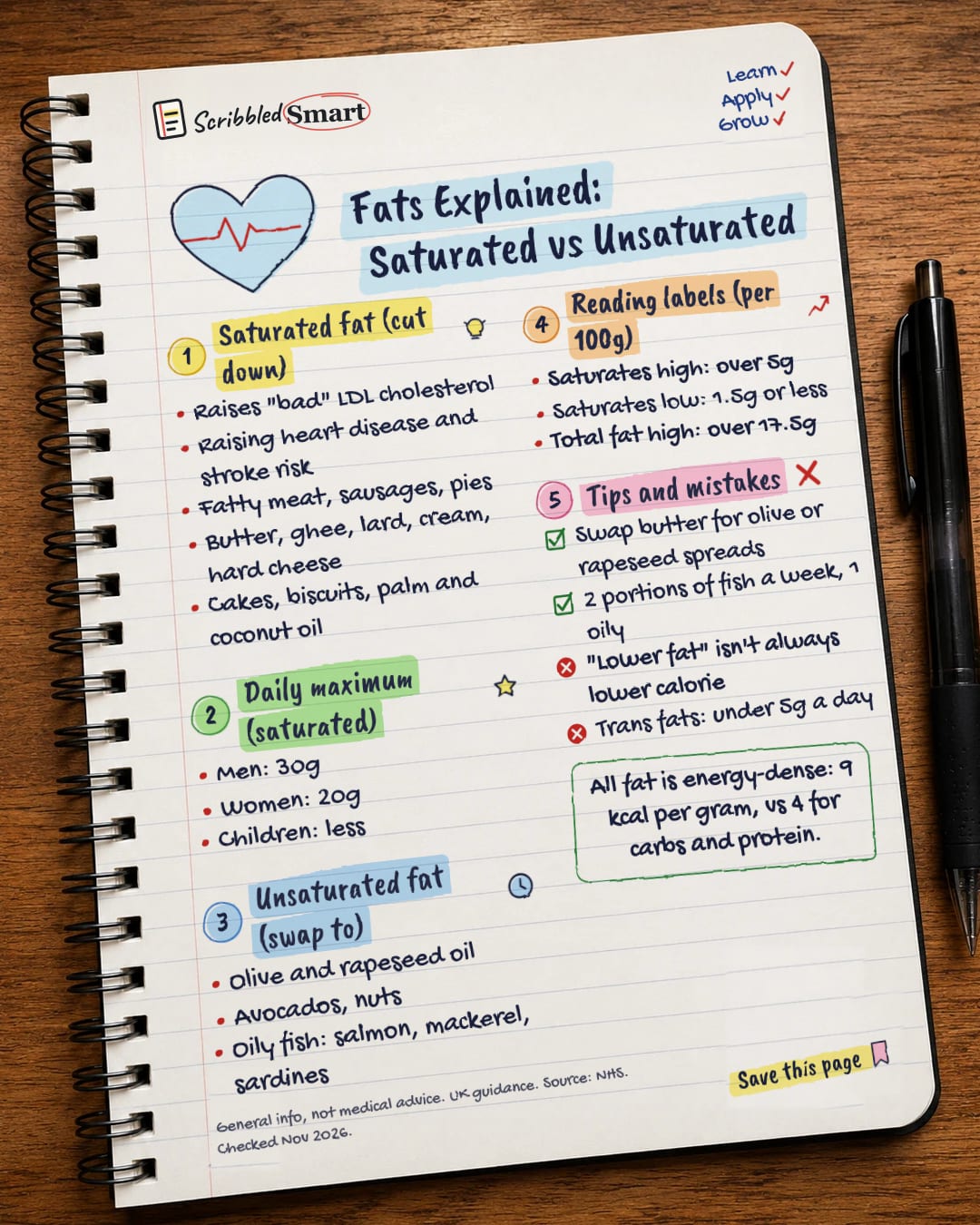
Saturated fat (cut down)
- Raises "bad" LDL cholesterol
- Raising heart disease and stroke risk
- Fatty meat, sausages, pies
- Butter, ghee, lard, cream, hard cheese
- Cakes, biscuits, palm and coconut oil
Daily maximum (saturated)
- Men: 30g
- Women: 20g
- Children: less
Unsaturated fat (swap to)
- Olive and rapeseed oil
- Avocados, nuts
- Oily fish: salmon, mackerel, sardines
Reading labels (per 100g)
- Saturates high: over 5g
- Saturates low: 1.5g or less
- Total fat high: over 17.5g
Tips and mistakes
- Swap butter for olive or rapeseed spreads
- 2 portions of fish a week, 1 oily
- "Lower fat" isn't always lower calorie
- Trans fats: under 5g a day
Sources
How we checked this
Every fact on this note comes from the 2 sources listed here, checked against official or peer-reviewed sources where possible. AI tools help with drafting; a person checks every fact against the sources. How we research
Spotted a mistake? Tell us and we'll fix it and log it on the corrections page.


