
Language One-page note UK only
Active vs Passive Voice
"Mistakes were made" — by whom? Spot the passive in two seconds and write clearer sentences. Save this page.
Good to know
GOV.UK is UK government house style; other guides allow more passive (e.g. science writing).
What's on the page
The note as text, so you can read it, copy it or use a screen reader.
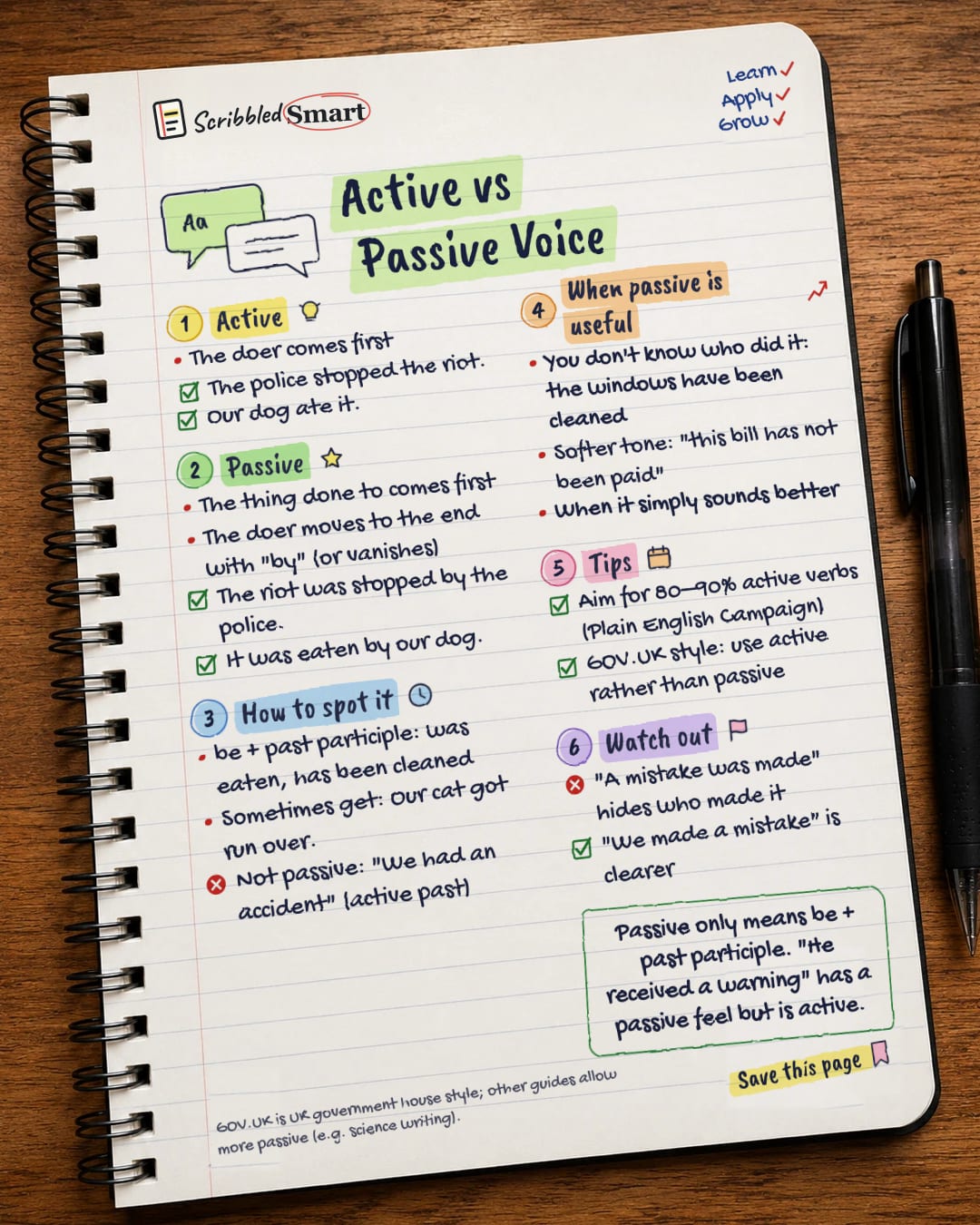
Active
- The doer comes first
- The police stopped the riot.
- Our dog ate it.
Passive
- The thing done to comes first
- The doer moves to the end with "by" (or vanishes)
- The riot was stopped by the police.
- It was eaten by our dog.
How to spot it
- be + past participle: was eaten, has been cleaned
- Sometimes get: Our cat got run over.
- Not passive: "We had an accident" (active past)
When passive is useful
- You don't know who did it: the windows have been cleaned
- Softer tone: "this bill has not been paid"
- When it simply sounds better
Tips
- Aim for 80–90% active verbs (Plain English Campaign)
- GOV.UK style: use active rather than passive
Watch out
- "A mistake was made" hides who made it
- "We made a mistake" is clearer
Sources
How we checked this
Every fact on this note comes from the 4 sources listed here, checked against official or peer-reviewed sources where possible. AI tools help with drafting; a person checks every fact against the sources. How we research
Spotted a mistake? Tell us and we'll fix it and log it on the corrections page.


