
Language One-page note UK only
English Levels Explained: A1 to C2
A1 to C2: what each English level really means, and which level UK visas ask for. Save this page.
Good to know
Levels from the Council of Europe CEFR global scale. Visa levels from GOV.UK, UK, checked Nov 2026. General info, not legal advice.
What's on the page
The note as text, so you can read it, copy it or use a screen reader.
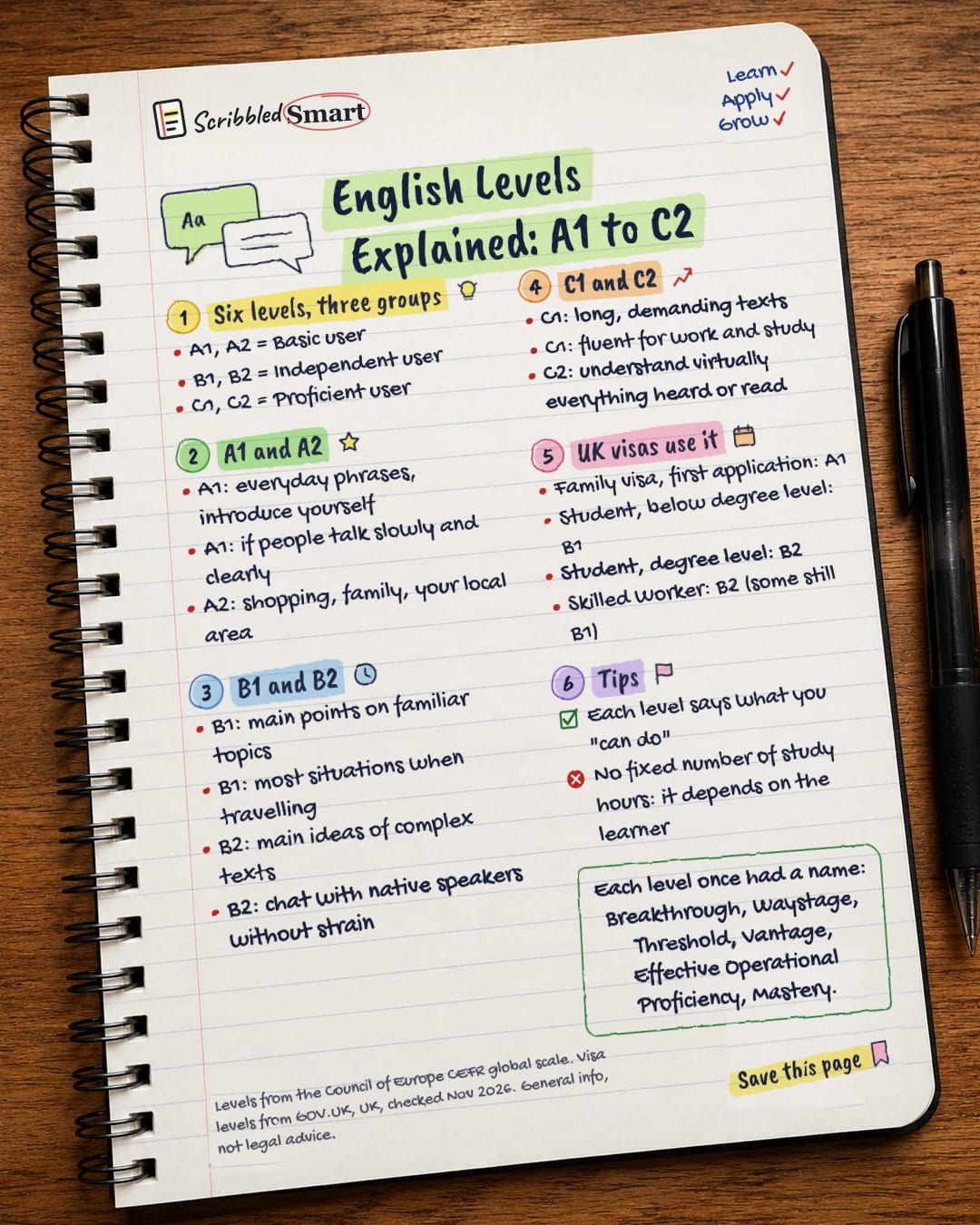
Six levels, three groups
- A1, A2 = Basic user
- B1, B2 = Independent user
- C1, C2 = Proficient user
A1 and A2
- A1: everyday phrases, introduce yourself
- A1: if people talk slowly and clearly
- A2: shopping, family, your local area
B1 and B2
- B1: main points on familiar topics
- B1: most situations when travelling
- B2: main ideas of complex texts
- B2: chat with native speakers without strain
C1 and C2
- C1: long, demanding texts
- C1: fluent for work and study
- C2: understand virtually everything heard or read
UK visas use it
- Family visa, first application: A1
- Student, below degree level: B1
- Student, degree level: B2
- Skilled Worker: B2 (some still B1)
Tips
- Each level says what you "can do"
- No fixed number of study hours: it depends on the learner
Sources
- Council of Europe: CEFR Table 1, Common Reference Levels: global scale (via Trinity College London reproduction)
- GOV.UK (Home Office): English language requirement levels for immigration applications
- Cambridge University Press: How long does it take to learn a foreign language? (2018)
- Cambridge English: International language standards (CEFR)
- Cambridge English Helpdesk: Guided learning hours (search summary only; 403)
- LanguageCert: Guided Learning Hours
How we checked this
Every fact on this note comes from the 6 sources listed here, checked against official or peer-reviewed sources where possible. AI tools help with drafting; a person checks every fact against the sources. How we research
Spotted a mistake? Tell us and we'll fix it and log it on the corrections page.


