
Language One-page note
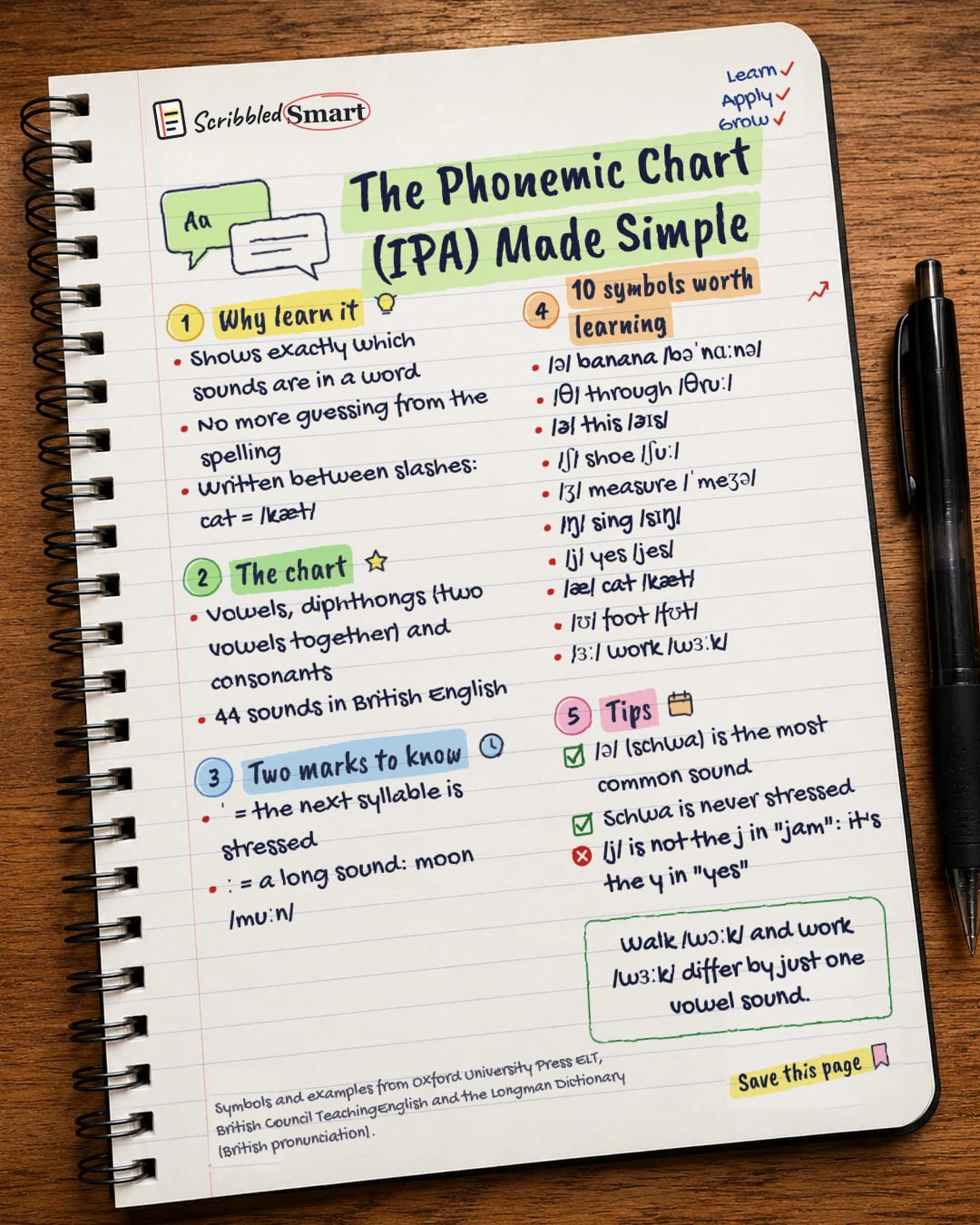
The Phonemic Chart (IPA) Made Simple
/ə/, /θ/, /ʃ/: what do the funny symbols in the dictionary mean? 10 sounds that make every pronunciation easy to read. Save this page.
Good to know
Symbols and examples from Oxford University Press ELT, British Council TeachingEnglish and the Longman Dictionary (British pronunciation).
What's on the page
The note as text, so you can read it, copy it or use a screen reader.
Why learn it
- Shows exactly which sounds are in a word
- No more guessing from the spelling
- Written between slashes: cat = /kæt/
The chart
- Vowels, diphthongs (two vowels together) and consonants
- 44 sounds in British English
Two marks to know
- ˈ = the next syllable is stressed
- ː = a long sound: moon /muːn/
10 symbols worth learning
- /ə/ banana /bəˈnɑːnə/
- /θ/ through /θruː/
- /ð/ this /ðɪs/
- /ʃ/ shoe /ʃuː/
- /ʒ/ measure /ˈmeʒə/
- /ŋ/ sing /sɪŋ/
- /j/ yes /jes/
- /æ/ cat /kæt/
- /ʊ/ foot /fʊt/
- /ɜː/ work /wɜːk/
Tips
- /ə/ (schwa) is the most common sound
- Schwa is never stressed
- /j/ is not the j in "jam": it's the y in "yes"
Sources
- Oxford University Press ELT: Why you should start using the International Phonetic Alphabet (2021)
- British Council TeachingEnglish: Phonemic chart for English teachers
- British Council TeachingEnglish: Schwa
- Longman Dictionary of Contemporary English: cat, banana, this, measure, sing, yes, jam
- Wikipedia: Length (phonetics) (search summary only)
How we checked this
Every fact on this note comes from the 5 sources listed here, checked against official or peer-reviewed sources where possible. AI tools help with drafting; a person checks every fact against the sources. How we research
Spotted a mistake? Tell us and we'll fix it and log it on the corrections page.


