
Language One-page note UK only
Hyphens, Dashes and Brackets
Hyphen, en dash or em dash? Three lines, three different jobs. Save this page.
Good to know
UK style from the Edinburgh and Hull university guides and the GOV.UK style guide. Style guides differ, so pick one and stay consistent.
What's on the page
The note as text, so you can read it, copy it or use a screen reader.
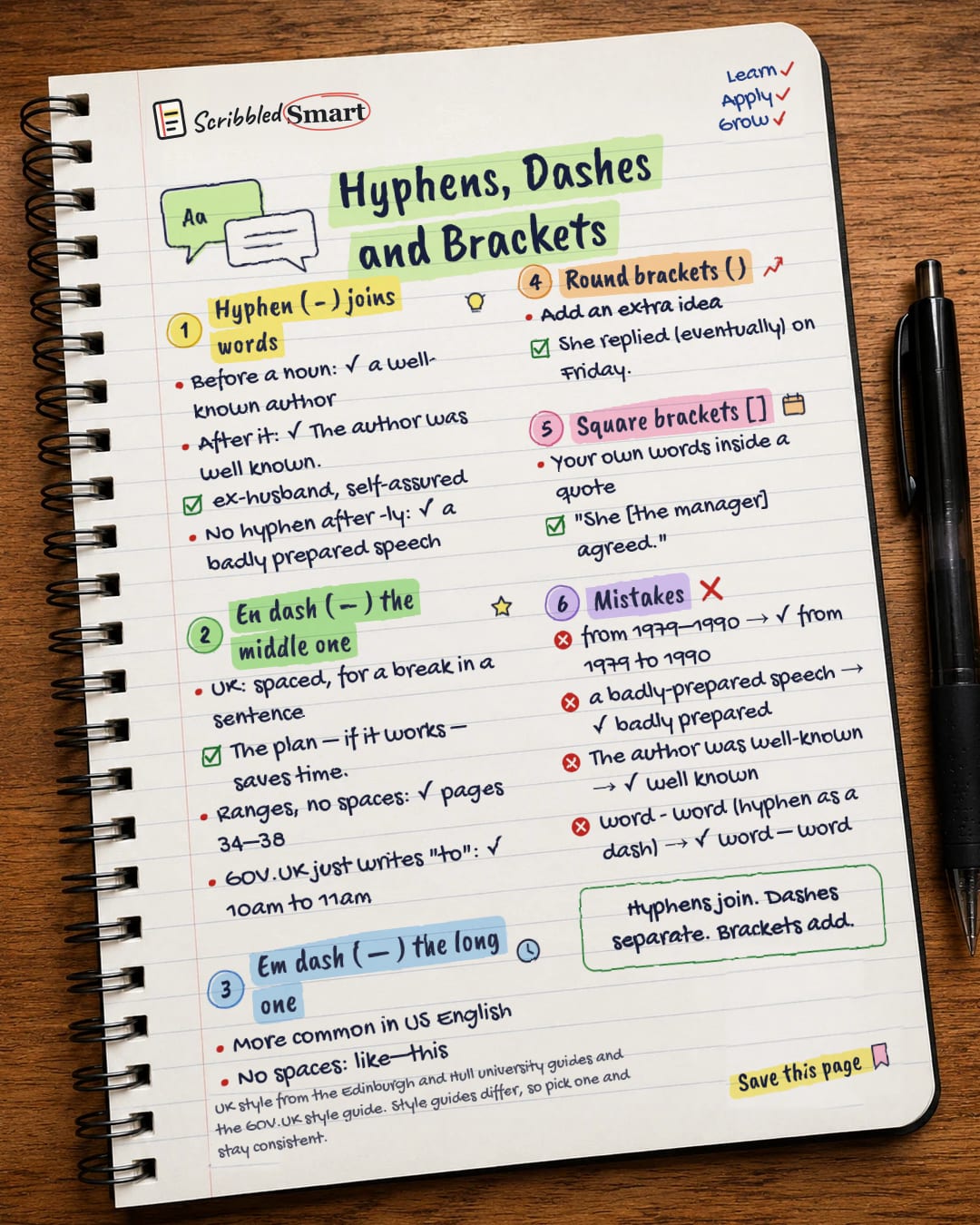
Hyphen ( - ) joins words
- Before a noun: ✓ a well-known author
- After it: ✓ The author was well known.
- ex-husband, self-assured
- No hyphen after -ly: ✓ a badly prepared speech
En dash ( – ) the middle one
- UK: spaced, for a break in a sentence
- The plan – if it works – saves time.
- Ranges, no spaces: ✓ pages 34–38
- GOV.UK just writes "to": ✓ 10am to 11am
Em dash ( — ) the long one
- More common in US English
- No spaces: like—this
Round brackets ( )
- Add an extra idea
- She replied (eventually) on Friday.
Square brackets [ ]
- Your own words inside a quote
- "She [the manager] agreed."
Mistakes
- from 1979–1990 → ✓ from 1979 to 1990
- a badly-prepared speech → ✓ badly prepared
- The author was well-known → ✓ well known
- word - word (hyphen as a dash) → ✓ word – word
Sources
How we checked this
Every fact on this note comes from the 4 sources listed here, checked against official or peer-reviewed sources where possible. AI tools help with drafting; a person checks every fact against the sources. How we research
Spotted a mistake? Tell us and we'll fix it and log it on the corrections page.


