
Language One-page note
Irony vs Sarcasm vs Coincidence
Rain on your picnic isn't ironic. It's just bad luck. Here's what irony really means. Save this page.
Good to know
Definitions from the Longman Dictionary of Contemporary English. Romeo and Juliet example as explained by LitCharts.
What's on the page
The note as text, so you can read it, copy it or use a screen reader.
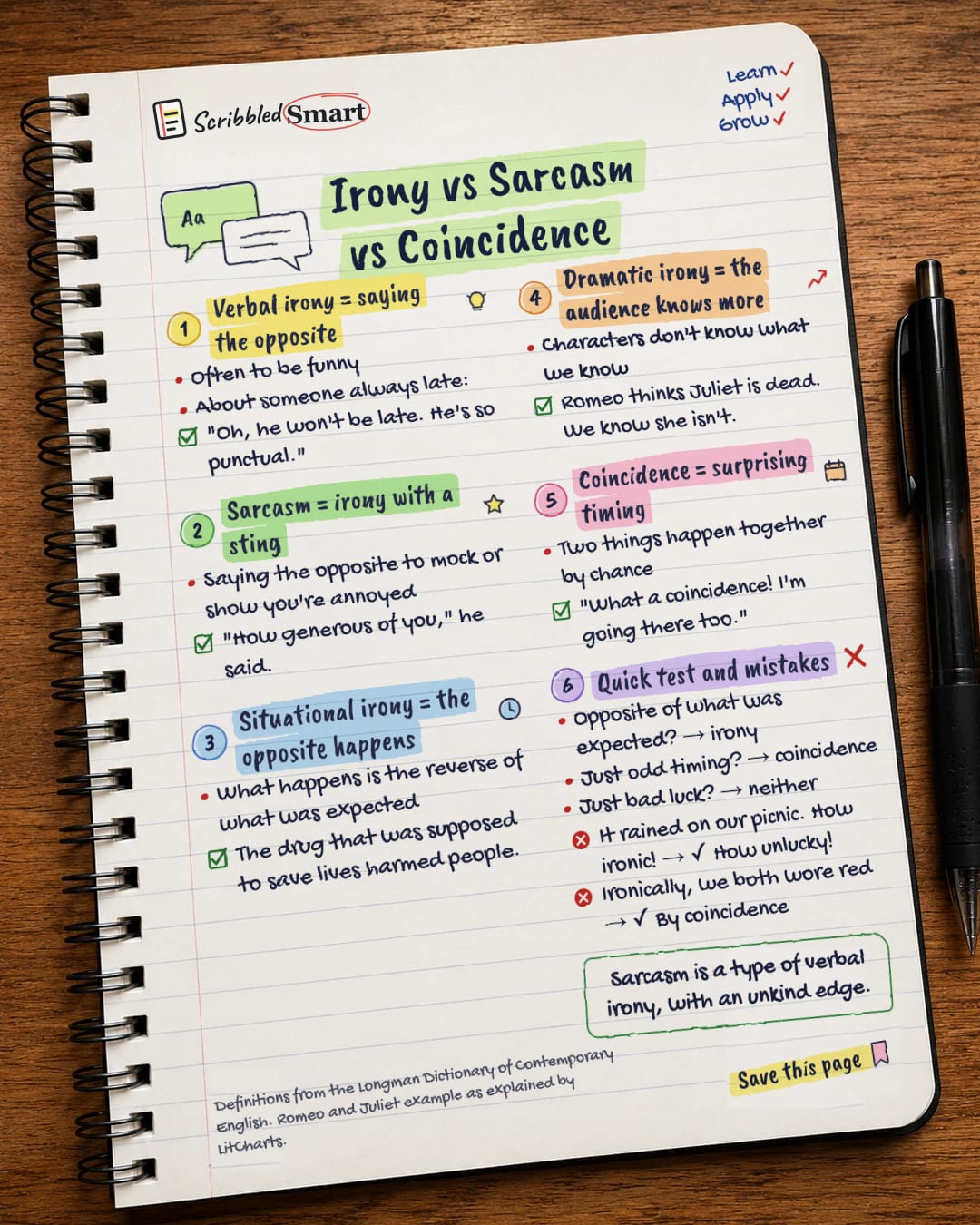
Verbal irony = saying the opposite
- Often to be funny
- About someone always late:
- "Oh, he won't be late. He's so punctual."
Sarcasm = irony with a sting
- Saying the opposite to mock or show you're annoyed
- "How generous of you," he said.
Situational irony = the opposite happens
- What happens is the reverse of what was expected
- The drug that was supposed to save lives harmed people.
Dramatic irony = the audience knows more
- Characters don't know what we know
- Romeo thinks Juliet is dead. We know she isn't.
Coincidence = surprising timing
- Two things happen together by chance
- "What a coincidence! I'm going there too."
Quick test and mistakes
- Opposite of what was expected? → irony
- Just odd timing? → coincidence
- Just bad luck? → neither
- It rained on our picnic. How ironic! → ✓ How unlucky!
- Ironically, we both wore red → ✓ By coincidence
Sources
How we checked this
Every fact on this note comes from the 5 sources listed here, checked against official or peer-reviewed sources where possible. AI tools help with drafting; a person checks every fact against the sources. How we research
Spotted a mistake? Tell us and we'll fix it and log it on the corrections page.


