
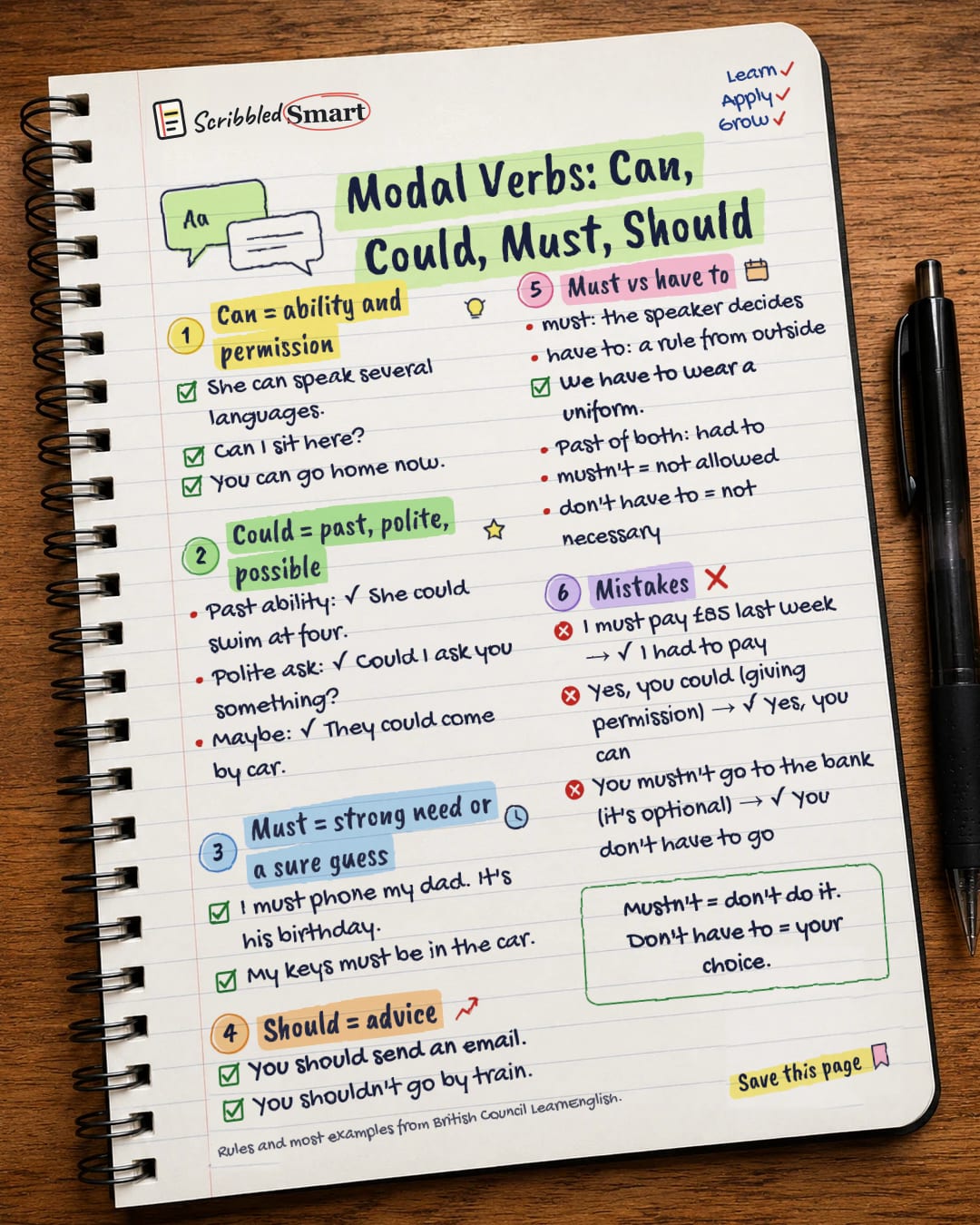
Language One-page note
Modal Verbs: Can, Could, Must, Should
Mustn't and don't have to mean very different things. Here's every modal in one go. Save this page.
Good to know
Rules and most examples from British Council LearnEnglish.
What's on the page
The note as text, so you can read it, copy it or use a screen reader.
Can = ability and permission
- She can speak several languages.
- Can I sit here?
- You can go home now.
Could = past, polite, possible
- Past ability: ✓ She could swim at four.
- Polite ask: ✓ Could I ask you something?
- Maybe: ✓ They could come by car.
Must = strong need or a sure guess
- I must phone my dad. It's his birthday.
- My keys must be in the car.
Should = advice
- You should send an email.
- You shouldn't go by train.
Must vs have to
- must: the speaker decides
- have to: a rule from outside
- We have to wear a uniform.
- Past of both: had to
- mustn't = not allowed
- don't have to = not necessary
Mistakes
- I must pay £85 last week → ✓ I had to pay
- Yes, you could (giving permission) → ✓ Yes, you can
- You mustn't go to the bank (it's optional) → ✓ You don't have to go
Sources
How we checked this
Every fact on this note comes from the 4 sources listed here, checked against official or peer-reviewed sources where possible. AI tools help with drafting; a person checks every fact against the sources. How we research
Spotted a mistake? Tell us and we'll fix it and log it on the corrections page.


