
Language One-page note
Sentence Types: Simple, Compound, Complex
Simple, compound or complex? It's all about clauses. Here's the whole system. Save this page.
Good to know
Terms from the DfE English glossary (England) and Purdue OWL.
What's on the page
The note as text, so you can read it, copy it or use a screen reader.
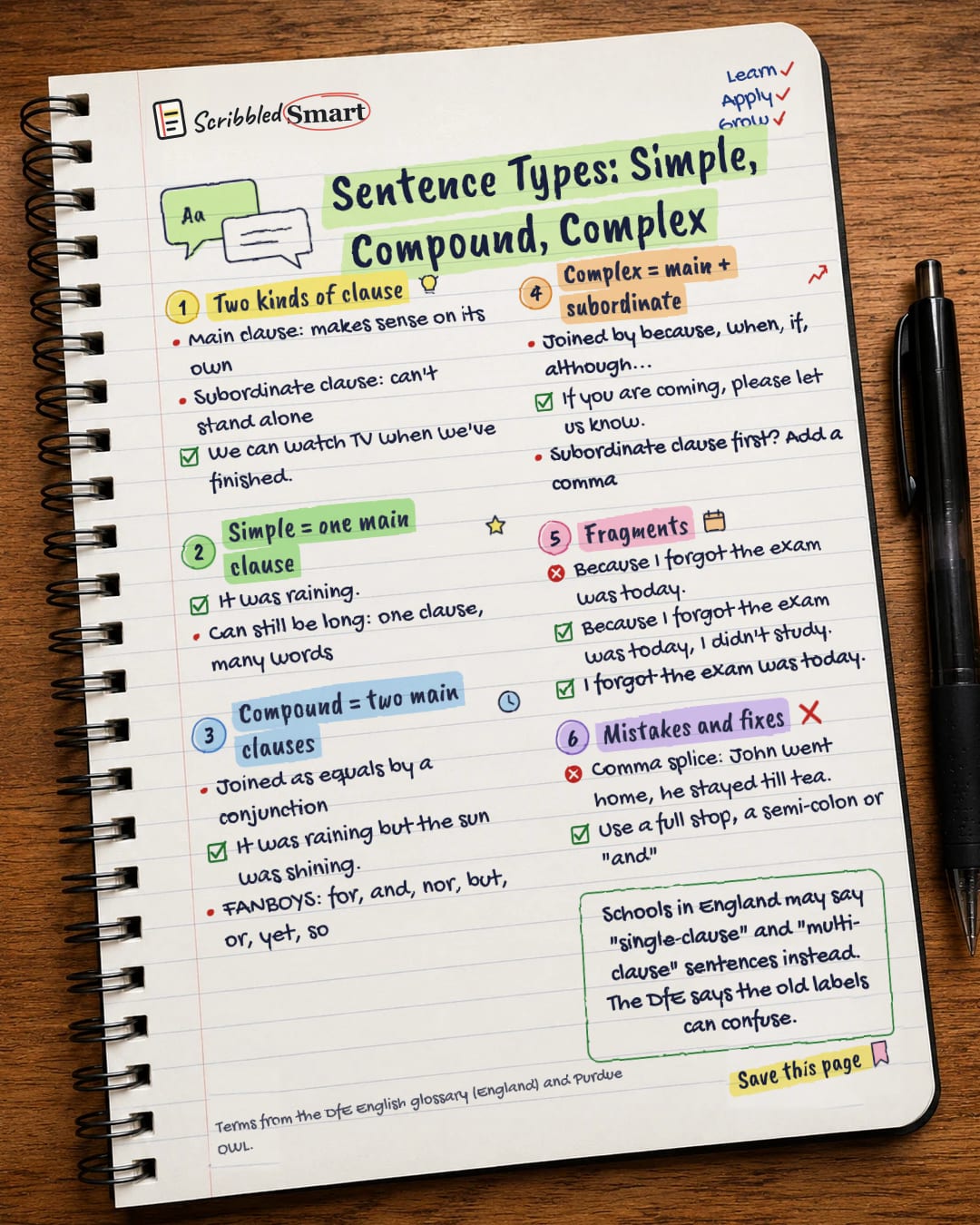
Two kinds of clause
- Main clause: makes sense on its own
- Subordinate clause: can't stand alone
- We can watch TV when we've finished.
Simple = one main clause
- It was raining.
- Can still be long: one clause, many words
Compound = two main clauses
- Joined as equals by a conjunction
- It was raining but the sun was shining.
- FANBOYS: for, and, nor, but, or, yet, so
Complex = main + subordinate
- Joined by because, when, if, although...
- If you are coming, please let us know.
- Subordinate clause first? Add a comma
Fragments
- Because I forgot the exam was today.
- Because I forgot the exam was today, I didn't study.
- I forgot the exam was today.
Mistakes and fixes
- Comma splice: John went home, he stayed till tea.
- Use a full stop, a semi-colon or "and"
Sources
How we checked this
Every fact on this note comes from the 5 sources listed here, checked against official or peer-reviewed sources where possible. AI tools help with drafting; a person checks every fact against the sources. How we research
Spotted a mistake? Tell us and we'll fix it and log it on the corrections page.


