
Language One-page note
How to Write a Good Paragraph (PEEL)
Point, Evidence, Explain, Link: the paragraph formula teachers love, with a worked example. Save this page.
Good to know
Structure from University of Sunderland and Staffordshire library guides. Example ours; quote from Newcastle University.
What's on the page
The note as text, so you can read it, copy it or use a screen reader.
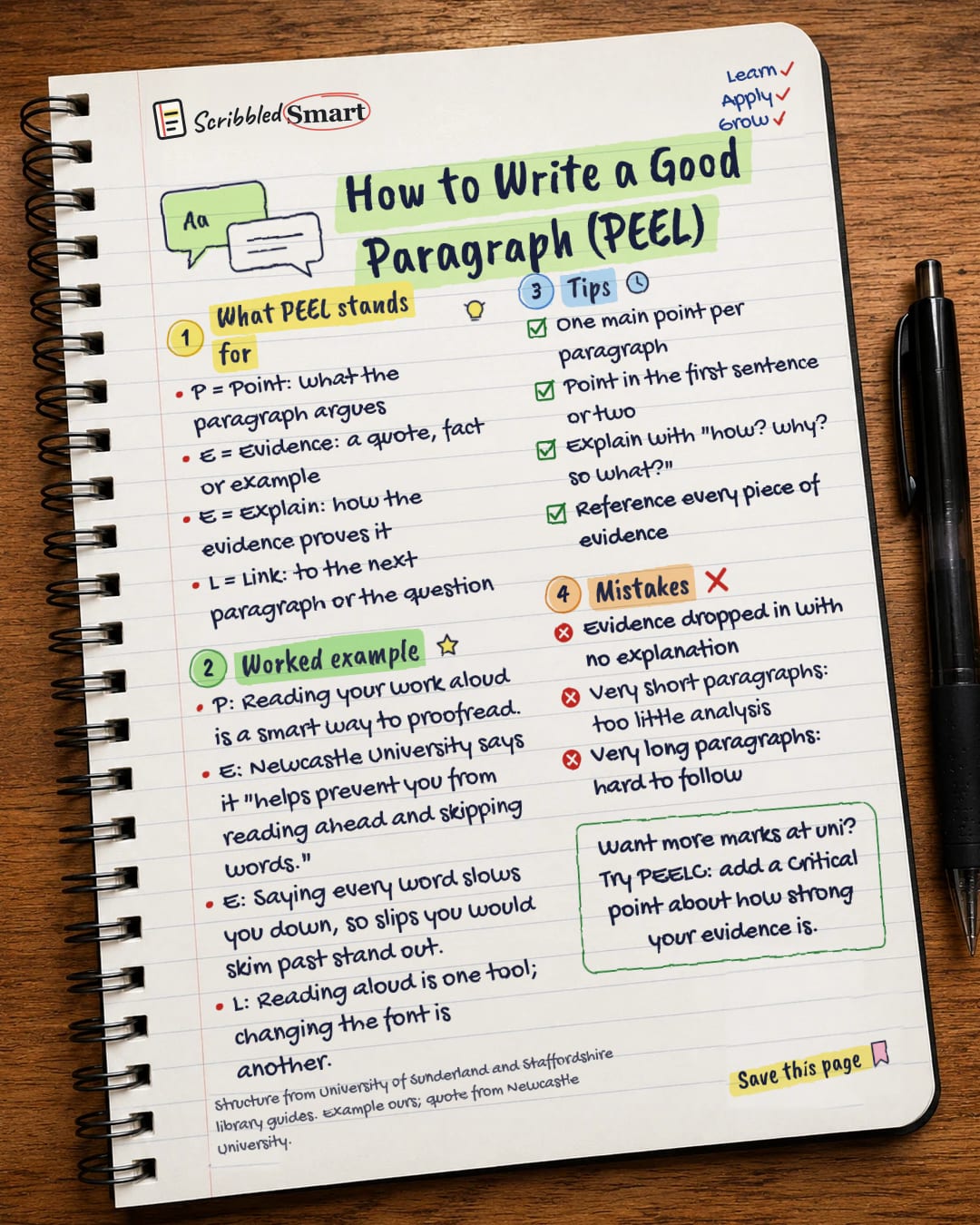
What PEEL stands for
- P = Point: what the paragraph argues
- E = Evidence: a quote, fact or example
- E = Explain: how the evidence proves it
- L = Link: to the next paragraph or the question
Worked example
- P: Reading your work aloud is a smart way to proofread.
- E: Newcastle University says it "helps prevent you from reading ahead and skipping words."
- E: Saying every word slows you down, so slips you would skim past stand out.
- L: Reading aloud is one tool; changing the font is another.
Tips
- One main point per paragraph
- Point in the first sentence or two
- Explain with "how? why? so what?"
- Reference every piece of evidence
Mistakes
- Evidence dropped in with no explanation
- Very short paragraphs: too little analysis
- Very long paragraphs: hard to follow
Sources
How we checked this
Every fact on this note comes from the 4 sources listed here, checked against official or peer-reviewed sources where possible. AI tools help with drafting; a person checks every fact against the sources. How we research
Spotted a mistake? Tell us and we'll fix it and log it on the corrections page.


