
Language One-page note
Show, Don't Tell: Better Descriptions
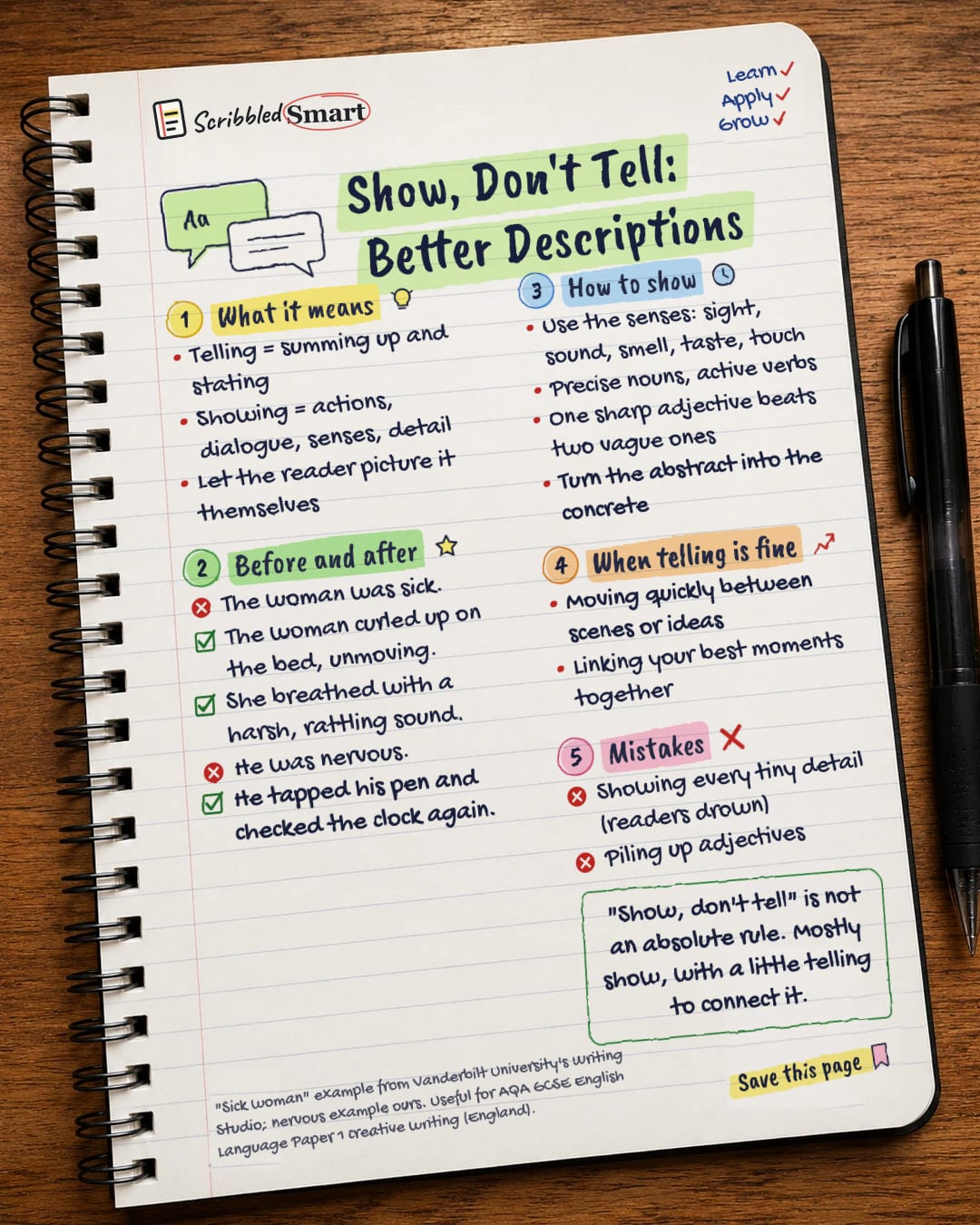
"He was nervous" vs "He tapped his pen and checked the clock again." Show, don't tell, explained in one page. Save this page.
Good to know
"Sick woman" example from Vanderbilt University's Writing Studio; nervous example ours. Useful for AQA GCSE English Language Paper 1 creative writing (England).
What's on the page
The note as text, so you can read it, copy it or use a screen reader.
What it means
- Telling = summing up and stating
- Showing = actions, dialogue, senses, detail
- Let the reader picture it themselves
Before and after
- The woman was sick.
- The woman curled up on the bed, unmoving.
- She breathed with a harsh, rattling sound.
- He was nervous.
- He tapped his pen and checked the clock again.
How to show
- Use the senses: sight, sound, smell, taste, touch
- Precise nouns, active verbs
- One sharp adjective beats two vague ones
- Turn the abstract into the concrete
When telling is fine
- Moving quickly between scenes or ideas
- Linking your best moments together
Mistakes
- Showing every tiny detail (readers drown)
- Piling up adjectives
Sources
How we checked this
Every fact on this note comes from the 3 sources listed here, checked against official or peer-reviewed sources where possible. AI tools help with drafting; a person checks every fact against the sources. How we research
Spotted a mistake? Tell us and we'll fix it and log it on the corrections page.


