
Language One-page note UK only
Question Tags: Isn't It? Don't You?
Isn't it? Doesn't she? Aren't I? How question tags work, and what your tone tells people. Save this page.
Good to know
Rules and examples from British Council LearnEnglish and the Longman Dictionary. "Innit" is UK informal English.
What's on the page
The note as text, so you can read it, copy it or use a screen reader.
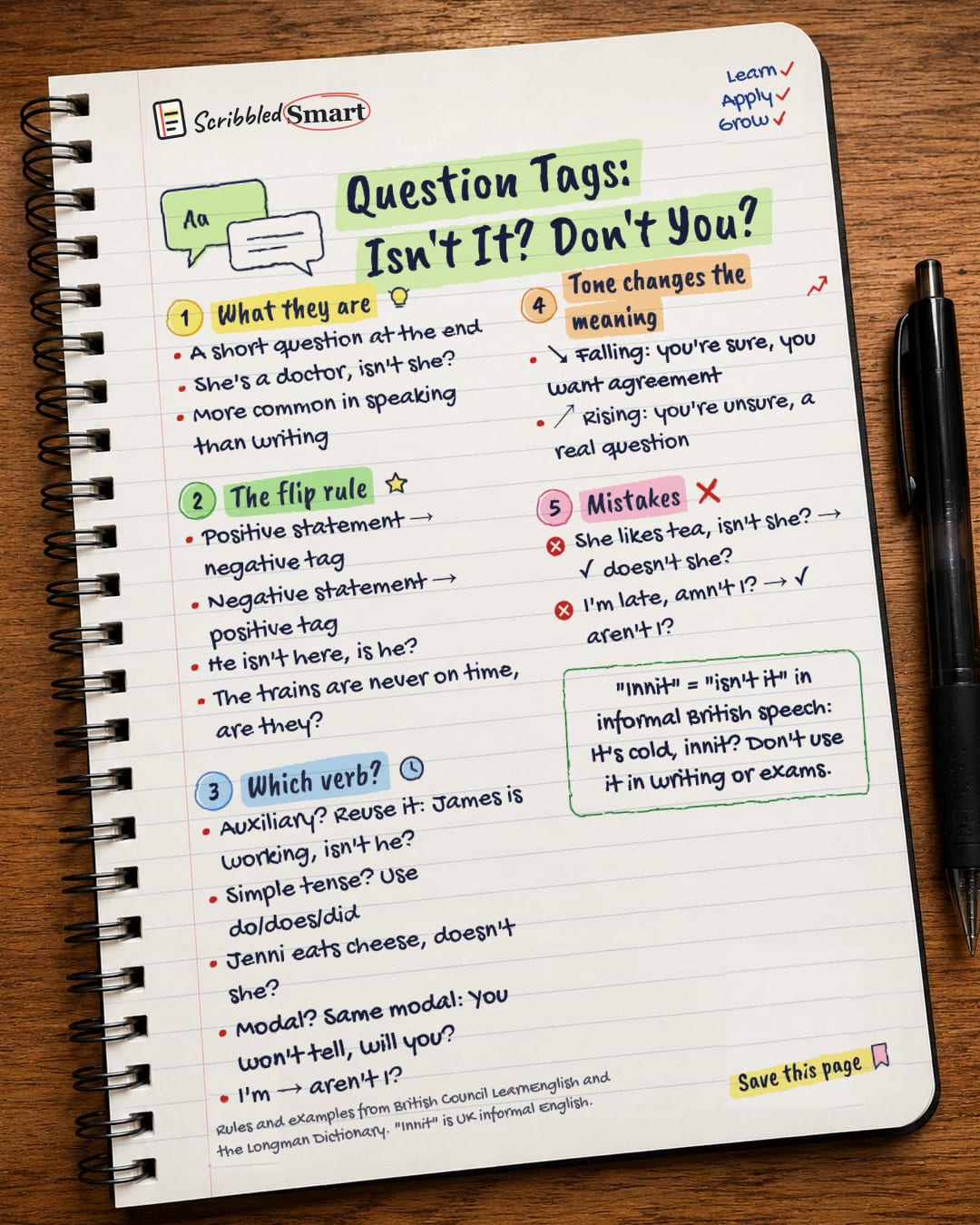
What they are
- A short question at the end
- She's a doctor, isn't she?
- More common in speaking than writing
The flip rule
- Positive statement → negative tag
- Negative statement → positive tag
- He isn't here, is he?
- The trains are never on time, are they?
Which verb?
- Auxiliary? Reuse it: James is working, isn't he?
- Simple tense? Use do/does/did
- Jenni eats cheese, doesn't she?
- Modal? Same modal: You won't tell, will you?
- I'm → aren't I?
Tone changes the meaning
- ↘ Falling: you're sure, you want agreement
- ↗ Rising: you're unsure, a real question
Mistakes
- She likes tea, isn't she? → ✓ doesn't she?
- I'm late, amn't I? → ✓ aren't I?
Sources
How we checked this
Every fact on this note comes from the 4 sources listed here, checked against official or peer-reviewed sources where possible. AI tools help with drafting; a person checks every fact against the sources. How we research
Spotted a mistake? Tell us and we'll fix it and log it on the corrections page.


