
Money One-page note UK only
Bank of England Base Rate: What It Means
When the Bank of England changes the base rate, who actually feels it? Here's the one-page answer. Save this page.
Good to know
*Repayment mortgage, Bank of England example. UK. Checked Nov 2026. General info, not financial advice.
What's on the page
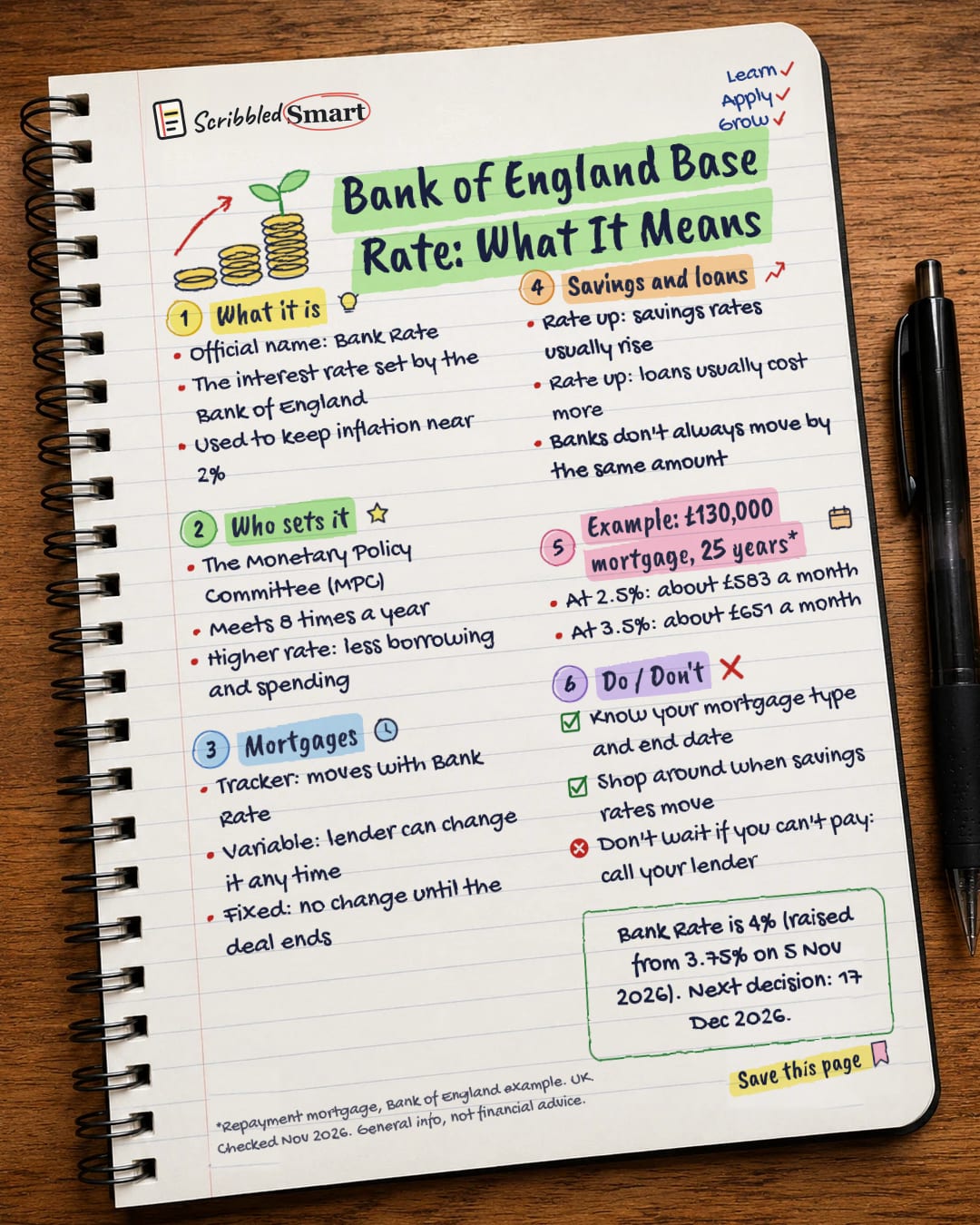
The note as text, so you can read it, copy it or use a screen reader.
What it is
- Official name: Bank Rate
- The interest rate set by the Bank of England
- Used to keep inflation near 2%
Who sets it
- The Monetary Policy Committee (MPC)
- Meets 8 times a year
- Higher rate: less borrowing and spending
Mortgages
- Tracker: moves with Bank Rate
- Variable: lender can change it any time
- Fixed: no change until the deal ends
Savings and loans
- Rate up: savings rates usually rise
- Rate up: loans usually cost more
- Banks don't always move by the same amount
Example: £130,000 mortgage, 25 years*
- At 2.5%: about £583 a month
- At 3.5%: about £651 a month
Do / Don't
- Know your mortgage type and end date
- Shop around when savings rates move
- Don't wait if you can't pay: call your lender
Sources
- Bank of England: Interest rates and Bank Rate
- Bank of England: What are interest rates?
- Bank of England: Why have interest rates gone up in the UK?
- Bank of England: Bank Rate history and data
- Bank of England Quarterly Bulletin 2024: About a rate of (general) interest: how monetary policy transmits
- FCA: Support available for mortgages as interest rates rise
How we checked this
Every fact on this note comes from the 6 sources listed here, checked against official or peer-reviewed sources where possible. AI tools help with drafting; a person checks every fact against the sources. How we research
Spotted a mistake? Tell us and we'll fix it and log it on the corrections page.


