
Money One-page note
Emergency Tax: Why It Happens
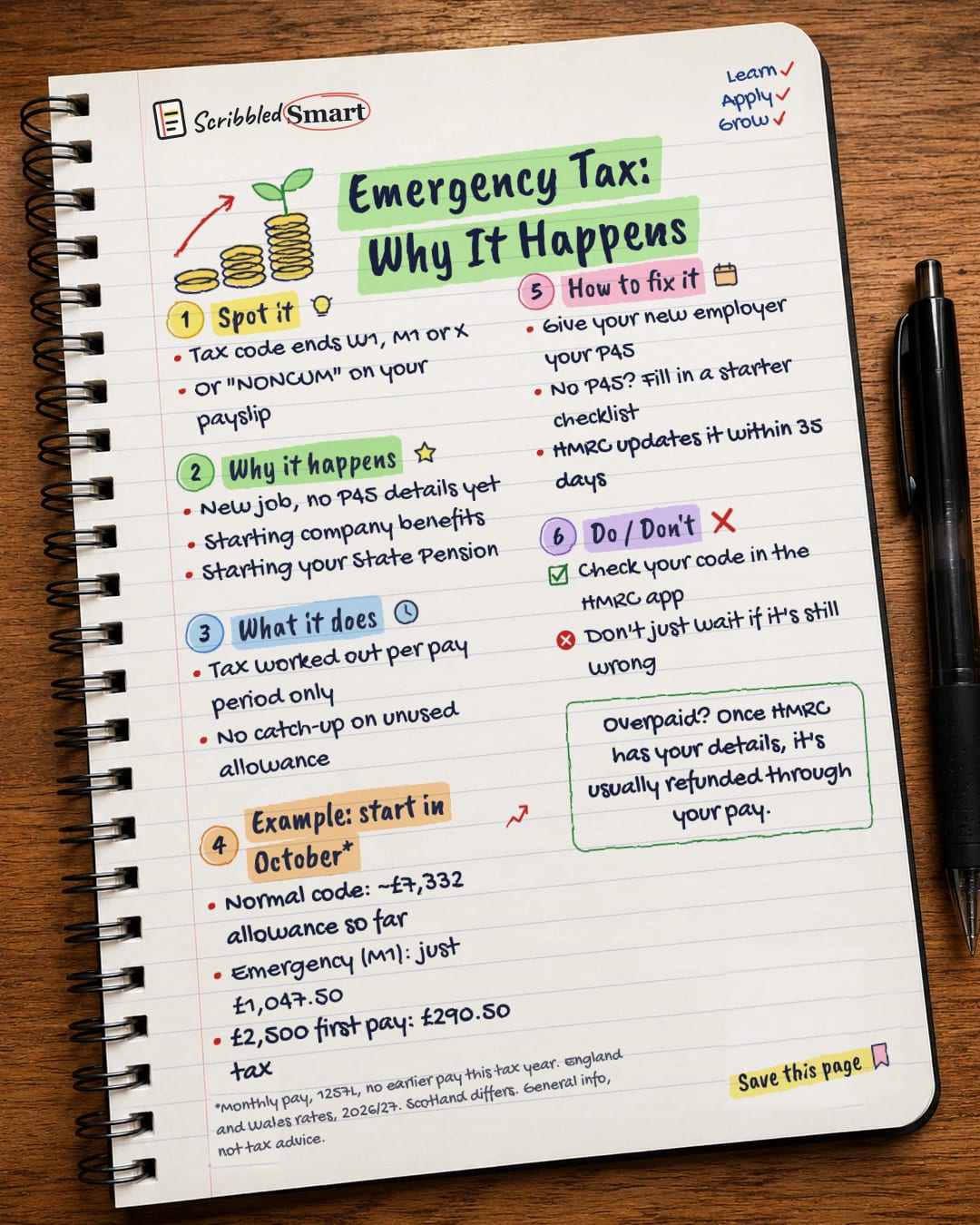
New job, smaller payslip? You might be on an emergency tax code. Here's why it happens and how to fix it. Save this page.
Good to know
*Monthly pay, 1257L, no earlier pay this tax year. England and Wales rates, 2026/27. Scotland differs. General info, not tax advice.
What's on the page
The note as text, so you can read it, copy it or use a screen reader.
Spot it
- Tax code ends W1, M1 or X
- Or "NONCUM" on your payslip
Why it happens
- New job, no P45 details yet
- Starting company benefits
- Starting your State Pension
What it does
- Tax worked out per pay period only
- No catch-up on unused allowance
Example: start in October*
- Normal code: ~£7,332 allowance so far
- Emergency (M1): just £1,047.50
- £2,500 first pay: £290.50 tax
How to fix it
- Give your new employer your P45
- No P45? Fill in a starter checklist
- HMRC updates it within 35 days
Do / Don't
- Check your code in the HMRC app
- Don't just wait if it's still wrong
Sources
- GOV.UK: Tax codes (incl. Emergency tax codes; If you've paid too much or too little tax)
- GOV.UK: P45, P60 and P11D forms: workers' guide
- GOV.UK: Tax overpayments and underpayments
- GOV.UK: New employee starter checklist (employer guide)
- GOV.UK: Tax codes (main page: where to find your code)
- GOV.UK: Tax codes: If you've paid too much or too little tax
- GOV.UK: Income Tax rates and Personal Allowances (£12,570 allowance, 20% basic rate, 2026/27)
- GOV.UK: Welsh Income Tax (2026/27 Welsh rates match the example)
How we checked this
Every fact on this note comes from the 8 sources listed here, checked against official or peer-reviewed sources where possible. AI tools help with drafting; a person checks every fact against the sources. How we research
Spotted a mistake? Tell us and we'll fix it and log it on the corrections page.


