
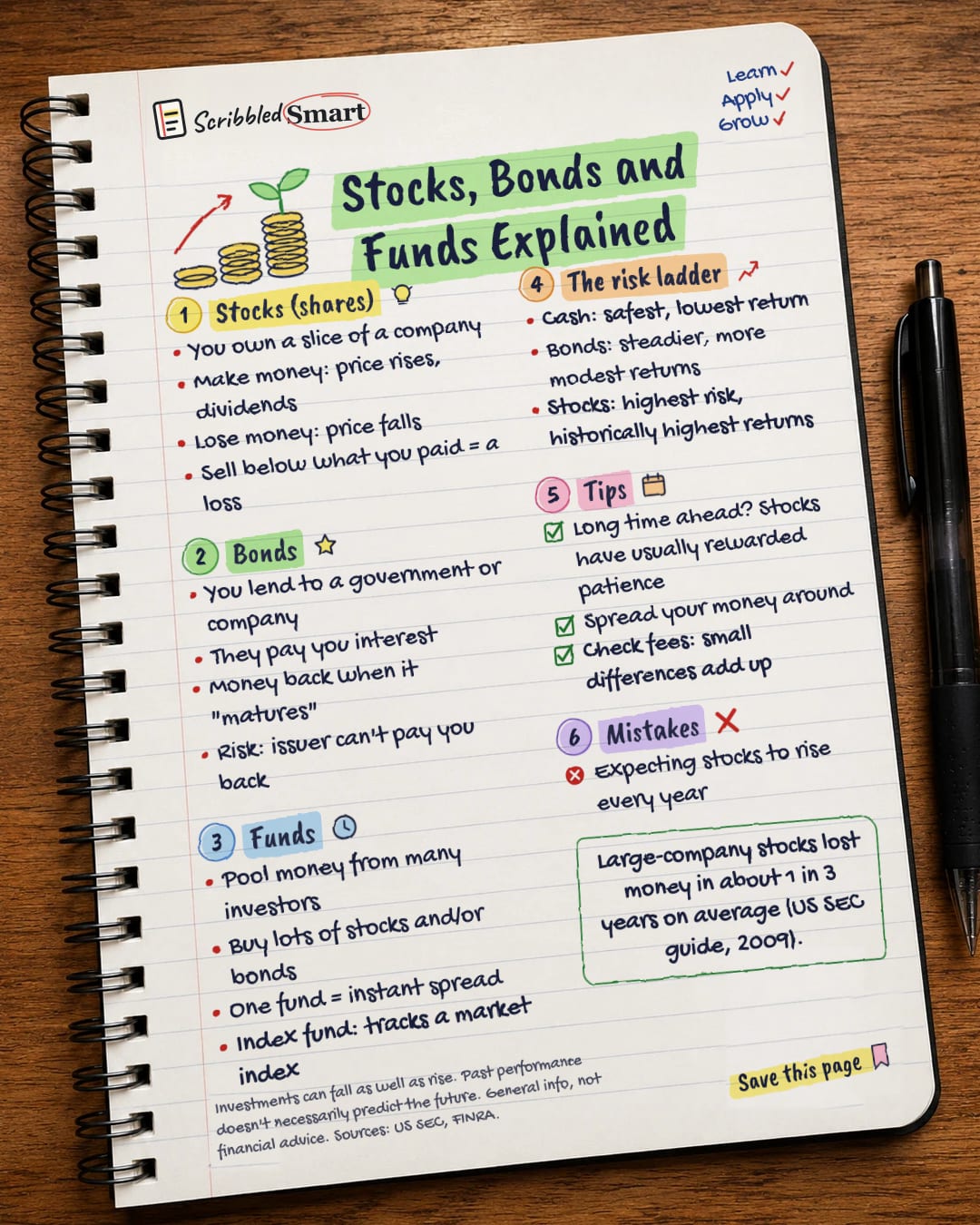
Money One-page note
Stocks, Bonds and Funds Explained
Stocks, bonds, funds: what you actually own, how each one makes (or loses) money, and which is riskiest. Save this page.
Good to know
Investments can fall as well as rise. Past performance doesn't necessarily predict the future. General info, not financial advice. Sources: US SEC, FINRA.
What's on the page
The note as text, so you can read it, copy it or use a screen reader.
Stocks (shares)
- You own a slice of a company
- Make money: price rises, dividends
- Lose money: price falls
- Sell below what you paid = a loss
Bonds
- You lend to a government or company
- They pay you interest
- Money back when it "matures"
- Risk: issuer can't pay you back
Funds
- Pool money from many investors
- Buy lots of stocks and/or bonds
- One fund = instant spread
- Index fund: tracks a market index
The risk ladder
- Cash: safest, lowest return
- Bonds: steadier, more modest returns
- Stocks: highest risk, historically highest returns
Tips
- Long time ahead? Stocks have usually rewarded patience
- Spread your money around
- Check fees: small differences add up
Mistakes
- Expecting stocks to rise every year
Sources
- Investor.gov (US SEC): Stocks FAQs
- Investor.gov (US SEC): Bonds
- Investor.gov (US SEC): Mutual Funds
- Investor.gov (US SEC): Exchange-Traded Funds (ETFs)
- Investor.gov (US SEC): Beginners' Guide to Asset Allocation, Diversification, and Rebalancing
- Investor.gov (US SEC): Asset Allocation and Diversification
- SEC.gov: Beginners' Guide to Asset Allocation, Diversification, and Rebalancing (SEC.gov copy, readable when Investor.gov returns 403; added 2026-11-17)
- FINRA: Stocks
- FINRA: Bonds
- FINRA: Mutual Funds
How we checked this
Every fact on this note comes from the 10 sources listed here, checked against official or peer-reviewed sources where possible. AI tools help with drafting; a person checks every fact against the sources. How we research
Spotted a mistake? Tell us and we'll fix it and log it on the corrections page.


